

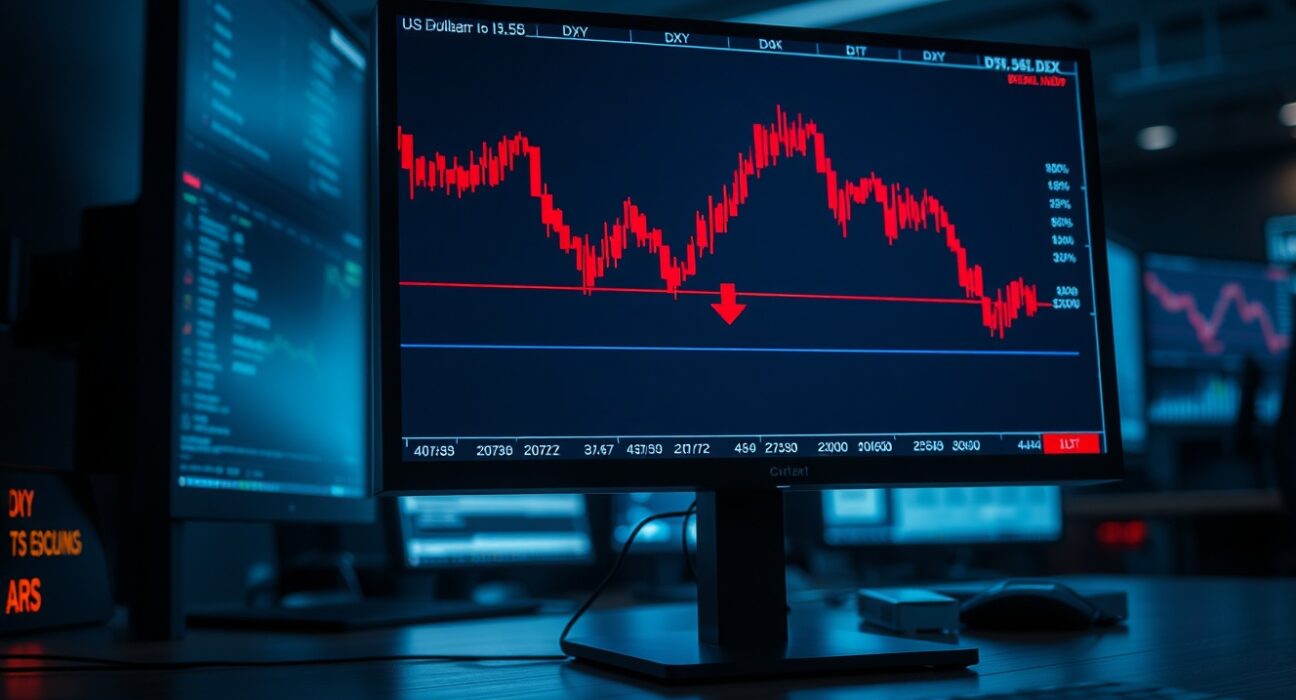
The US Dollar Index (DXY) is facing notable downside risks even as markets push back expectations for Federal Reserve easing, according to a recent analysis from TD Securities. The assessment comes as currency markets grapple with shifting interest rate outlooks and persistent economic uncertainty.
Delayed Easing, Persistent Dollar Weakness
TD Securities strategists note that while the timeline for potential rate cuts has been extended, the fundamental pressures on the dollar remain intact. The delayed easing scenario, which initially might seem supportive for the greenback, does not fully offset the structural headwinds weighing on the currency.
The firm points to a combination of factors driving the bearish outlook, including slowing US economic momentum, narrowing interest rate differentials with other major economies, and ongoing fiscal concerns. Markets have recalibrated expectations for the first rate cut to later in 2025, but this repricing has not been sufficient to reverse the dollar’s underlying weakness.
Market Implications and Investor Positioning
For currency traders and institutional investors, the TD Securities analysis suggests that positioning for further dollar declines may still be warranted despite the shift in Fed expectations. The euro and Japanese yen have shown resilience against the dollar, and further gains could materialize if US economic data continues to disappoint.
The analysis also highlights the risk that markets may be underestimating the potential for a sharper slowdown in the US economy, which could force the Fed’s hand sooner than currently priced in. This scenario would likely accelerate dollar depreciation.
What This Means for Global Markets
A weaker dollar has broad implications beyond forex markets. It typically supports commodity prices, benefits emerging market currencies, and can influence corporate earnings for multinational companies. Investors with exposure to dollar-denominated assets may need to reassess their hedging strategies.
The TD Securities view aligns with a growing consensus among some currency strategists that the dollar’s multi-year rally may have peaked, though the timing and magnitude of any decline remain subjects of debate.
Conclusion
TD Securities’ warning on US Dollar Index downside risks, despite delayed easing expectations, underscores the complexity of the current macro environment. While the Fed’s cautious stance provides some near-term support, the broader trend appears tilted toward dollar weakness. Market participants should monitor incoming economic data and central bank communications for further clues on the currency’s trajectory.
FAQs
Q1: What is the US Dollar Index (DXY)?
The US Dollar Index (DXY) measures the value of the US dollar against a basket of six major foreign currencies: the euro, Japanese yen, British pound, Canadian dollar, Swedish krona, and Swiss franc. It is widely used as a benchmark for the dollar’s overall strength.
Q2: Why does delayed Fed easing pose downside risks for the dollar?
Delayed easing can initially support the dollar by keeping US interest rates higher relative to other countries. However, if the delay is due to persistent economic weakness rather than strong growth, it can signal underlying problems that ultimately undermine the currency.
Q3: How might a weaker dollar affect investors?
A weaker dollar can benefit exporters and multinational companies by making their goods cheaper abroad and increasing the value of foreign earnings. It can also boost commodity prices and emerging market assets. Conversely, it may hurt investors holding unhedged dollar-denominated assets.
Disclaimer: The information provided is not trading advice, Bitcoinworld.co.in holds no liability for any investments made based on the information provided on this page. We strongly recommend independent research and/or consultation with a qualified professional before making any investment decisions.
