

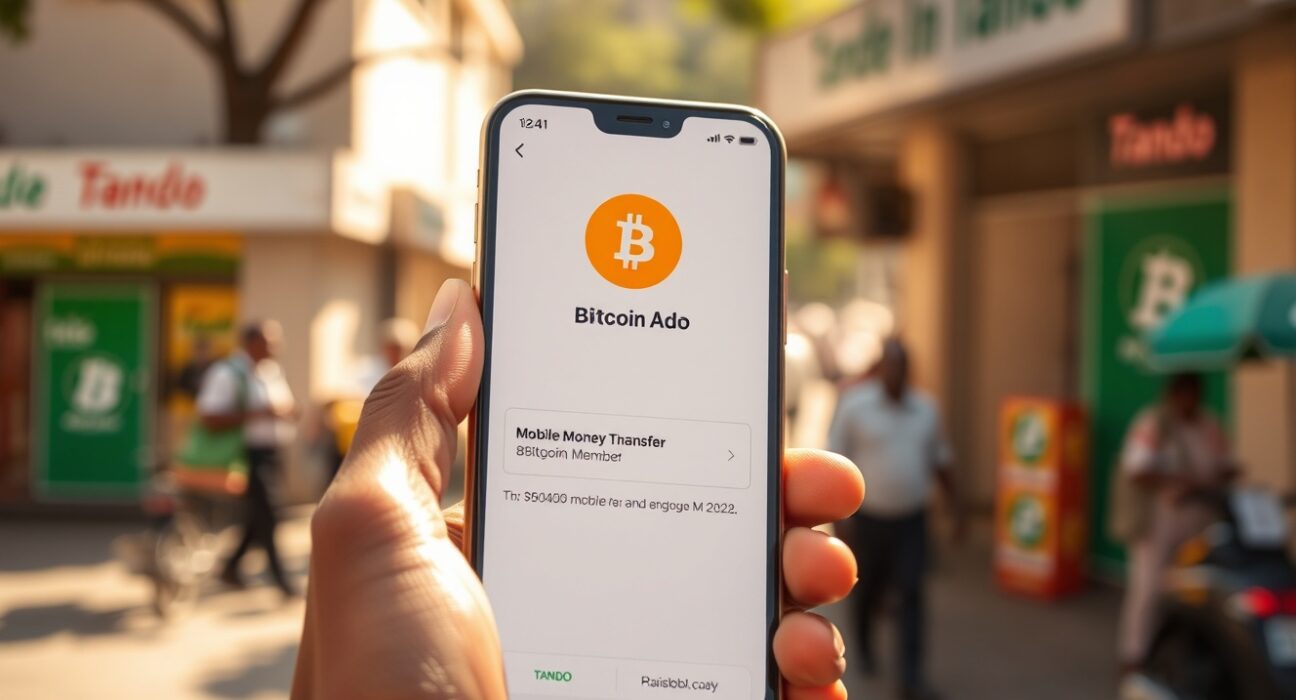
Kenyan mobile payment application Tando has introduced a new service that allows users to send Bitcoin (BTC) to any mobile phone number, leveraging the Lightning Network for instant, low-cost transactions. According to a report by CoinDesk, the recipient receives the funds directly in Kenyan Shillings (KES) deposited into their mobile money account, such as M-PESA, without needing a cryptocurrency wallet or completing know-your-customer (KYC) verification.
How the Tando Bitcoin transfer service works
The service is built on the Lightning Network, a layer-2 scaling solution for Bitcoin that enables faster and cheaper transactions than the main Bitcoin blockchain. Users can initiate a transfer from anywhere in the world by entering the recipient’s mobile phone number. The system automatically converts the Bitcoin to Kenyan Shillings at the prevailing exchange rate and deposits the equivalent amount into the recipient’s existing mobile money account. This eliminates the need for the recipient to understand or interact with cryptocurrency technology.
This design is particularly significant for Kenya, where mobile money penetration is among the highest in the world. Safaricom’s M-PESA service has over 30 million active users, making it a ubiquitous financial tool for daily transactions, savings, and remittances.
Why this matters for cross-border payments and financial inclusion
The ability to send Bitcoin to a phone number without requiring the recipient to have a crypto wallet or undergo KYC addresses two major barriers to cryptocurrency adoption: complexity and accessibility. For many unbanked or underbanked individuals in Kenya, mobile money is their primary financial interface. By bridging Bitcoin with M-PESA, Tando effectively allows anyone with a basic mobile phone to receive value from anywhere in the world, instantly.
Implications for remittances and the broader market
Kenya is one of the largest recipients of remittances in Sub-Saharan Africa, with inflows exceeding $4 billion annually. Traditional remittance channels often charge high fees and take days to settle. Tando’s Lightning-based service could offer a faster, cheaper alternative for diaspora communities sending money home. However, the service’s reliance on Bitcoin’s price volatility and the exchange rate applied at the time of transfer will be key factors for users to consider.
The decision to forgo KYC for recipients also raises regulatory questions. Kenya’s Central Bank has historically taken a cautious stance toward cryptocurrencies, warning consumers about risks but not outright banning them. How regulators respond to services that allow value transfer without identity verification will be an important development to watch.
Conclusion
Tando’s new service represents a practical step toward integrating Bitcoin with mainstream mobile money infrastructure in Kenya. By simplifying the user experience and removing technical barriers, it could accelerate cryptocurrency adoption for real-world use cases like remittances and peer-to-peer payments. The long-term viability of the service will depend on regulatory clarity, exchange rate stability, and user trust in the Lightning Network’s reliability.
FAQs
Q1: Does the recipient need a smartphone or internet connection to receive Bitcoin via Tando?
No. The recipient only needs a mobile phone number linked to a mobile money account like M-PESA. The funds are deposited as Kenyan Shillings, not Bitcoin, so no internet connection or smartphone is required.
Q2: Are there any fees for using Tando’s Bitcoin transfer service?
The report from CoinDesk did not specify exact fee structures. Users should check the Tando app for applicable transaction fees, exchange rate spreads, and any Lightning Network routing fees that may apply.
Q3: Is the service legal in Kenya?
Kenya does not have specific legislation legalizing or prohibiting cryptocurrencies, but the Central Bank of Kenya has issued warnings about their risks. Tando operates as a mobile payment app, and the service’s compliance with existing mobile money regulations will be subject to regulatory review. Users should exercise due diligence.
Disclaimer: The information provided is not trading advice, Bitcoinworld.co.in holds no liability for any investments made based on the information provided on this page. We strongly recommend independent research and/or consultation with a qualified professional before making any investment decisions.
