

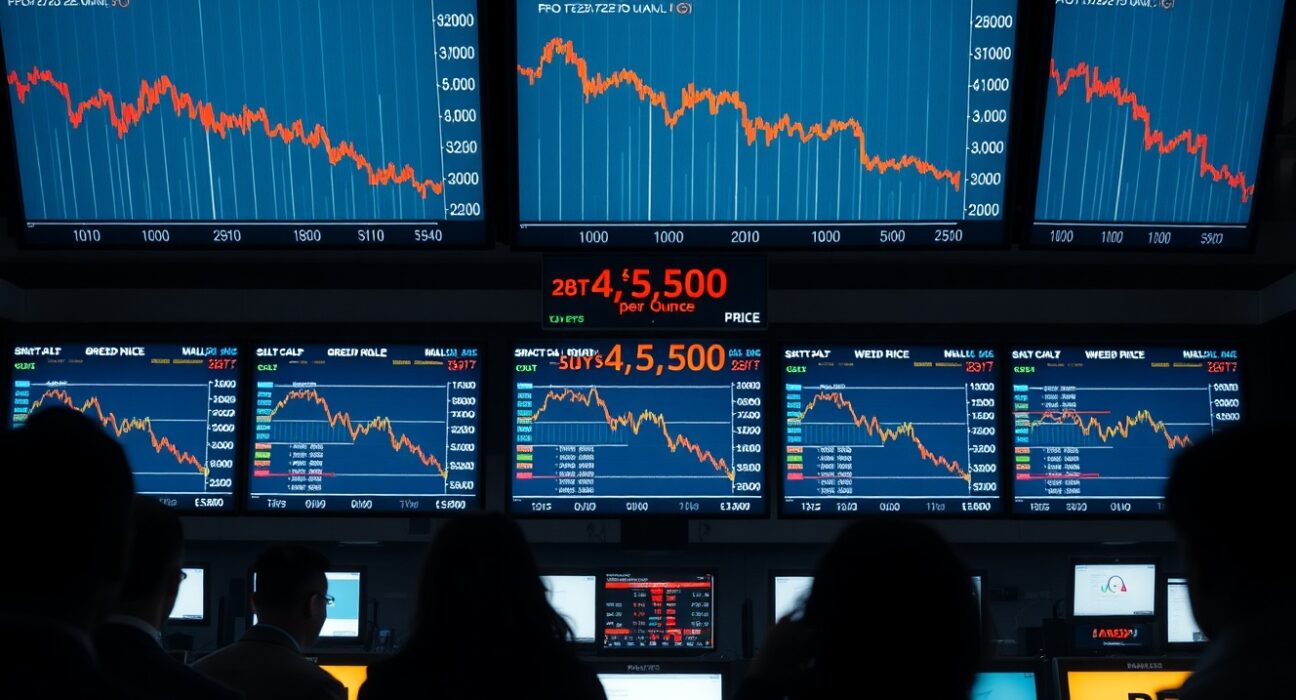
The spot price of gold fell below $4,500 per ounce on Tuesday for the first time since late March, declining 0.85% during the trading session. The move marks a notable retreat from recent highs and signals a shift in investor sentiment toward the precious metal.
Market Context Behind the Decline
Gold’s pullback comes amid a broader reassessment of safe-haven assets. Traders have been adjusting positions following stronger-than-expected U.S. economic data, which has reduced immediate recession fears. Additionally, the U.S. dollar index has firmed, creating headwinds for dollar-denominated commodities like gold.
Analysts note that gold had rallied sharply in early 2025, driven by geopolitical uncertainty and central bank buying. The current correction, while significant, remains within the range of normal market volatility for the asset class.
What This Means for Investors
For retail and institutional investors, the drop below $4,500 is a psychological threshold. Many market participants had viewed this level as a support zone. A sustained break below could trigger further selling, while a rebound from this level may reinforce bullish sentiment.
Gold remains up approximately 12% year-to-date, even after this decline. The metal continues to benefit from long-term demand from central banks and ongoing inflationary concerns in several major economies.
Key Factors to Watch
Market attention now turns to upcoming Federal Reserve commentary and U.S. employment data. Any signals regarding interest rate policy could influence gold’s next move. Higher rates typically pressure gold, as they increase the opportunity cost of holding non-yielding assets.
Physical demand from China and India, the world’s top gold consumers, also remains a critical variable. Seasonal buying patterns during festival periods may provide support for prices in the coming weeks.
Conclusion
The decline of spot gold below $4,500 reflects a convergence of macroeconomic factors, including a stronger dollar and improved risk appetite. While the move is notable, it does not alter the metal’s long-term fundamental picture. Investors should monitor upcoming economic releases and central bank statements for further direction.
FAQs
Q1: Why did gold fall below $4,500?
Gold declined due to a stronger U.S. dollar, better-than-expected economic data, and reduced safe-haven demand as investor risk appetite improved.
Q2: Is this a good time to buy gold?
That depends on individual investment goals and market outlook. Some analysts see the pullback as a buying opportunity, while others advise waiting for clearer signals on interest rates and inflation.
Q3: How does the dollar affect gold prices?
Gold is priced in U.S. dollars, so a stronger dollar makes gold more expensive for foreign buyers, typically pushing prices lower. The inverse relationship between the dollar and gold is one of the most consistent patterns in commodity markets.
Disclaimer: The information provided is not trading advice, Bitcoinworld.co.in holds no liability for any investments made based on the information provided on this page. We strongly recommend independent research and/or consultation with a qualified professional before making any investment decisions.
