

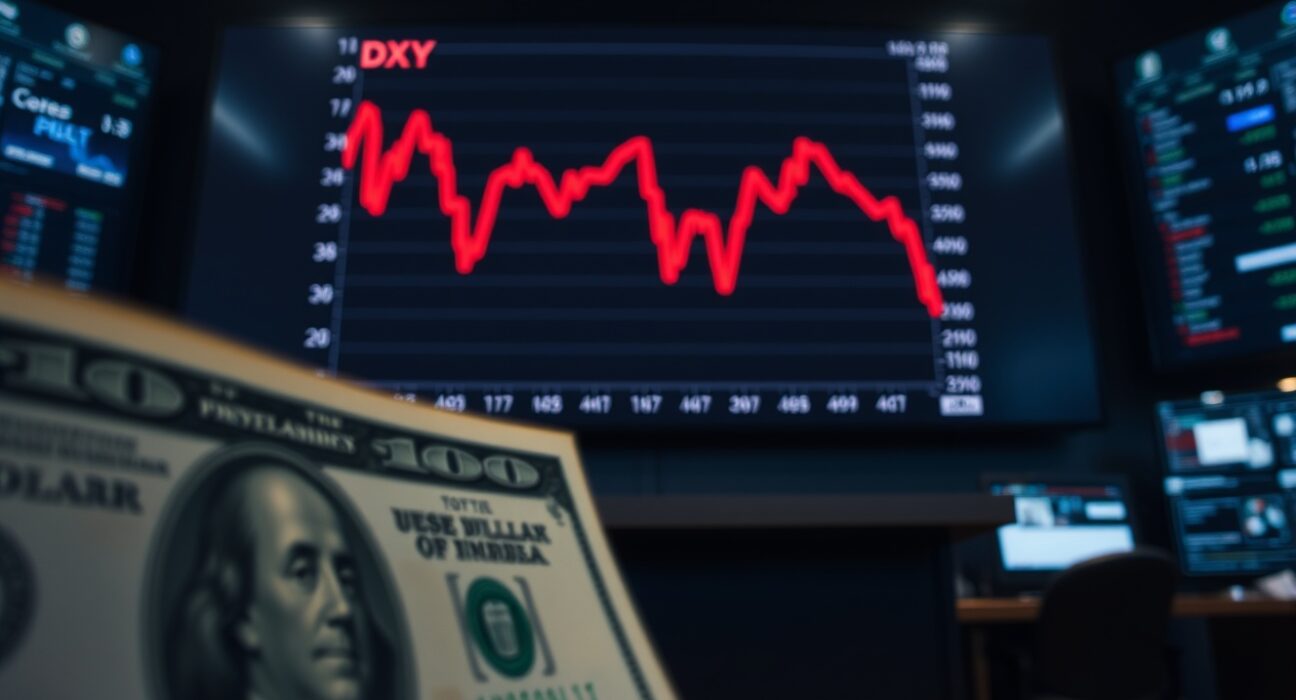
The U.S. dollar retreated on Tuesday, giving back some of its sharp gains from the previous week, as a rapid selloff in global bond markets began to stabilize. The dollar index, which measures the greenback against a basket of six major currencies, edged lower after posting its strongest weekly performance in over nine months.
Bond Market Volatility Drives Currency Moves
The recent rally in the dollar was fueled by a dramatic spike in U.S. Treasury yields, which sent shockwaves through global financial markets. Investors rushed into the dollar as a safe haven, pushing the currency higher against the euro, Japanese yen, and British pound. However, as yields pulled back from their peaks on Tuesday, the dollar followed suit, signaling that the currency’s trajectory remains tightly tied to bond market dynamics.
Analysts note that the speed of the yield move was historically significant. The benchmark 10-year Treasury note yield rose by roughly 30 basis points over the course of last week, its largest weekly jump since early 2023. The move was driven by stronger-than-expected U.S. economic data and hawkish commentary from Federal Reserve officials, which dampened hopes for imminent interest rate cuts.
Market Implications and Trader Sentiment
The easing of the bond market rout has provided some relief to risk-sensitive currencies. The euro recovered slightly against the dollar, while the yen, which had been under intense pressure, also stabilized. Currency traders are now closely watching upcoming U.S. inflation data and retail sales figures, which could determine whether the dollar’s correction deepens or if the broader uptrend resumes.
“The dollar’s pullback is a natural correction after an aggressive rally,” said a senior currency strategist at a London-based investment bank. “The market is recalibrating its expectations for Fed policy, and any sign of economic softening could accelerate the dollar’s decline.”
What This Means for Investors
For investors and businesses exposed to currency fluctuations, the recent volatility underscores the importance of hedging strategies. A weaker dollar can benefit multinational companies with overseas earnings, while importers may see some cost relief. Conversely, a sustained dollar rally could tighten financial conditions globally, particularly for emerging markets that borrow in dollars.
The Federal Reserve’s next policy meeting, scheduled for early May, remains the key event on the horizon. Markets are currently pricing in a roughly 50% chance of a rate cut by July, though that probability has shifted dramatically in recent weeks.
Conclusion
The dollar’s slip on Tuesday does not necessarily signal a reversal of its recent strength, but it does highlight the market’s sensitivity to interest rate expectations. With bond market volatility easing for now, currency traders are refocusing on economic fundamentals. The coming days will be critical in determining whether the dollar can regain its footing or if the current pullback has further to run.
FAQs
Q1: Why did the dollar rally so sharply last week?
The dollar rallied due to a sharp rise in U.S. Treasury yields, driven by strong economic data and hawkish comments from Federal Reserve officials. This made the dollar more attractive to yield-seeking investors.
Q2: What does a weaker dollar mean for the stock market?
A weaker dollar can be positive for U.S. stocks, especially for multinational companies that earn revenue abroad. It can also make U.S. exports cheaper, boosting corporate profits.
Q3: How long will the bond market volatility last?
Bond market volatility is expected to persist until there is greater clarity on the Federal Reserve’s interest rate path. Key data releases, such as inflation and employment reports, will be crucial in shaping market expectations.
Disclaimer: The information provided is not trading advice, Bitcoinworld.co.in holds no liability for any investments made based on the information provided on this page. We strongly recommend independent research and/or consultation with a qualified professional before making any investment decisions.
