

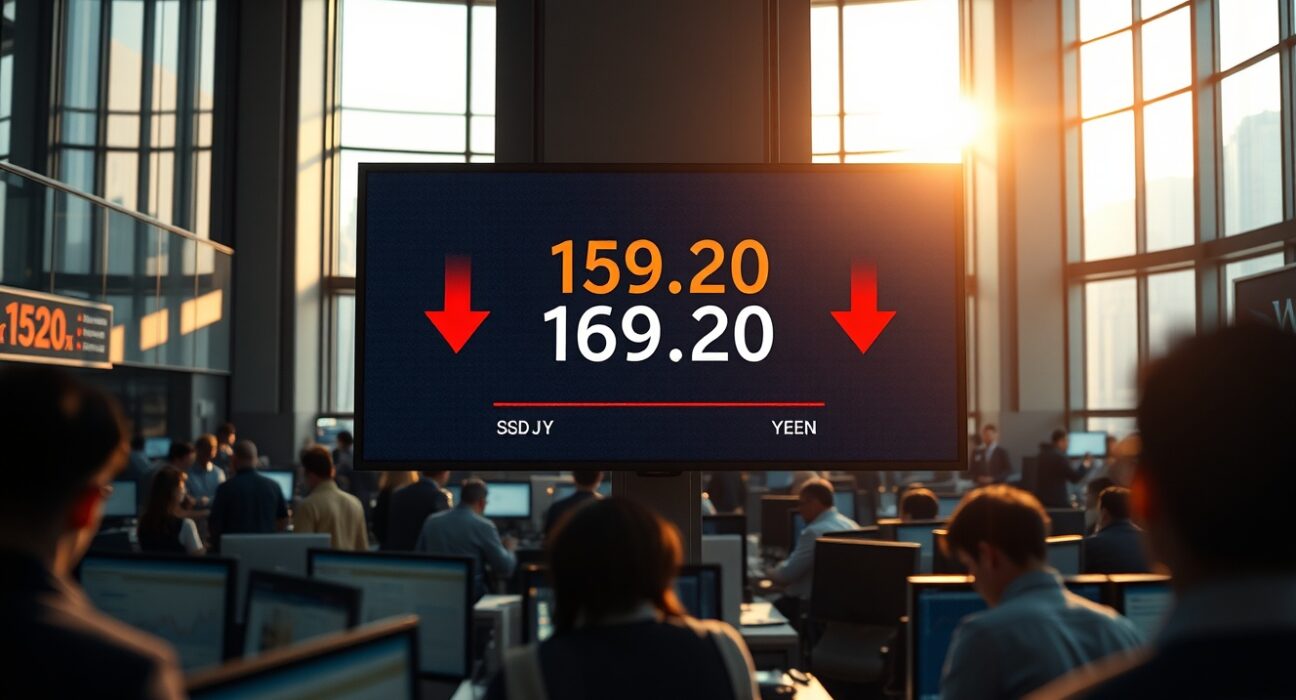
The Japanese yen extended its decline on Wednesday, sliding further below the 159.00 level against the U.S. dollar to reach a nearly three-week low. The move comes as escalating geopolitical tensions in the Middle East drive investors toward the U.S. dollar as a safe-haven asset, putting additional pressure on the yen despite its traditional safe-haven status.
Yen Under Pressure as Middle East Conflict Intensifies
The USD/JPY pair climbed to 159.20 during early Asian trading, its highest level since late June, as reports of renewed hostilities in the Middle East fueled risk aversion across global markets. The yen, often seen as a refuge during times of uncertainty, has underperformed the dollar in recent sessions due to the wide interest rate differential between Japan and the United States.
Japan’s Ministry of Finance and the Bank of Japan have reiterated their readiness to intervene in the currency market if volatility becomes excessive, but traders remain skeptical about the effectiveness of such measures given the fundamental drivers behind the yen’s weakness. The BOJ’s ultra-loose monetary policy stands in stark contrast to the Federal Reserve’s relatively higher interest rates, which continues to attract capital flows into dollar-denominated assets.
Market Implications and Investor Sentiment
The latest leg lower in the yen reflects a broader shift in market sentiment as geopolitical risks take center stage. Oil prices have also risen sharply, adding to concerns about imported inflation in Japan, a country heavily reliant on energy imports. Higher energy costs could further pressure Japan’s trade balance, which has already been negative for much of the past year.</n
Currency analysts note that the 160.00 level remains a key psychological barrier for USD/JPY. A decisive break above that level could trigger fresh intervention fears, as it would approach the 32-year high of 161.95 reached in October 2022. The BOJ’s next policy meeting, scheduled for late July, will be closely watched for any signals of a shift away from its ultra-dovish stance.
What This Means for Traders and Importers
For Japanese importers, particularly energy and raw material buyers, the weaker yen increases costs and squeezes profit margins. Conversely, exporters such as automakers and electronics manufacturers benefit from a weaker currency, as it makes their products more competitive abroad. For global forex traders, the yen’s decline presents both opportunities and risks, with heightened volatility expected in the near term.
Conclusion
The Japanese yen’s slide below 159.00 against the dollar underscores the complex interplay between geopolitical risk, monetary policy divergence, and market sentiment. While the yen remains under pressure, traders and policymakers alike are watching for potential intervention or a shift in BOJ policy that could alter the trajectory. The immediate focus remains on developments in the Middle East and their broader impact on global financial markets.
FAQs
Q1: Why is the Japanese yen falling despite being a safe-haven currency?
The yen’s safe-haven appeal is being overshadowed by the wide interest rate gap between Japan and the U.S. The Federal Reserve’s higher rates make the dollar more attractive, while the BOJ maintains ultra-loose policy. During geopolitical crises, investors often prefer the dollar for its liquidity and yield advantage.
Q2: What is the key level to watch for USD/JPY?
The 160.00 level is a major psychological resistance. A break above it could lead to a test of the 2022 high near 161.95 and may prompt intervention from Japanese authorities.
Q3: How does a weaker yen affect the Japanese economy?
It benefits exporters by making their goods cheaper abroad, but hurts importers by raising costs for energy, food, and raw materials. This can fuel inflation and widen Japan’s trade deficit.
Disclaimer: The information provided is not trading advice, Bitcoinworld.co.in holds no liability for any investments made based on the information provided on this page. We strongly recommend independent research and/or consultation with a qualified professional before making any investment decisions.
