

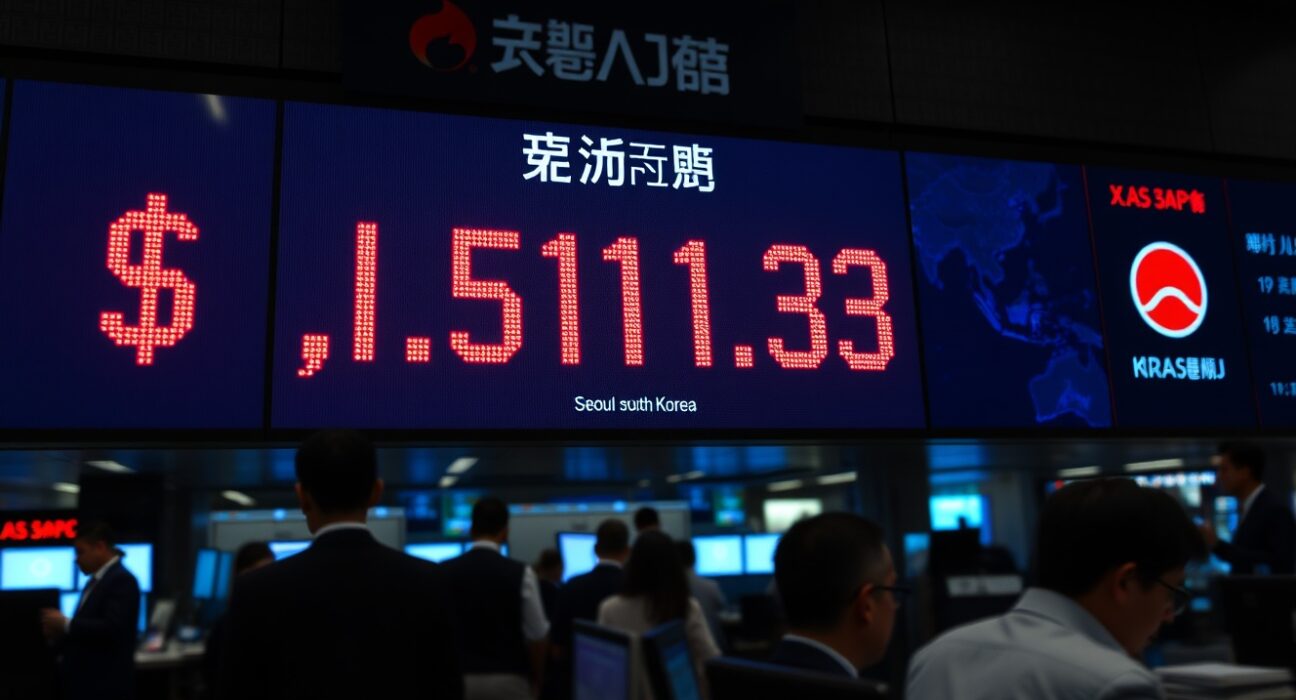
The dollar-won exchange rate surged past the 1,510 mark in early trading on Wednesday, extending its upward momentum from the previous session. The pair was trading at 1,511.33 won per dollar as of 9:15 a.m. local time, representing a 0.31% increase from the previous close. This marks the first time the rate has crossed the psychologically significant 1,510 threshold since early November 2022.
Market Dynamics and Reverse Kimchi Premium
The latest move comes amid sustained dollar strength globally and persistent risk-off sentiment in Asian markets. On South Korea’s leading cryptocurrency exchange, Upbit, Tether (USDT) was trading at 1,490 won in the KRW market, implying a reverse kimchi premium of approximately 1.5%. This means that dollar-denominated stablecoins are trading at a discount relative to the official exchange rate, a phenomenon that typically indicates capital outflows or reduced demand for crypto assets in the Korean market.
The reverse kimchi premium has been a recurring theme in recent months, reflecting the divergence between onshore forex rates and crypto market pricing. Analysts point to heightened geopolitical uncertainties and a stronger U.S. dollar index as key drivers behind the won’s depreciation.
Implications for Korean Investors and Importers
A weaker won has direct consequences for Korean consumers and businesses. Importers of raw materials and energy face higher costs, which could feed into domestic inflation. For Korean investors holding foreign assets or dollar-denominated products, the exchange rate movement translates into increased returns when converted back to won. However, the broader economic impact remains a concern for policymakers at the Bank of Korea, who may face pressure to intervene in the forex market to stabilize the currency.
What This Means for Crypto Traders
The widening gap between the official dollar-won rate and USDT prices on Korean exchanges suggests that arbitrage opportunities may emerge. Traders monitoring the kimchi premium — the price difference between cryptocurrencies on Korean exchanges versus global platforms — should note that a reverse premium often signals reduced local demand or increased selling pressure. This dynamic can affect trading strategies, particularly for those using stablecoins as a hedge against volatility.
Conclusion
The breach of the 1,510 level marks a significant milestone for the dollar-won pair, underscoring the ongoing pressure on the Korean won amid global macroeconomic headwinds. Market participants will be watching for any intervention from Korean authorities and further cues from the U.S. Federal Reserve’s policy stance. The reverse kimchi premium adds an additional layer of complexity for crypto traders operating in the Korean market.
FAQs
Q1: What is the reverse kimchi premium?
The reverse kimchi premium occurs when the price of a cryptocurrency or stablecoin on South Korean exchanges is lower than the global average or the official exchange rate. It typically indicates capital outflows or reduced local demand for crypto assets.
Q2: Why did the dollar-won rate cross 1,510?
The move is driven by a combination of global dollar strength, risk-off sentiment in Asian markets, and domestic economic uncertainties. The won has been under pressure against the greenback for several weeks.
Q3: How does a weaker won affect Korean consumers?
A weaker won makes imported goods and raw materials more expensive, which can lead to higher inflation. It also benefits exporters and investors holding foreign assets, as their returns increase when converted back to won.
Disclaimer: The information provided is not trading advice, Bitcoinworld.co.in holds no liability for any investments made based on the information provided on this page. We strongly recommend independent research and/or consultation with a qualified professional before making any investment decisions.
