

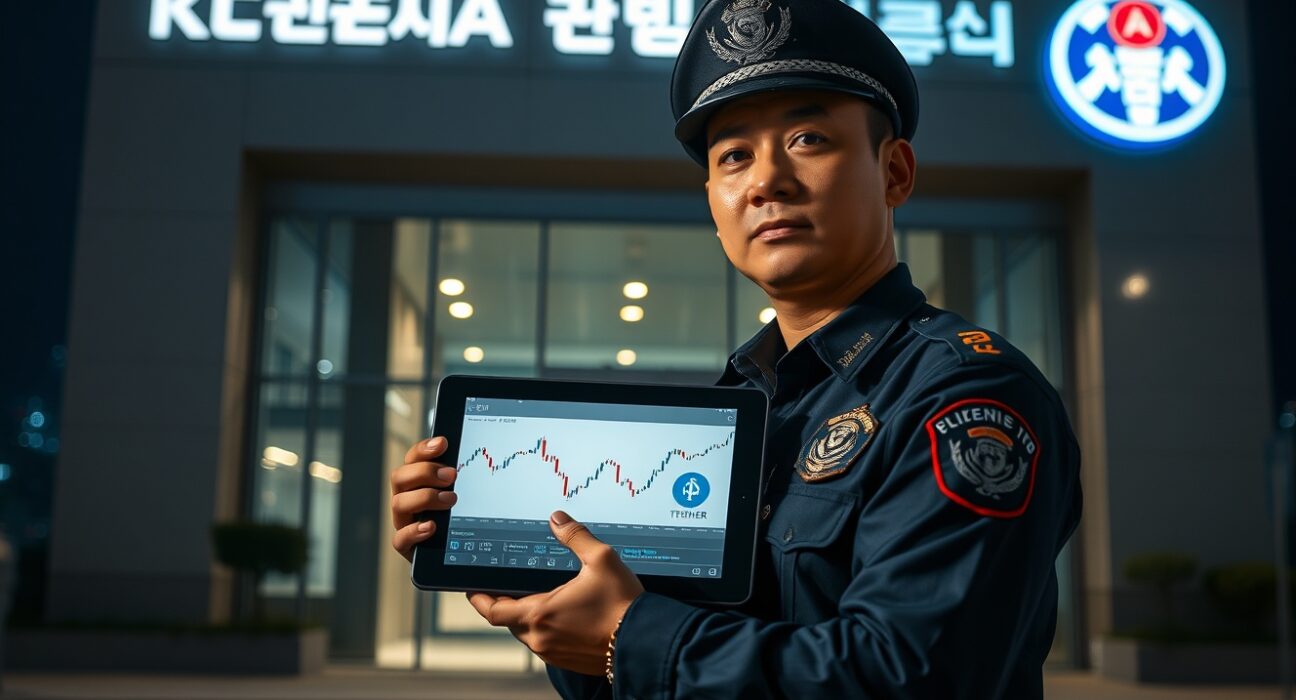
South Korean authorities have dismantled a major cross-border money laundering operation, arresting 149 individuals accused of funneling approximately 110 billion won (around $83 million) in criminal proceeds. The Seoul Metropolitan Police Agency confirmed that the ring primarily used Tether (USDT) to move illicit funds, highlighting the growing role of stablecoins in financial crime.
How the Scheme Operated
According to the Seoul Economic Daily, the domestic ring collaborated with a China-based money laundering organization. The operation relied on multiple methods to conceal the origins of the funds:
- USDT (72%): The vast majority of laundered money was converted into Tether, a stablecoin pegged to the US dollar, enabling rapid, cross-border transfers with limited oversight.
- Gift certificate businesses (19%): Funds were disguised as legitimate transactions through front companies that dealt in gift certificates, a common tactic to layer illicit money.
- Standard bank transfers (9%): Traditional wire transfers were used for smaller amounts, likely to avoid triggering banking alerts.
The domestic ring was responsible for distributing illegal bank accounts, which were then used to receive and transfer the criminal proceeds. The Chinese organization provided the laundering infrastructure and facilitated the conversion of funds into USDT.
Arrests and Legal Charges
The Seoul Metropolitan Police Agency announced the arrests on charges of violating laws on the concealment of criminal proceeds. Of the 149 individuals apprehended, seven have been formally detained. The police have not disclosed the identities of the suspects, but confirmed they include both members of the domestic account distribution network and the Chinese money laundering cell.
Why This Matters for Crypto Regulation
This case underscores a persistent challenge for regulators: the use of stablecoins like USDT in illicit finance. While blockchain transactions are pseudonymous, law enforcement agencies are increasingly able to trace funds through exchanges and wallet addresses. However, the speed and borderless nature of crypto transactions make them attractive for money laundering compared to traditional banking systems.
For South Korea, which has one of the most active cryptocurrency markets in the world, this arrest signals a tightening of enforcement. The country has implemented strict know-your-customer (KYC) and anti-money laundering (AML) rules for crypto exchanges, but this case demonstrates that criminals are adapting by using peer-to-peer networks and foreign-based organizations.
Conclusion
The arrest of 149 individuals in a USDT-linked money laundering case is a significant law enforcement action in South Korea. It reveals the sophisticated methods used by criminal networks to exploit stablecoins and highlights the ongoing battle between regulators and illicit finance. The case is likely to fuel further debate on the need for global standards in cryptocurrency oversight.
FAQs
Q1: What is USDT and why was it used in this case?
USDT (Tether) is a stablecoin whose value is pegged to the US dollar. It was used because it allows fast, low-cost transfers across borders without relying on traditional banks, making it attractive for laundering money.
Q2: How did the police trace the laundered funds?
While specific methods were not disclosed, South Korean police likely used blockchain analysis tools to track USDT transactions on the Tron or Ethereum networks, combined with traditional financial intelligence from bank records and the gift certificate businesses.
Q3: What penalties do the arrested individuals face?
Under South Korean law, violating the Act on the Regulation and Punishment of Concealment of Criminal Proceeds can result in imprisonment for up to five years or a fine. Those detained face the most serious charges, including potential extradition considerations if the Chinese organization is involved.
Disclaimer: The information provided is not trading advice, Bitcoinworld.co.in holds no liability for any investments made based on the information provided on this page. We strongly recommend independent research and/or consultation with a qualified professional before making any investment decisions.
