

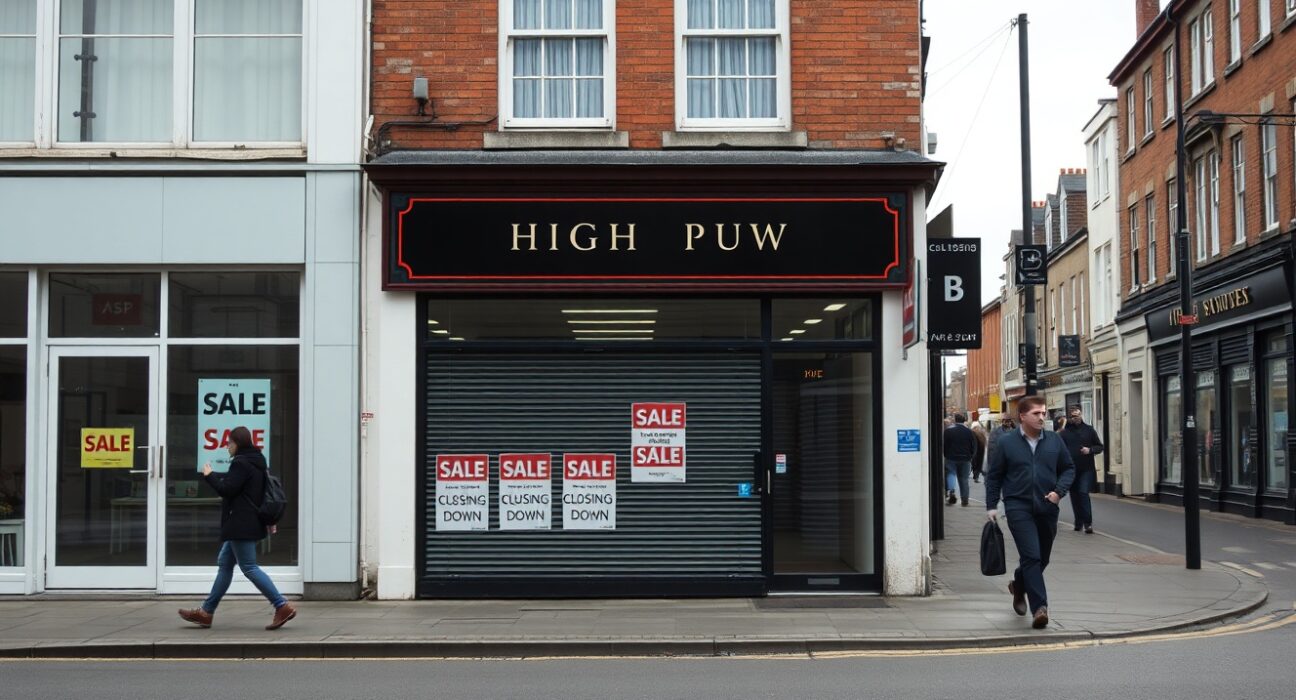
The British pound traded in a narrow range on Friday after official data revealed that UK retail sales suffered their sharpest monthly decline in nearly a year, raising fresh questions about the strength of consumer demand and the broader economic recovery.
Retail Sales Fall Sharply in April
According to figures released by the Office for National Statistics (ONS), retail sales volumes dropped by 1.4% in April compared to the previous month, significantly worse than the 0.3% decline forecast by economists. The decline was broad-based, with food stores, non-food retailers, and fuel sales all contributing to the weakness. This marks the steepest monthly fall since May 2024, when sales contracted by 2.1%.
Market Reaction and Sterling Performance
Despite the disappointing data, the pound remained relatively stable against both the US dollar and the euro. Analysts attributed the muted reaction to the fact that the data largely confirmed existing concerns about consumer caution amid still-elevated living costs and persistent inflation. Sterling was trading around $1.2750 against the dollar, little changed from the previous session, and held near €1.1650 against the euro.
What This Means for the UK Economy
The sharp drop in retail sales adds to a growing body of evidence that the UK economy is losing momentum. Consumer spending, which had been a key driver of growth in late 2024, appears to be cooling as households grapple with higher mortgage rates, rising rents, and subdued wage growth. The data also complicates the Bank of England’s policy path. While inflation has fallen from its peak, the central bank has been cautious about cutting interest rates too quickly. A sustained weakening in consumer demand could, however, increase pressure on the Monetary Policy Committee to consider rate cuts later this year to support growth.
Conclusion
The April retail sales figures underscore the fragility of the UK’s economic recovery. While the pound has so far held its ground, sustained weakness in consumer spending could eventually weigh on sterling and increase the likelihood of monetary policy easing. Investors will now focus on upcoming inflation and GDP data for further clues on the economy’s trajectory.
FAQs
Q1: Why did UK retail sales fall so sharply in April?
The decline was driven by reduced spending across multiple categories, including food, clothing, and fuel. Analysts point to persistent cost-of-living pressures, including high mortgage rates and subdued wage growth, which have dampened consumer confidence and spending.
Q2: How did the pound react to the retail sales data?
The pound was largely flat against the US dollar and the euro, as the data aligned with existing market expectations of a slowing economy. The muted reaction suggests the market had already priced in some weakness in consumer spending.
Q3: Could this data influence Bank of England interest rate decisions?
Yes. Weaker retail sales add to the case for the Bank of England to consider cutting interest rates later this year. However, the central bank remains cautious, balancing the need to support growth against the risk of rekindling inflation.
Disclaimer: The information provided is not trading advice, Bitcoinworld.co.in holds no liability for any investments made based on the information provided on this page. We strongly recommend independent research and/or consultation with a qualified professional before making any investment decisions.
