

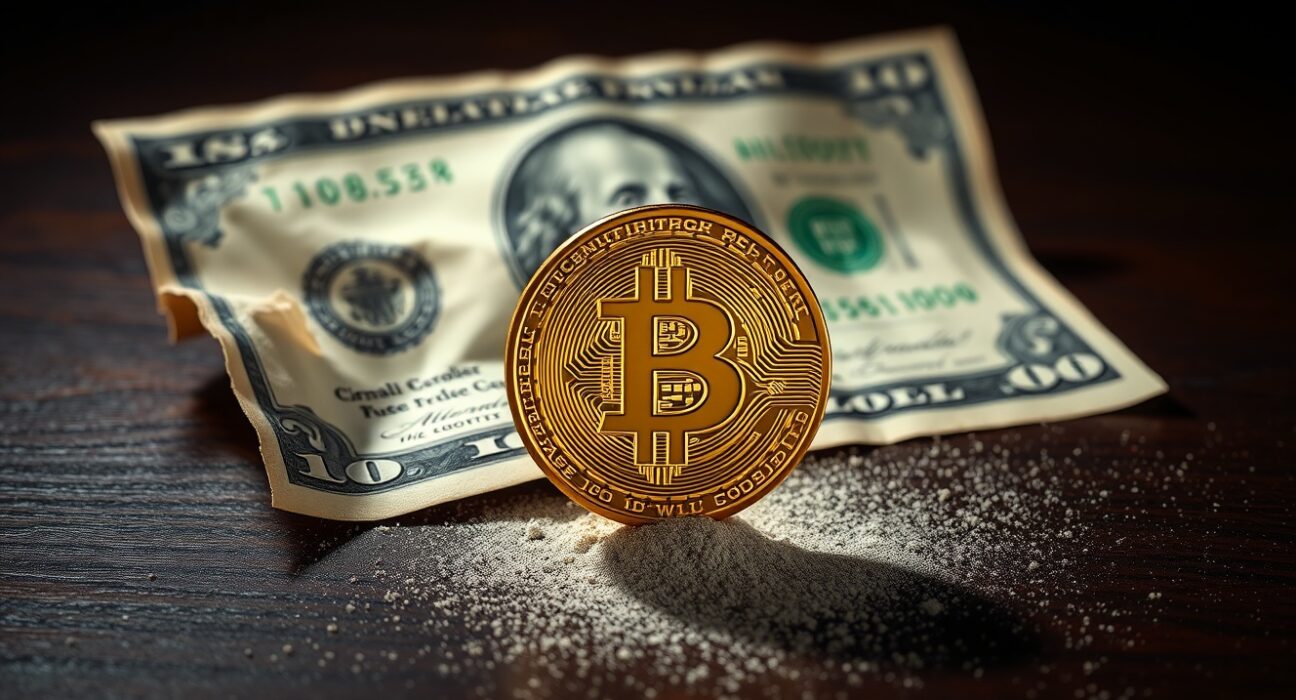
Mike Belshe, CEO of digital asset custody firm BitGo, has challenged a prevailing narrative in cryptocurrency markets, asserting that the primary driver for Bitcoin’s (BTC) long-term value is not the prospect of lower interest rates, but rather a deeper erosion of public trust in traditional fiat currencies.
Monetary Policy Shift and the Dollar’s Credibility
Belshe’s comments, shared on social media platform X, came in response to the appointment of Kevin Warsh as the new Chairman of the Federal Reserve. Warsh, a former Fed governor, has been a vocal critic of quantitative easing (QE) and the central bank’s history of large-scale asset purchases. Belshe argued that if Warsh is sincere in his criticisms, the reflexive use of expansionary monetary policy to address economic challenges may come to an end.
The CEO outlined two distinct scenarios stemming from this leadership change. In the first, a successful restoration of confidence in the U.S. dollar under Warsh would be a positive development for the stability of the global financial system. In the second, a failure to restore that trust would serve as definitive proof that the existing monetary framework is fundamentally broken, creating a powerful catalyst for Bitcoin adoption.
The Hard Money Thesis in a Binary Outcome
Belshe’s analysis frames the future of Bitcoin within a binary outcome that, in his view, leads to the same conclusion. “Hard money wins in either scenario,” he stated, referring to assets like Bitcoin that have a fixed or algorithmically determined supply, immune to government or central bank inflation. This perspective suggests that whether the dollar strengthens or weakens, the fundamental appeal of a decentralized, non-sovereign store of value remains intact.
This argument adds a nuanced layer to the ongoing debate about Bitcoin’s role as a hedge against inflation and monetary debasement. While many market participants focus on the Federal Reserve’s interest rate decisions as a primary driver for risk assets like cryptocurrencies, Belshe’s commentary shifts the focus to a more structural, trust-based concern.
Implications for Investors and the Broader Market
For investors, this analysis implies that Bitcoin’s value proposition may be less correlated with traditional macroeconomic cycles than previously assumed. If the core bull case is indeed about eroding trust in fiat, then short-term interest rate fluctuations become less relevant. The focus instead turns to long-term fiscal and monetary credibility. The appointment of a new Fed chair who is skeptical of QE introduces a variable that could either strengthen the dollar or accelerate its decline in public confidence, with Bitcoin positioned to benefit from the latter.
This perspective is particularly relevant as global debt levels remain high and central banks worldwide grapple with inflationary pressures. Belshe’s comments serve as a reminder that for many proponents, Bitcoin is not merely a speculative asset but a bet against the long-term sustainability of the current fiat-based system.
Conclusion
Mike Belshe’s remarks offer a distinct and thought-provoking lens through which to view Bitcoin’s future. By centering the argument on trust in fiat currency rather than interest rate policy, he challenges market participants to consider deeper, structural drivers of value. Whether or not Chairman Warsh succeeds in restoring confidence in the dollar, Belshe’s analysis underscores a core tenet of Bitcoin’s original thesis: that hard money, by its very nature, remains a compelling alternative in times of monetary uncertainty.
FAQs
Q1: Why does Mike Belshe believe interest rate cuts are not the main driver for Bitcoin’s price?
A1: Belshe argues that Bitcoin’s core value proposition is tied to the erosion of trust in fiat currency systems, not short-term changes in interest rates. He believes that the fundamental question is whether people trust the dollar, not whether the Fed cuts rates.
Q2: Who is Kevin Warsh and why is his appointment relevant to Bitcoin?
A2: Kevin Warsh is the newly appointed Federal Reserve Chairman. He is known for his criticism of quantitative easing. Belshe suggests that if Warsh successfully restores trust in the dollar, it stabilizes the system, but if he fails, it proves the system is broken, which would be bullish for Bitcoin.
Q3: What does ‘hard money’ mean in the context of this article?
A3: ‘Hard money’ refers to assets like Bitcoin that have a fixed or algorithmically controlled supply that cannot be increased by governments or central banks. This makes them resistant to inflation and debasement, contrasting with fiat currencies that can be printed at will.
Disclaimer: The information provided is not trading advice, Bitcoinworld.co.in holds no liability for any investments made based on the information provided on this page. We strongly recommend independent research and/or consultation with a qualified professional before making any investment decisions.
