

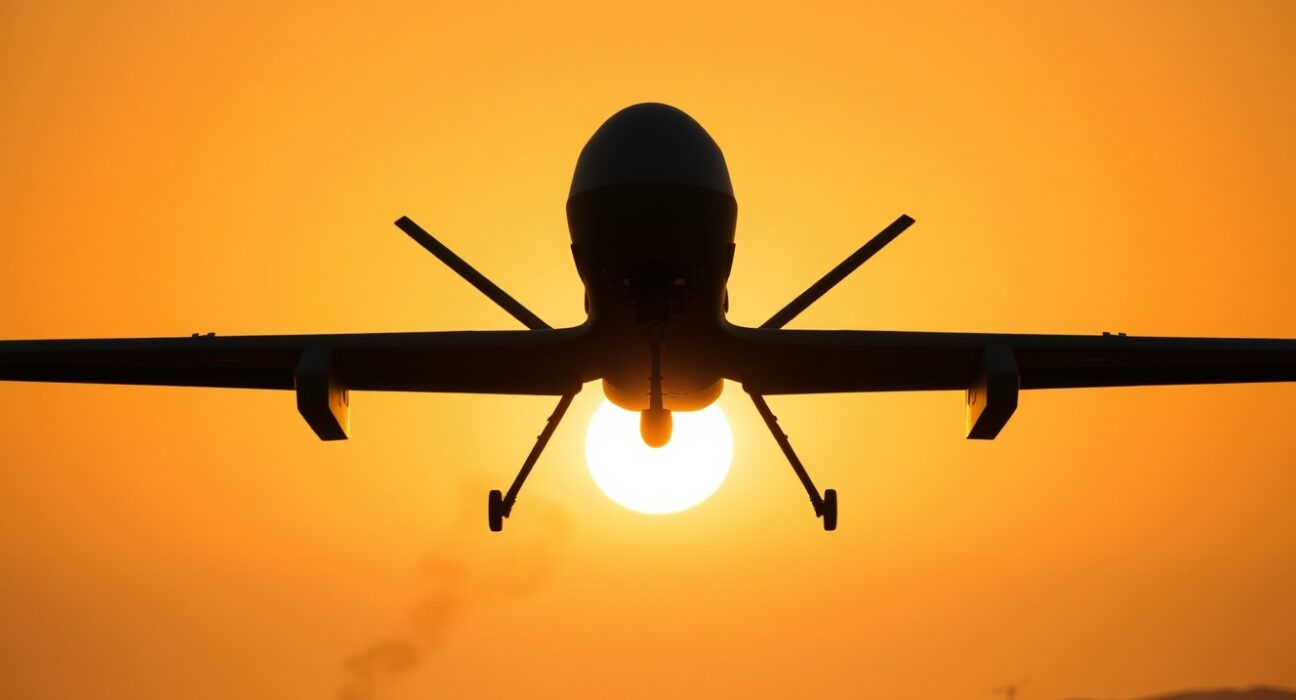
Iran’s Islamic Revolutionary Guard Corps (IRGC) announced on [insert date if known, otherwise use ‘recently’] that it successfully shot down an MQ-9 Reaper drone. The claim, if verified, marks a significant escalation in the ongoing shadow conflict between Iran and the United States in the Persian Gulf region. The MQ-9 is a high-altitude, long-endurance unmanned aerial vehicle (UAV) used primarily for surveillance and, in some configurations, armed strikes. The incident has raised immediate questions about air defense capabilities, operational protocols, and the potential for further military confrontation.
Background of the MQ-9 Reaper and Its Role in the Region
The MQ-9 Reaper, manufactured by General Atomics, is one of the most advanced drones in the U.S. military inventory. It can fly at altitudes above 50,000 feet and remain airborne for over 24 hours. In the Persian Gulf, the U.S. regularly operates MQ-9s for intelligence, surveillance, and reconnaissance (ISR) missions, monitoring shipping lanes, oil infrastructure, and military movements. The drone’s presence is a persistent feature of the security landscape, and any successful engagement against it represents a notable tactical achievement for the IRGC.
Iran has previously claimed to have shot down or jammed U.S. drones, including a RQ-4 Global Hawk in 2019. The IRGC’s air defense units have been steadily upgraded with domestically developed systems, some of which are believed to be based on reverse-engineered foreign technology. The specific method used in this latest incident — whether a surface-to-air missile, electronic warfare, or a combination — has not been disclosed, but it will be closely analyzed by military experts.
Official Statements and Initial Reactions
The IRGC’s official news agency released a brief statement claiming the drone was downed over Iranian airspace near the strategic Strait of Hormuz. The statement did not provide immediate physical evidence, such as wreckage or video footage. The U.S. Central Command (CENTCOM) has not yet confirmed the loss of any drone. In past incidents, the U.S. has either denied the claims or acknowledged mechanical failure rather than hostile action. The lack of immediate confirmation from Washington suggests that verification efforts are underway.
Regional analysts note that the timing of the claim coincides with heightened tensions over nuclear negotiations and maritime security. The Strait of Hormuz, through which about 20% of the world’s oil passes, remains a flashpoint. Any disruption to drone surveillance could reduce the U.S. military’s situational awareness in the area, potentially increasing the risk of miscalculation.
Implications for Regional Security and Military Strategy
If the IRGC’s claim is accurate, it would demonstrate that Iran has developed or deployed effective counter-UAV capabilities capable of engaging high-altitude drones. This could force the U.S. to adjust its ISR operations, possibly relying more on stealthier platforms or alternative intelligence sources. It may also embolden Iran to take more assertive actions in the Strait, knowing it has a credible deterrent against aerial surveillance.
For the broader region, the incident adds another layer of uncertainty. Gulf Cooperation Council (GCC) states, which host U.S. military bases, will be watching closely. Any escalation could affect shipping insurance rates, oil prices, and the security posture of neighboring countries. The incident also underscores the growing importance of drone warfare and counter-drone technology in modern conflicts.
Conclusion
The IRGC’s claim of shooting down an MQ-9 drone is a serious development that, if confirmed, represents a tangible shift in the military balance in the Persian Gulf. While details remain scarce, the incident highlights the persistent volatility of the region and the increasing role of unmanned systems in state-on-state confrontation. Readers should expect further statements from both sides in the coming days, and the story will likely be a key factor in upcoming diplomatic and military discussions. Independent verification of the claim is still pending, and caution is warranted until concrete evidence emerges.
FAQs
Q1: Has the U.S. confirmed the loss of an MQ-9 drone?
A1: As of the latest updates, the U.S. Central Command has not officially confirmed or denied the claim. Verification is ongoing, and past incidents have sometimes resulted in delayed acknowledgments or alternative explanations.
Q2: What is the significance of the Strait of Hormuz in this incident?
A2: The Strait of Hormuz is a critical maritime chokepoint for global oil shipments. The IRGC claimed the drone was downed near this area, which is heavily monitored by both Iranian and U.S. forces. Any incident there has immediate implications for energy security and military tensions.
Q3: Could this incident lead to a broader military conflict?
A3: While the risk of escalation exists, both sides have historically shown restraint after similar incidents. The U.S. has avoided direct military retaliation for previous drone losses, preferring diplomatic or covert responses. However, each incident raises the stakes and reduces the margin for error.
Disclaimer: The information provided is not trading advice, Bitcoinworld.co.in holds no liability for any investments made based on the information provided on this page. We strongly recommend independent research and/or consultation with a qualified professional before making any investment decisions.
