

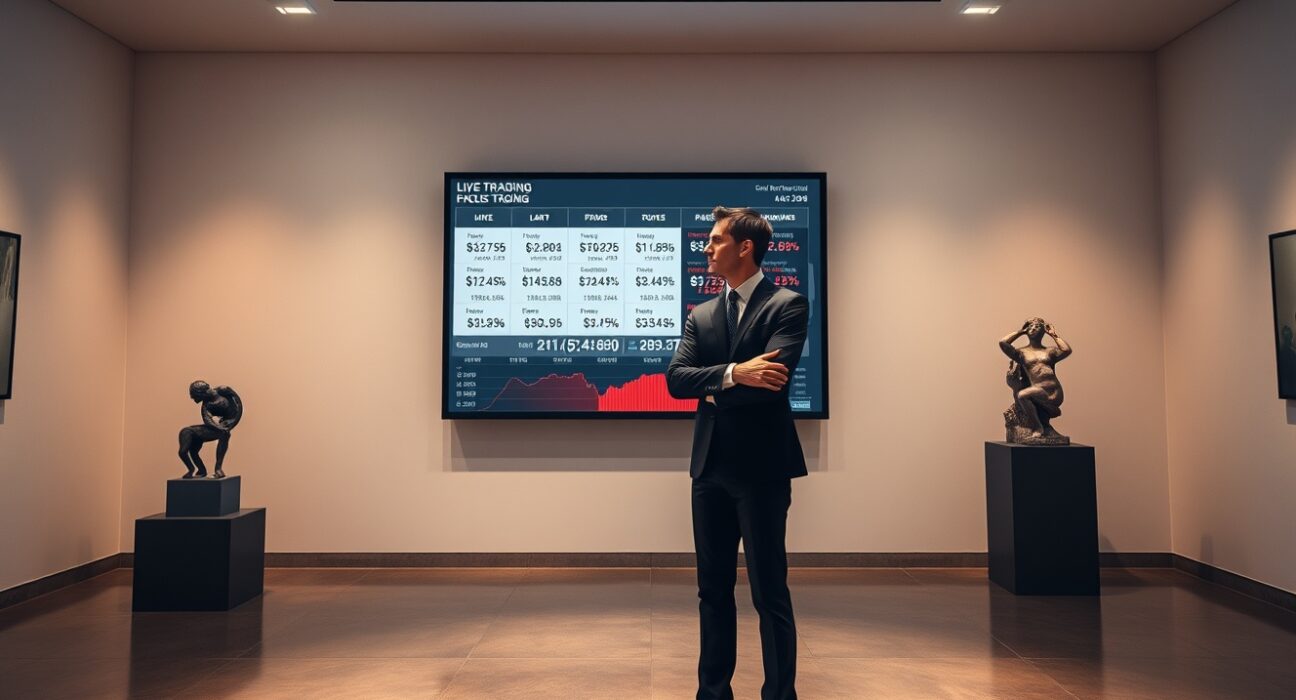
Kalshi, the regulated prediction market platform, has announced the launch of a new market that allows users to trade on the future prices of specific artworks. The move marks a significant expansion of prediction markets into the traditionally opaque and illiquid fine art sector, enabling retail traders to speculate on the value of pieces by high-profile digital and traditional artists.
How the Art Prediction Market Works
Kalshi’s new contracts allow traders to buy and sell shares based on whether the price of a particular artwork will rise or fall over a set period. The platform, which is regulated by the Commodity Futures Trading Commission (CFTC), uses public auction results and verified sales data to settle contracts. Early listings include works by digital artists Beeple and Pak, whose NFT-based art has seen volatile pricing in recent years.
Each contract represents a binary outcome — up or down — and trades in real-time based on market sentiment. This structure mirrors Kalshi’s existing markets for events like Federal Reserve interest rate decisions and weather patterns, but applies it to an asset class that has historically been difficult to value objectively.
Implications for the Art Market
The introduction of prediction markets for art prices could bring greater transparency to a sector known for private sales and subjective valuations. By aggregating crowd-sourced predictions, Kalshi aims to create a continuous, data-driven price discovery mechanism for artworks that are rarely traded on public exchanges.
However, the move also raises questions about market manipulation and the suitability of speculative trading for culturally significant assets. Art market analysts have noted that small trading volumes in these contracts could make them susceptible to price swings driven by a few large traders, rather than genuine shifts in collector demand.
Regulatory and Market Context
Kalshi’s CFTC registration provides a layer of oversight that distinguishes it from unregulated crypto-based prediction platforms. The company has previously launched markets for economic indicators, climate events, and political outcomes, all of which are settled using official government data. For art prices, Kalshi relies on publicly reported auction results from major houses like Christie’s and Sotheby’s, as well as verified on-chain sales data for NFT artworks.
The launch comes amid growing interest in alternative assets and tokenization. While traditional art investment funds have existed for decades, they typically require high minimum investments and lock-up periods. Kalshi’s market offers lower barriers to entry, with contracts priced at fractions of the underlying artwork’s value.
Conclusion
Kalshi’s art price prediction market represents a novel intersection of regulated finance and the art world. While it offers potential benefits in terms of liquidity and price transparency, the market’s long-term viability will depend on sufficient trading volume and the accuracy of its settlement mechanisms. For now, it provides a new way for traders to engage with art valuation, even if they never set foot in a gallery.
FAQs
Q1: Is Kalshi’s art prediction market legal?
Yes. Kalshi is registered with the Commodity Futures Trading Commission (CFTC) and operates under U.S. derivatives regulations. The art price contracts are classified as event contracts, similar to those for economic indicators.
Q2: How are the art prices determined for settlement?
Kalshi uses publicly available auction results from major auction houses and verified blockchain sales data for NFT artworks. Contracts are settled based on the realized sale price of the specific artwork referenced in the contract.
Q3: Can anyone trade on Kalshi’s art market?
Yes, but only in jurisdictions where Kalshi is licensed. Users must create an account and pass KYC (Know Your Customer) verification. The platform is available to retail traders in most U.S. states, though some restrictions apply.
Disclaimer: The information provided is not trading advice, Bitcoinworld.co.in holds no liability for any investments made based on the information provided on this page. We strongly recommend independent research and/or consultation with a qualified professional before making any investment decisions.
