

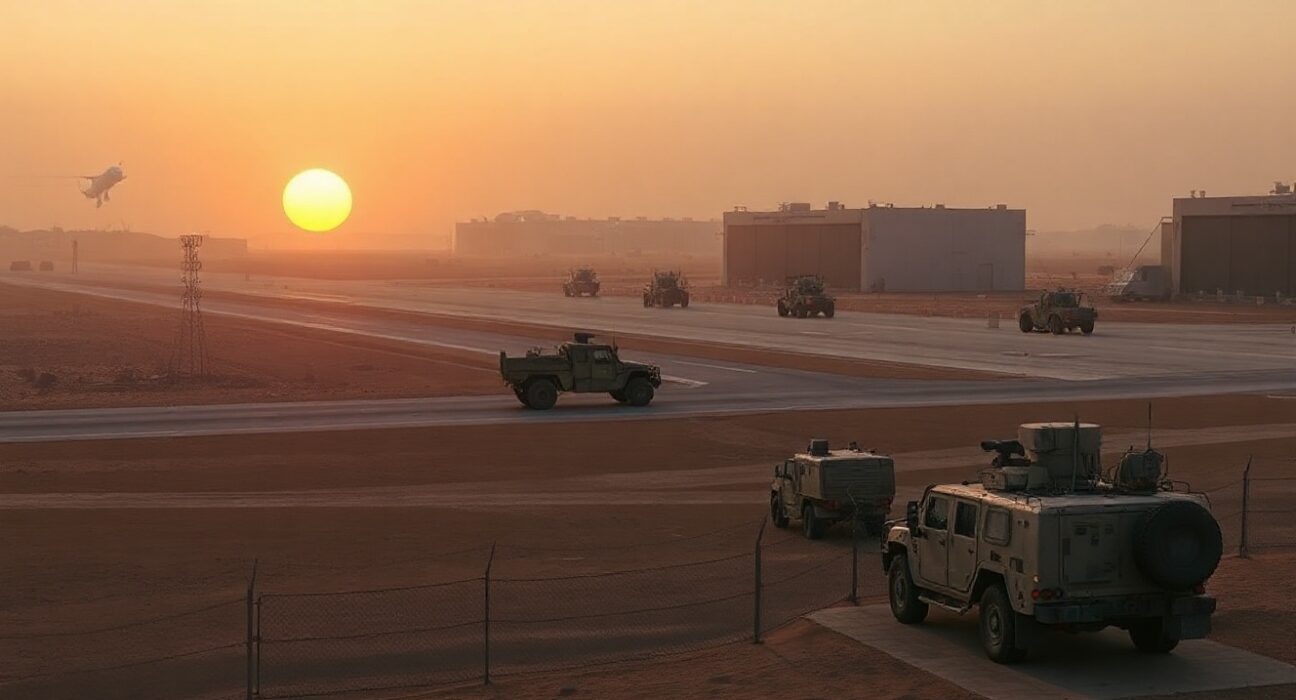
Iran’s Islamic Revolutionary Guard Corps (IRGC) announced on May 28 that it had conducted a strike on a U.S. airbase, describing the action as a direct response to an American airstrike that occurred earlier the same day on the outskirts of Bandar Abbas, a key port city in southern Iran. The announcement, reported by the state-affiliated Xinhua News Agency, marks a significant escalation in the ongoing military tensions between the two nations.
Timeline of Events and Official Statements
According to the IRGC’s statement, the U.S. airstrike targeted an area near the Abbas Port airport. In retaliation, the IRGC stated it launched an attack on a U.S. airbase. The corps explicitly warned that it would deliver a “more decisive response” to any further American aggression, adding that “Washington must take responsibility for the consequences.” The precise location of the U.S. airbase struck by the IRGC has not been independently verified, and details regarding casualties or material damage remain unconfirmed at this time. The U.S. Department of Defense has not yet issued an official response to the IRGC’s claims.
Regional Context and Broader Implications
This incident occurs against a backdrop of heightened friction between Iran and the United States, particularly regarding military activities in the Persian Gulf and the Strait of Hormuz, a critical waterway for global oil shipments. Bandar Abbas is home to a major Iranian naval base and serves as a logistical hub for the IRGC. Any military engagement near this strategic location carries the risk of disrupting commercial shipping and escalating into a broader regional conflict. The IRGC’s warning of a “more decisive response” signals a willingness to expand the scope of its retaliatory actions, which could draw in other regional actors and further destabilize an already volatile security environment.
Why This Story Matters
For readers, this development underscores the fragile state of U.S.-Iran relations and the potential for miscalculation leading to a wider military confrontation. The involvement of the IRGC, a designated foreign terrorist organization by the U.S., and the proximity of the strikes to a major commercial port, elevate the stakes significantly. This event is not merely a bilateral exchange but a flashpoint that could impact global energy markets, regional security alliances, and the safety of civilian and military personnel in the area. The lack of independent verification and the conflicting narratives from both sides highlight the importance of cautious, fact-based reporting as the situation evolves.
Conclusion
The IRGC’s claim of a retaliatory strike on a U.S. airbase represents a serious and potentially escalatory development in the ongoing tensions between Iran and the United States. While details remain unconfirmed and official responses are pending, the incident near Bandar Abbas carries significant implications for regional stability and international security. Continued monitoring and verification of claims from all parties are essential to understanding the full scope and consequences of this event.
FAQs
Q1: Did the IRGC confirm the location of the U.S. airbase it struck?
A1: No. The IRGC’s statement did not specify the exact location of the U.S. airbase it claims to have attacked. This information has not been independently verified by third-party sources.
Q2: What was the reported target of the initial U.S. airstrike?
A2: According to the IRGC, the U.S. airstrike targeted an area on the outskirts of Bandar Abbas, near the Abbas Port airport. The specific objective of that strike has not been disclosed by U.S. officials.
Q3: What are the potential global consequences of this military exchange?
A3: The proximity of the incident to the Strait of Hormuz, a vital chokepoint for global oil transit, raises the risk of disruptions to energy supplies. Furthermore, the escalation could draw in other regional powers and increase the likelihood of broader military engagement, impacting international security and diplomatic efforts.
Disclaimer: The information provided is not trading advice, Bitcoinworld.co.in holds no liability for any investments made based on the information provided on this page. We strongly recommend independent research and/or consultation with a qualified professional before making any investment decisions.
