

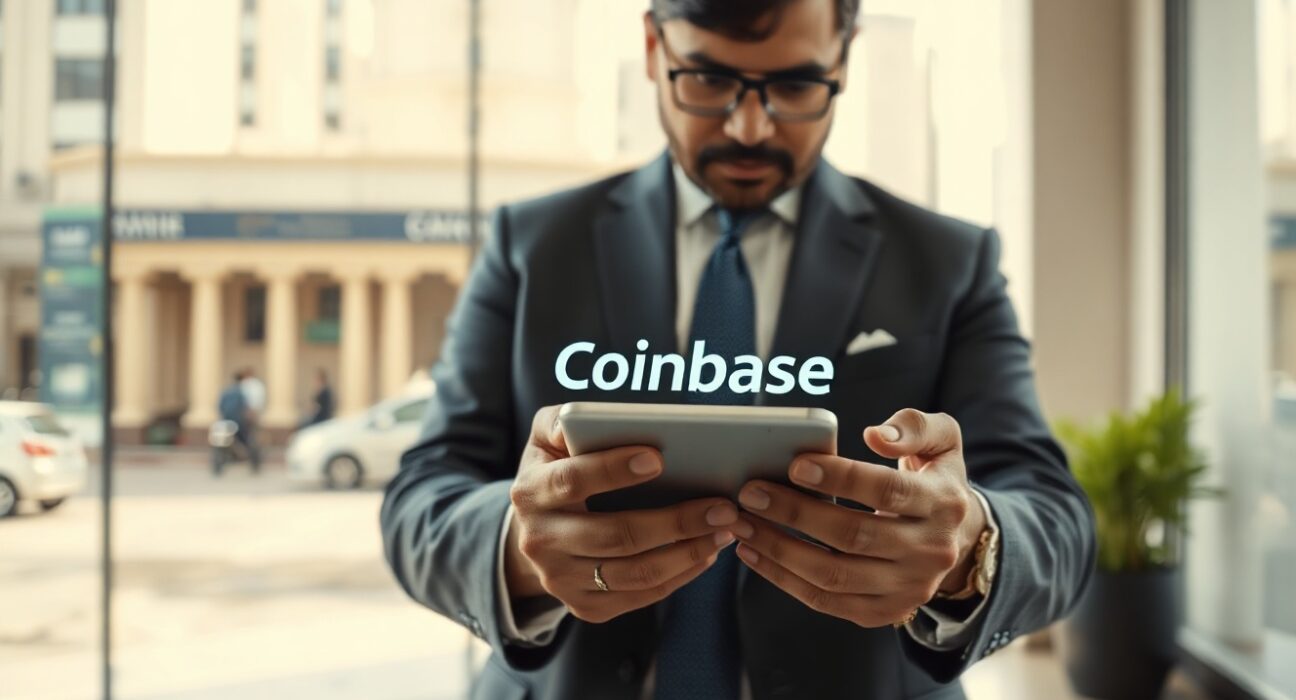
Coinbase has officially enabled direct Indian Rupee (INR) deposits and withdrawals for users in India, marking a significant step in its strategy to expand within one of the world’s fastest-growing cryptocurrency markets. According to a report by CoinDesk, the feature went live on June 1, allowing Indian customers to transfer funds seamlessly between their bank accounts and Coinbase wallets using the Immediate Payment Service (IMPS).
A Streamlined On-Ramp for Indian Investors
Previously, Indian users faced friction when funding their Coinbase accounts. Many relied on peer-to-peer (P2P) transactions or third-party intermediaries, which introduced complexity, delays, and potential security risks. The integration of IMPS—a real-time interbank payment system widely used across India—eliminates these hurdles. Now, users can transfer funds directly, making the process faster and more transparent.
This development aligns with Coinbase’s broader push into international markets. India represents a critical opportunity: the country’s cryptocurrency market is estimated to be worth approximately $3.04 billion as of 2025, with projections suggesting it could grow to $14.2 billion by 2034, according to industry data cited in the report.
Regulatory Context and Market Implications
India’s relationship with cryptocurrency has been complex. While the Supreme Court overturned a banking ban on crypto transactions in 2020, regulatory uncertainty persists. The government has imposed a 30% tax on crypto income and a 1% tax deducted at source (TDS) on transactions, measures that have dampened trading volumes on domestic exchanges.
Coinbase’s move signals confidence in the market’s long-term potential despite these challenges. By offering direct INR rails, the exchange positions itself to capture a share of the growing retail and institutional interest in digital assets. It also places Coinbase in more direct competition with local exchanges like WazirX and CoinDCX, which already offer similar fiat on-ramps.
What This Means for Indian Crypto Users
For the average Indian investor, the ability to deposit and withdraw INR directly through Coinbase simplifies the user experience. It reduces reliance on informal channels and brings a layer of institutional reliability to the process. This could encourage more cautious investors to enter the market, knowing they are using a regulated, publicly traded platform.
However, users should remain aware of applicable tax obligations. The 30% tax on gains and the 1% TDS on transactions over a certain threshold still apply, regardless of the exchange used.
Conclusion
Coinbase’s launch of direct INR deposits and withdrawals is a practical improvement for Indian crypto traders and a strategic bet on the country’s market growth. By removing a key friction point, the exchange is lowering the barrier to entry for millions of potential users. As India’s regulatory framework continues to evolve, moves like this could help shape the future of digital asset adoption in the region.
FAQs
Q1: How do I deposit Indian Rupees into my Coinbase account?
You can now transfer INR directly from your Indian bank account to your Coinbase account using the Immediate Payment Service (IMPS), a real-time interbank payment system. Simply select the INR deposit option in your Coinbase account and follow the instructions.
Q2: Are there any fees for INR deposits or withdrawals on Coinbase?
Coinbase typically does not charge fees for IMPS deposits, but users should check the latest fee schedule on the platform, as policies can change. Bank charges from the sending institution may also apply.
Q3: Does this mean cryptocurrency is fully legal in India?
Cryptocurrency trading is not illegal in India, but it operates in a gray regulatory area. The government imposes a 30% tax on crypto gains and a 1% TDS on transactions. There is no comprehensive regulatory framework yet, but the market continues to operate.
Disclaimer: The information provided is not trading advice, Bitcoinworld.co.in holds no liability for any investments made based on the information provided on this page. We strongly recommend independent research and/or consultation with a qualified professional before making any investment decisions.
