

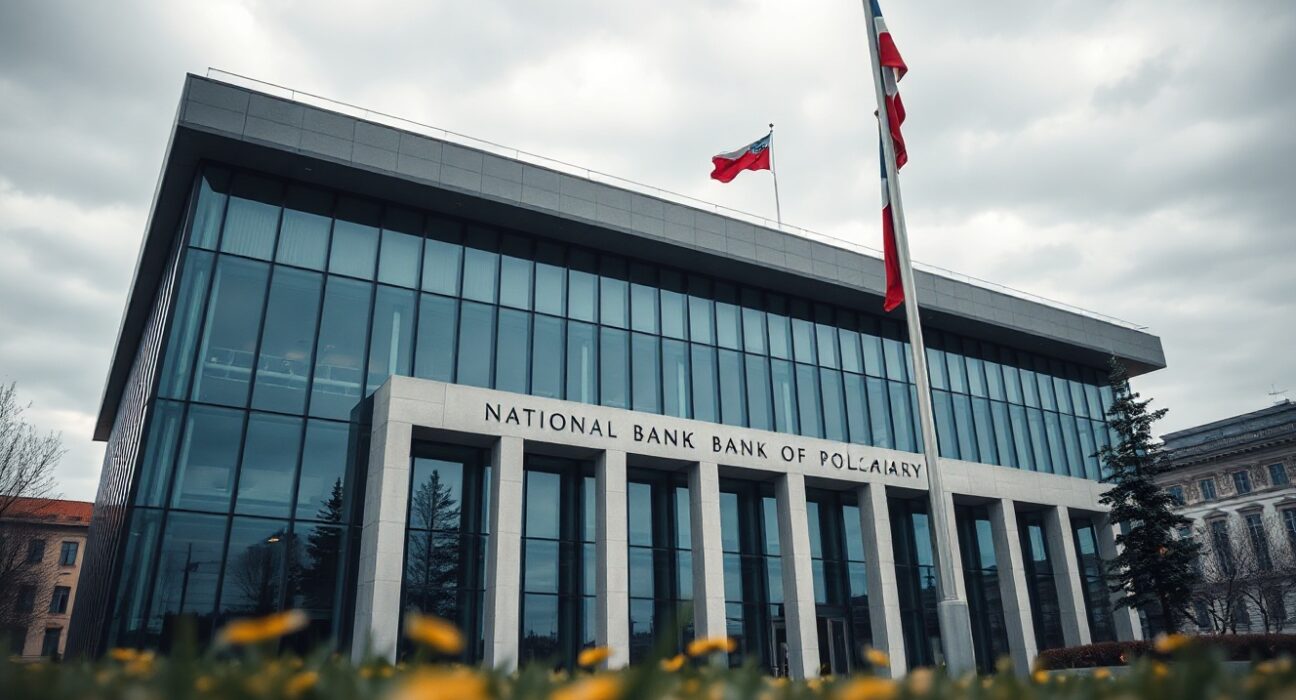
The Polish zloty is expected to remain range-bound as the National Bank of Poland (NBP) maintains its cautious monetary policy stance, according to a recent analysis by Commerzbank. The bank notes that inflation in Poland is sending mixed signals, which reduces the likelihood of an imminent rate cut or hike.
NBP’s Extended Hold: What’s Driving the Decision?
Commerzbank strategists highlight that while headline inflation has moderated from its 2023 peaks, core inflation remains sticky. The NBP has kept its main reference rate at 5.75% since October 2023, and the current economic data does not provide a clear enough direction for policymakers to shift gears. The bank expects the NBP to remain on hold through at least the first half of 2025.
Key factors supporting the hold include persistent wage growth, a tight labor market, and uncertainty around energy price caps. On the other hand, weaker industrial production and subdued consumer demand in some sectors are preventing a more hawkish stance.
Impact on the Polish Zloty
For the zloty, the extended hold implies a period of relative stability against the euro and the US dollar, according to Commerzbank. The currency is unlikely to see sharp appreciation or depreciation unless there is a clear change in the interest rate outlook. The zloty has been trading in a narrow band, and Commerzbank sees this continuing in the near term.
However, the analysts caution that any unexpected inflation data, especially a renewed uptick, could force the NBP to consider rate hikes, which would likely strengthen the zloty. Conversely, a sharper-than-expected economic slowdown could revive rate cut expectations and pressure the currency lower.
What This Means for Investors and Businesses
For investors with exposure to Polish assets, the current environment suggests a wait-and-see approach. The carry trade on the zloty remains moderately attractive given the still-positive real interest rates, but the lack of a clear catalyst limits upside potential. Polish bond yields are likely to stay elevated as long as the NBP holds firm.
Businesses operating in Poland should factor in continued borrowing costs at current levels. The stable but uncertain outlook makes it prudent to hedge currency exposure, especially for companies with significant euro or dollar revenues or costs.
Conclusion
Commerzbank’s assessment reinforces the view that the NBP is in no rush to adjust policy. With inflation neither clearly accelerating nor decisively under control, the central bank’s extended hold appears justified. For the zloty, this translates into a period of low volatility, with direction dependent on future inflation and growth data. Market participants should watch Polish CPI releases and NBP governor statements closely for any shift in tone.
FAQs
Q1: Why is the NBP keeping interest rates unchanged?
The NBP is holding rates due to mixed inflation signals. While headline inflation has fallen, core inflation and wage growth remain high, creating uncertainty about the right policy direction.
Q2: How does the NBP’s decision affect the Polish zloty?
The extended hold keeps the zloty relatively stable. Without a clear rate change expectation, the currency trades in a narrow range against major peers like the euro and dollar.
Q3: When might the NBP cut or raise rates?
A rate cut would require a sustained drop in core inflation and weaker economic growth. A rate hike would likely follow if inflation reaccelerates, especially due to energy or food prices. Commerzbank sees no change before mid-2025.
Disclaimer: The information provided is not trading advice, Bitcoinworld.co.in holds no liability for any investments made based on the information provided on this page. We strongly recommend independent research and/or consultation with a qualified professional before making any investment decisions.
