

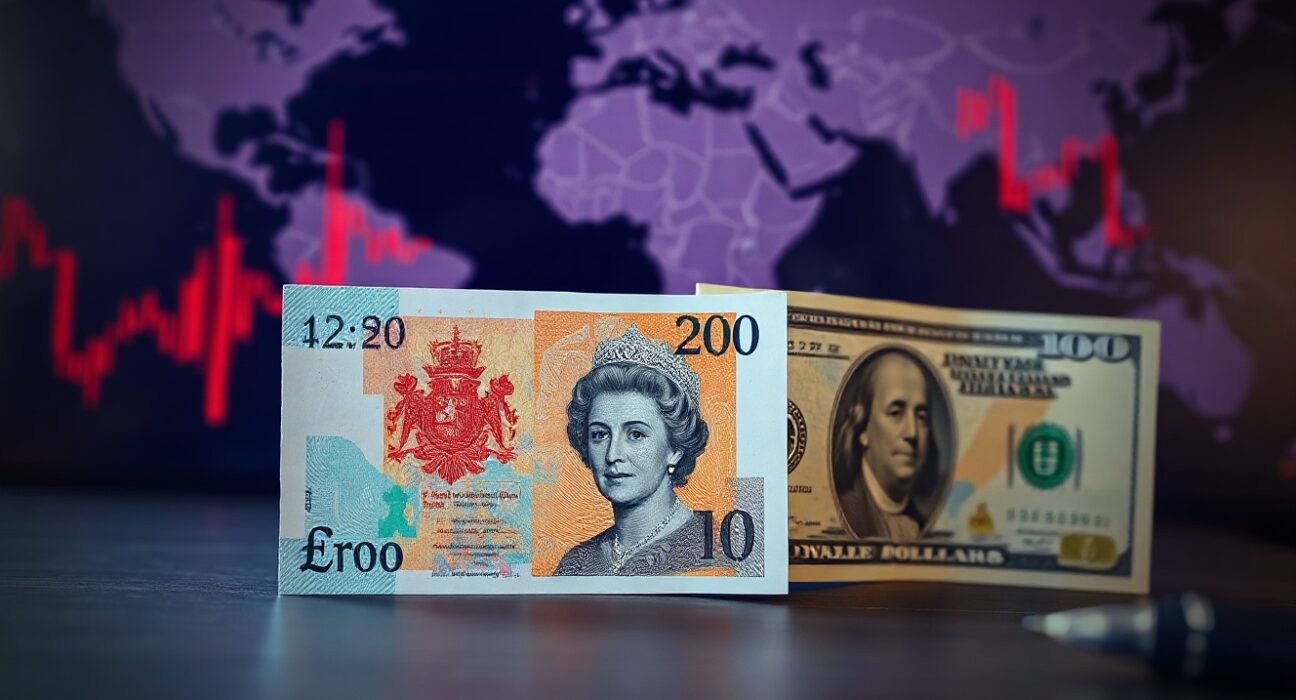
The British pound edged higher against the US dollar on Wednesday, as ongoing geopolitical uncertainty in the Gulf region weighed on the greenback. Sterling rose to $1.2685 in early London trading, up from $1.2650 at the previous close, as traders assessed the implications of heightened tensions in the Middle East.
Dollar under pressure from Gulf tensions
The US dollar index slipped 0.2% as safe-haven flows into the dollar were tempered by concerns over supply disruptions and broader regional instability. Recent developments in the Gulf, including heightened military posturing and diplomatic standoffs, have prompted investors to reassess risk exposure. While the dollar typically benefits from geopolitical turmoil, the nature of this uncertainty—centered on energy and trade routes—has created a more nuanced market reaction, with some capital shifting toward the pound and other currencies.
Sterling supported by domestic data
The pound also found support from relatively resilient UK economic data. The latest services PMI reading came in slightly above expectations, while inflation figures remained sticky, reinforcing expectations that the Bank of England will maintain a cautious approach to rate cuts. This contrasts with the Federal Reserve, where softer US jobs data has fueled speculation of a more dovish pivot later this year. The interest rate differential has provided a modest tailwind for GBP/USD.
What this means for traders and businesses
For currency traders and businesses with exposure to GBP/USD, the current environment demands careful monitoring of both geopolitical headlines and central bank signals. The pound’s gains remain fragile; any de-escalation in Gulf tensions could quickly reverse the dollar’s weakness, while a further deterioration could trigger renewed risk aversion. Importers and exporters should consider hedging strategies given the elevated volatility.
Conclusion
The pound’s modest advance against the dollar reflects a delicate balance between geopolitical risk and economic fundamentals. While Gulf uncertainty has temporarily weakened the greenback, the broader trend for sterling will depend on upcoming UK GDP data, Bank of England guidance, and the trajectory of US interest rates. Traders should remain alert to fast-moving developments in the Middle East, which could shift currency markets abruptly.
FAQs
Q1: Why did the pound rise against the dollar today?
The pound edged higher primarily because the US dollar weakened amid ongoing geopolitical uncertainty in the Gulf region, which prompted a reassessment of safe-haven flows.
Q2: Is this a sustainable trend for GBP/USD?
Not necessarily. The pound’s gains are fragile and depend on the evolution of Gulf tensions. Strong UK economic data could provide support, but any de-escalation could reverse the move.
Q3: How does Gulf uncertainty affect currency markets?
Geopolitical uncertainty in the Gulf can disrupt energy supplies, impact trade routes, and shift investor risk appetite. This often leads to volatility in major currency pairs, including GBP/USD.
Disclaimer: The information provided is not trading advice, Bitcoinworld.co.in holds no liability for any investments made based on the information provided on this page. We strongly recommend independent research and/or consultation with a qualified professional before making any investment decisions.
