

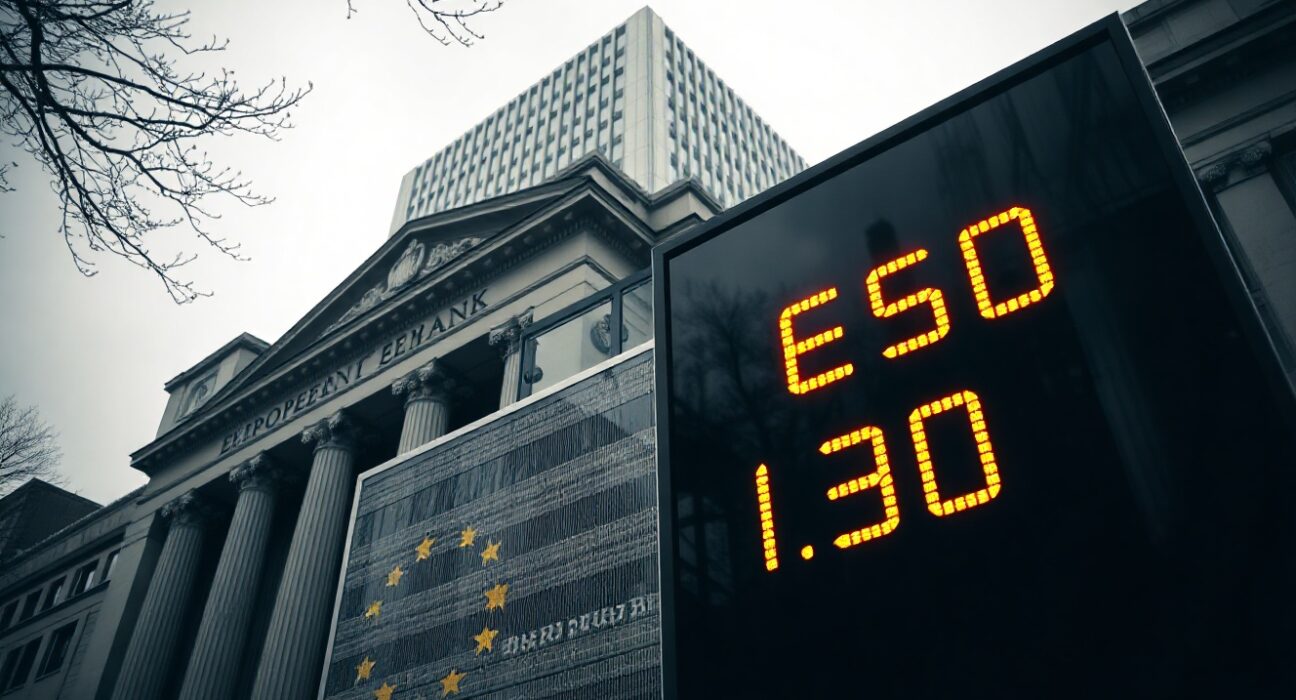
The euro edged higher against the dollar on Wednesday, as currency markets grappled with a mix of contradictory headlines surrounding US-Iran diplomatic tensions and a fresh batch of Eurozone inflation data that came in stronger than economists had anticipated. The single currency rose roughly 0.3% to trade near $1.0850 during European afternoon hours, reflecting cautious optimism among traders.
Conflicting Signals from the Middle East
Market participants were confronted with a flurry of conflicting reports regarding the status of indirect talks between the United States and Iran. While some sources suggested progress on a temporary nuclear deal, others indicated that negotiations had stalled over key enrichment demands. This uncertainty weighed on risk appetite globally, but the euro found support from the perception that a diplomatic breakthrough could ease geopolitical risk premiums embedded in energy prices.
Brent crude oil, which had rallied earlier in the week on supply disruption fears, pared gains as the headlines emerged. A lower oil price environment is generally favorable for the eurozone, a net energy importer, as it reduces import costs and supports the region’s terms of trade.
Eurozone Inflation Beats Expectations
Adding to the euro’s momentum was data from Eurostat showing that the annual inflation rate in the euro area rose to 2.6% in May, up from 2.4% in April and above the consensus forecast of 2.5%. Core inflation, which excludes volatile energy and food prices, also edged higher to 2.9%.
The figures complicate the European Central Bank’s policy path. While the ECB has signaled a potential rate cut in June, the stickiness of services inflation and the stronger headline print may give hawks on the Governing Council grounds to argue for a more cautious approach. Money markets currently price in a 25-basis-point cut next week, but the probability of a follow-up move in July has declined slightly following the data release.
What This Means for Traders
For forex traders, the combination of geopolitical crosscurrents and divergent inflation dynamics creates a challenging environment. The EUR/USD pair has been range-bound between $1.0700 and $1.0900 for several weeks, and Wednesday’s price action suggests that the upper end of that range may be tested again if US data continues to soften. The next major catalyst will be Friday’s US nonfarm payrolls report, which could determine whether the dollar regains its footing or the euro extends its gains.
Analysts at ING noted that the euro’s resilience is partly a function of the dollar losing its safe-haven premium as US-Iran headlines shift. They added that the inflation data, while supportive for the euro in the short term, may not be enough to prevent an ECB rate cut if growth indicators continue to weaken.
Conclusion
The euro’s modest advance reflects a market that is cautiously optimistic about both geopolitical de-escalation and the ECB’s ability to manage inflation without derailing growth. However, the conflicting nature of the US-Iran headlines and the uneven inflation picture mean that volatility is likely to persist. Traders should remain attentive to both diplomatic developments and central bank commentary in the days ahead.
FAQs
Q1: Why did the euro strengthen despite conflicting US-Iran headlines?
The euro gained because traders interpreted the headlines as potentially reducing geopolitical risk, which lowered oil prices and improved the outlook for the eurozone economy. Stronger-than-expected inflation data also supported the currency.
Q2: How does Eurozone inflation affect ECB policy?
Higher inflation gives the ECB less room to cut rates aggressively. While a June rate cut is still expected, stronger data may reduce the likelihood of a rapid sequence of cuts later in the year.
Q3: What is the next key event for EUR/USD?
The US nonfarm payrolls report, due on Friday, is the next major data point. A weak jobs number could push the euro above $1.0900, while a strong report could send it back toward $1.0700.
Disclaimer: The information provided is not trading advice, Bitcoinworld.co.in holds no liability for any investments made based on the information provided on this page. We strongly recommend independent research and/or consultation with a qualified professional before making any investment decisions.
