

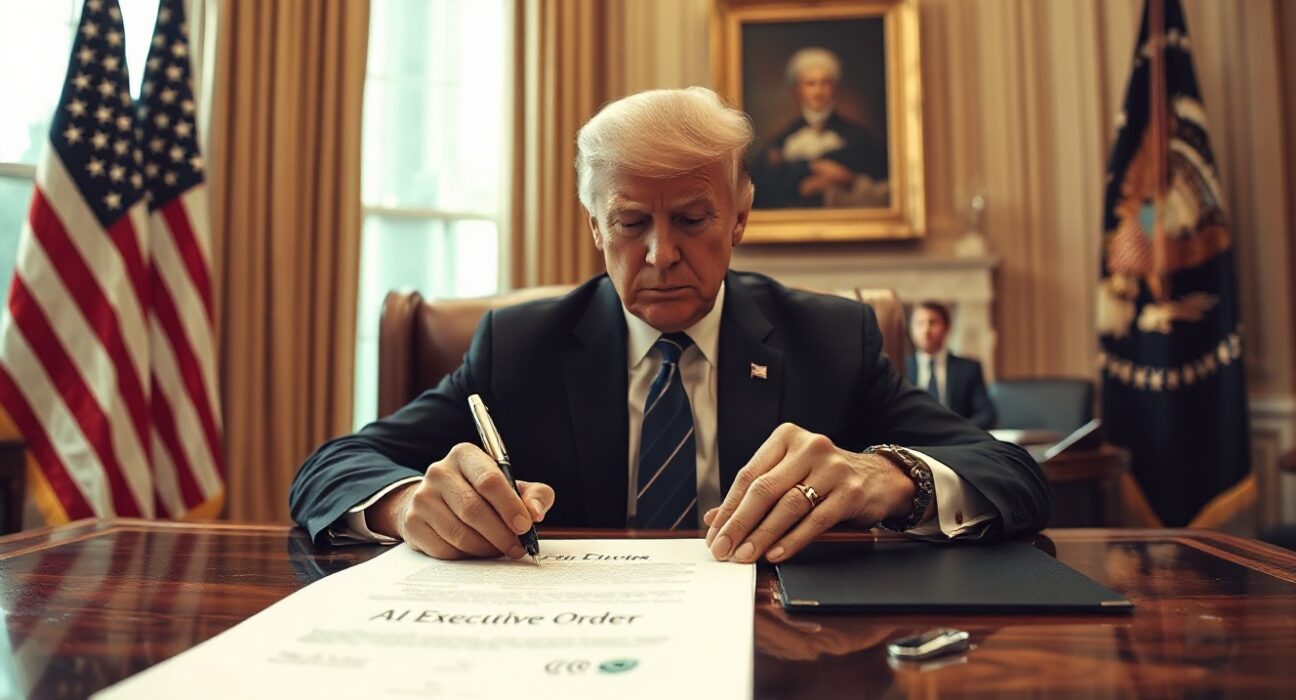
President Donald Trump has signed a new executive order that grants the U.S. government early access to powerful artificial intelligence models, marking a significant shift in federal AI policy. The order, signed at the White House on [date], requires developers of advanced AI systems to provide the government with pre-release access for safety testing and national security evaluation.
What the Executive Order Entails
The executive order directs federal agencies, including the National Institute of Standards and Technology (NIST) and the Department of Defense, to establish a framework for receiving early access to AI models before they are publicly released. Companies developing frontier AI systems—defined as models exceeding certain computational thresholds—must notify the government and provide access for testing. The goal, according to the White House, is to ensure that AI development aligns with national security interests and public safety standards.
Background and Context
This order builds on previous federal efforts to regulate AI, including the Biden administration’s 2023 executive order on AI safety and security. However, the Trump administration’s approach emphasizes direct government involvement in the development pipeline, rather than relying solely on voluntary industry commitments. The move comes amid growing concerns about AI risks, including potential misuse in cyberattacks, disinformation, and autonomous systems. Major AI companies, including OpenAI, Google DeepMind, and Anthropic, have already been engaged in voluntary safety agreements with the government, but this order formalizes and expands those arrangements.
Industry and Market Implications
The executive order is likely to have significant implications for the AI industry. Companies developing advanced models will need to allocate resources for government compliance, potentially slowing release timelines. Investors in AI startups may face increased regulatory uncertainty. However, the order could also accelerate federal adoption of AI technologies for defense and intelligence purposes, creating new opportunities for contractors. Market analysts are closely watching how this policy will affect the competitive landscape, particularly between U.S. firms and international rivals like China.
Why This Matters for Readers
For the general public, this executive order represents a major step in how the U.S. government oversees emerging technology. It could influence the safety and reliability of AI products that millions of Americans use daily, from chatbots to autonomous vehicles. The order also raises questions about privacy and government overreach, as early access may involve sharing proprietary data. Citizens concerned about AI ethics and civil liberties should monitor how these provisions are implemented.
Conclusion
President Trump’s executive order on early AI model access marks a pivotal moment in U.S. technology policy. By requiring pre-release government review, the administration aims to balance innovation with security. The long-term effects on the AI industry, national security, and consumer protection will depend on how the order is enforced and whether it withstands legal or legislative challenges. As AI continues to evolve, this policy sets a precedent for government-industry collaboration.
FAQs
Q1: What does ‘early access’ to AI models mean under this executive order?
It means that developers of advanced AI systems must provide the U.S. government with access to their models before public release, allowing federal agencies to test for safety, security, and compliance with national security guidelines.
Q2: Which companies are affected by this order?
The order targets companies developing ‘frontier AI models,’ typically those with high computational power and broad capabilities, such as OpenAI, Google DeepMind, Anthropic, and Meta. Smaller firms may be exempt depending on thresholds.
Q3: How does this order differ from previous AI regulations?
Previous regulations, like the 2023 executive order, focused on voluntary safety commitments and reporting. This order mandates pre-release access, giving the government a more direct role in the development cycle, which is a more assertive regulatory approach.
Disclaimer: The information provided is not trading advice, Bitcoinworld.co.in holds no liability for any investments made based on the information provided on this page. We strongly recommend independent research and/or consultation with a qualified professional before making any investment decisions.
