

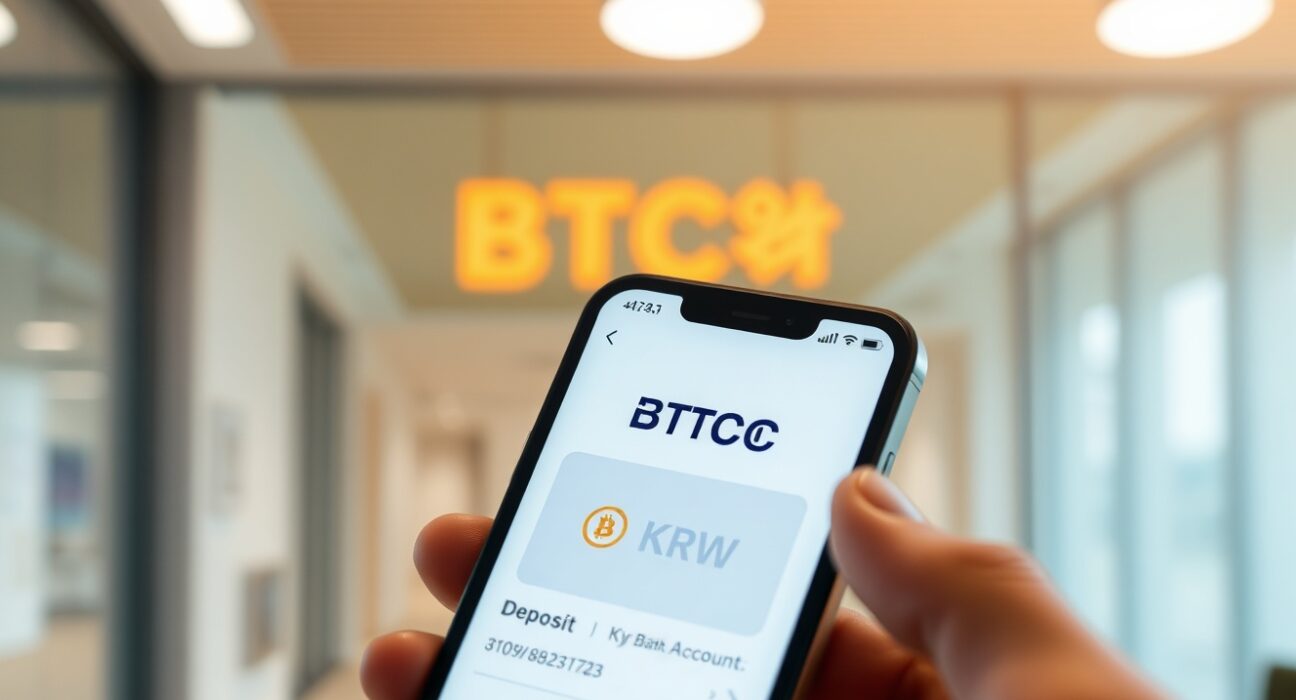
Unregistered cryptocurrency exchange BTCC has resumed a service that allows South Korean users to deposit Korean won (KRW) into domestic bank accounts to purchase stablecoins, according to a report by the Seoul Economic Daily. The development raises fresh questions about regulatory oversight of offshore crypto platforms operating in South Korea’s tightly controlled digital asset market.
How the Deposit Service Works
The BTCC app’s deposit screen now lists personal accounts at three South Korean banks: IBK Industrial Bank, Jeonbuk Bank, and Toss Bank. When users transfer won to these accounts, their exchange wallets are credited with Tether (USDT), the world’s largest stablecoin by market capitalization. The service effectively creates a direct on-ramp from the Korean banking system to an unregistered offshore exchange.
This mechanism bypasses the requirement for crypto exchanges to register with South Korea’s Financial Intelligence Unit (FIU), a legal obligation under the Specific Financial Information Act. Registered exchanges must comply with anti-money laundering (AML) protocols, including real-name account verification and transaction reporting.
Regulatory Implications
South Korea maintains one of the strictest crypto regulatory frameworks globally. The FIU requires all virtual asset service providers (VASPs) to register and comply with AML obligations. Operating without registration exposes exchanges to potential criminal penalties, including fines and imprisonment for executives.
The resumption of BTCC’s deposit service comes amid heightened scrutiny of unregistered platforms. In recent months, South Korean authorities have warned investors about the risks of using offshore exchanges that lack local registration, including potential asset freezes and lack of consumer protection.
Why This Matters to Korean Investors
For South Korean crypto users, the availability of KRW deposit services on unregistered exchanges presents both convenience and risk. While these platforms may offer lower fees or access to assets not listed on domestic exchanges, users forfeit the legal protections afforded by registered platforms. In the event of a dispute, hacking incident, or exchange failure, investors may have limited recourse under Korean law.
The use of personal bank accounts for crypto deposits also raises concerns about money laundering and illicit fund flows. Financial authorities have previously flagged such arrangements as potential channels for illegal transactions.
BTCC’s Status and History
BTCC, originally founded in China as one of the world’s oldest Bitcoin exchanges, has undergone multiple rebrandings and ownership changes. It is not registered as a VASP in South Korea, and its current regulatory status in other jurisdictions remains mixed. The exchange has previously faced service interruptions and regulatory actions in various markets.
The company has not publicly commented on the resumption of KRW deposit services or its compliance with South Korean law. Requests for comment from the Seoul Economic Daily went unanswered.
Conclusion
The resumption of KRW deposit services by BTCC highlights the ongoing tension between South Korea’s strict crypto regulations and the global nature of digital asset markets. While the service offers a convenient on-ramp for Korean investors, it operates in a legal gray area that carries significant risks. Users should carefully consider the regulatory status of any exchange before depositing funds, particularly when using domestic banking channels.
FAQs
Q1: Is BTCC legally allowed to operate in South Korea?
No. BTCC is not registered with South Korea’s Financial Intelligence Unit as a virtual asset service provider, which is required to legally offer crypto services to Korean residents.
Q2: What are the risks of using BTCC’s KRW deposit service?
Risks include lack of consumer protection under Korean law, potential asset freezes, exposure to money laundering investigations, and limited legal recourse in case of disputes or exchange failure.
Q3: Can Korean authorities block these deposits?
Potentially. The Financial Intelligence Unit and the Bank of Korea have the authority to investigate and block suspicious transactions. Banks facilitating unregistered crypto deposits may also face regulatory penalties.
Disclaimer: The information provided is not trading advice, Bitcoinworld.co.in holds no liability for any investments made based on the information provided on this page. We strongly recommend independent research and/or consultation with a qualified professional before making any investment decisions.
