

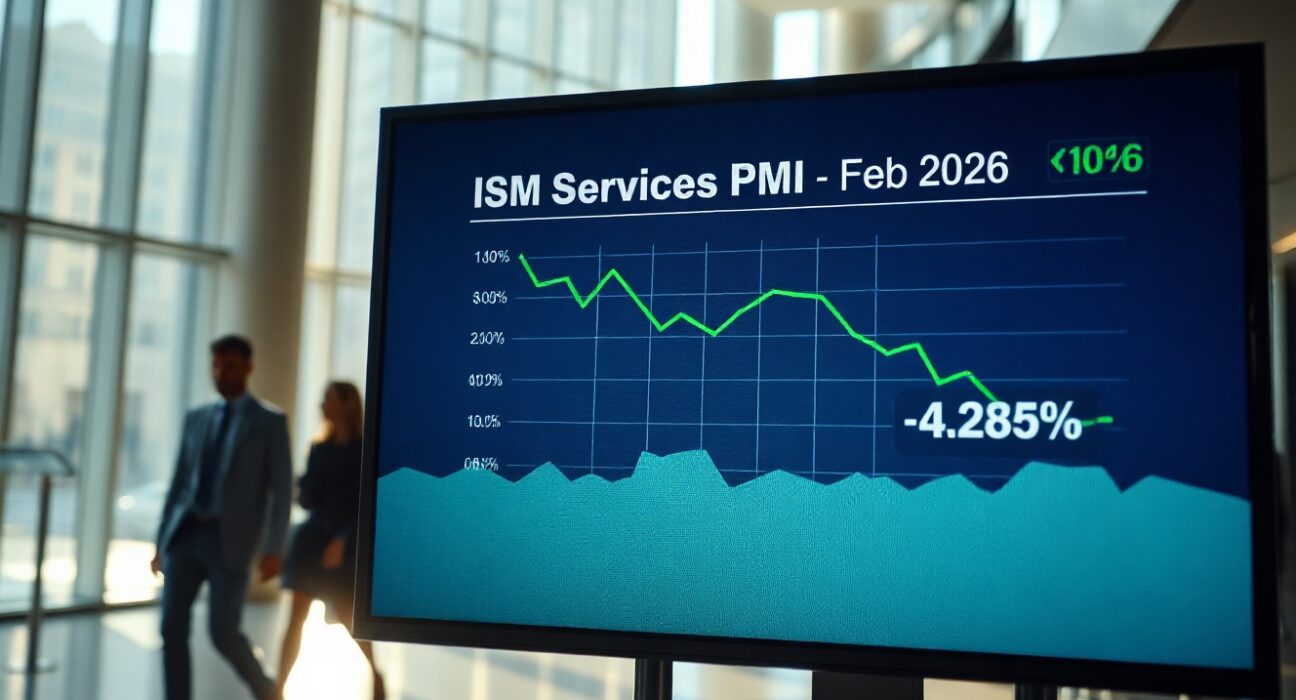
The Institute for Supply Management’s Services PMI for February 2026 is expected to indicate a continued but weakening expansion in the U.S. services sector, according to consensus forecasts from economists surveyed ahead of the report’s release. The data, set to be published on Wednesday, March 5, 2026, will provide a crucial reading on the health of the largest segment of the American economy.
What the Forecasts Are Saying
Economists polled by major financial data providers project the headline ISM Services PMI to come in at 52.8 for February, down from 54.1 in January. A reading above 50 indicates expansion, while below 50 signals contraction. The expected decline suggests that while the services sector is still growing, the pace has moderated significantly from the stronger levels seen in late 2025. Key sub-indices, including new orders, employment, and business activity, are all anticipated to show softer readings, reflecting a broader cooling in demand across industries such as hospitality, finance, and professional services.
Context Behind the Slowdown
The anticipated deceleration comes amid a complex economic backdrop. The Federal Reserve’s prolonged period of elevated interest rates, aimed at curbing inflation, has gradually dampened consumer spending and business investment. While inflation has eased from its 2022 peaks, it remains above the Fed’s 2% target, keeping borrowing costs high. Additionally, geopolitical uncertainties and ongoing trade policy adjustments have created headwinds for service-oriented businesses that rely on stable supply chains and cross-border demand. The services sector, which accounts for roughly 80% of U.S. economic output, is a key barometer for overall economic momentum.
Why This Matters for Markets and Consumers
A weakening services PMI could influence Federal Reserve policy expectations. If the data suggests a sharper-than-expected slowdown, it may reinforce arguments for rate cuts later in 2026, potentially boosting bond markets and easing pressure on equities. Conversely, if the reading remains resilient, it could signal that the economy is still running hot enough to keep the Fed cautious. For consumers, a softening services sector often translates into slower job growth in retail, hospitality, and healthcare, as well as more moderate price increases for services like dining, travel, and insurance. Investors will be watching the employment sub-index closely, as it provides an early read on labor market conditions beyond the monthly payrolls report.
Historical Context and Comparisons
The ISM Services PMI has remained in expansionary territory for over 40 consecutive months, with the last contraction recorded in December 2022. The projected February reading of 52.8 would be the lowest since January 2024, when the index stood at 52.5. Analysts caution that while a single month’s decline is not alarming, a sustained trend below 53 could signal a more pronounced economic deceleration. The data will be compared with the ISM Manufacturing PMI, released earlier this week, which showed the manufacturing sector remaining in contraction at 47.6, underscoring the divergence between the two sectors.
Conclusion
The ISM Services PMI for February 2026 is expected to confirm that the U.S. services sector is losing some steam, though it remains in growth territory. The report will offer fresh evidence for policymakers and investors assessing the trajectory of the economy. With inflation still above target and interest rates elevated, the services sector’s performance will be a critical factor in determining whether the Fed can engineer a soft landing or faces renewed recession risks. The actual data release on Wednesday will be closely scrutinized for signals on the pace and durability of economic expansion.
FAQs
Q1: What is the ISM Services PMI and why is it important?
The ISM Services PMI is a monthly survey-based index that measures the economic health of the U.S. services sector. It is considered a leading indicator of overall economic activity because services make up about 80% of the U.S. economy. Readings above 50 indicate expansion, while below 50 signal contraction.
Q2: What does a weakening expansion mean for the average consumer?
A weakening expansion in the services sector typically means slower job growth in industries like retail, hospitality, and healthcare. It may also lead to more moderate price increases for services, but could reduce consumer confidence and spending if the trend continues.
Q3: How might the Federal Reserve react to a lower ISM Services PMI?
A lower PMI could strengthen the case for the Fed to begin cutting interest rates later in 2026 to support economic growth. However, if inflation remains sticky, the Fed may prioritize price stability over growth, delaying any rate cuts. The Fed’s next policy meeting is scheduled for March 18-19, 2026.
Disclaimer: The information provided is not trading advice, Bitcoinworld.co.in holds no liability for any investments made based on the information provided on this page. We strongly recommend independent research and/or consultation with a qualified professional before making any investment decisions.
