

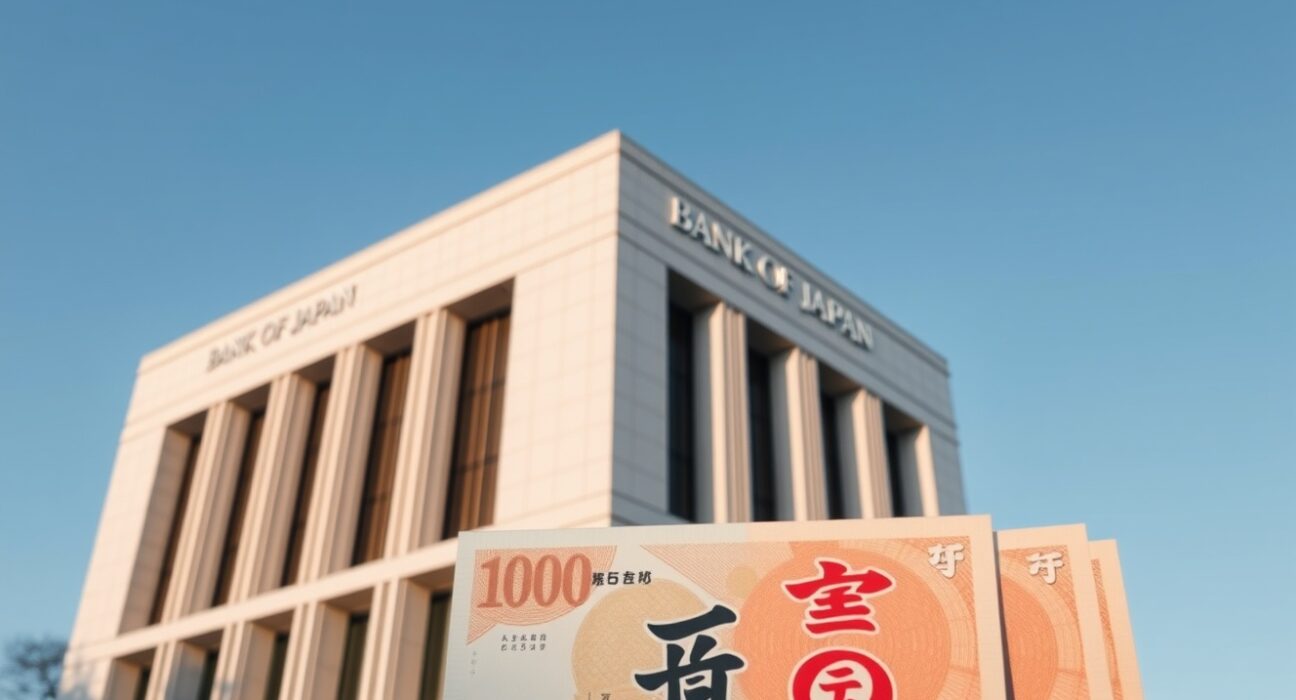
The Bank of Japan (BoJ) has sent its clearest signal yet that a long-awaited interest rate hike is on the horizon, a move that could finally provide sustained support for the beleaguered Japanese Yen. After years of ultra-loose monetary policy that has driven the currency to multi-decade lows against the US dollar, the central bank’s recent hawkish shift in language is being interpreted by analysts as a decisive pivot.
What the BoJ Said and Why It Matters
In its latest policy statement, the BoJ indicated it is moving away from its negative interest rate policy, citing more confidence in achieving its 2% inflation target on a sustainable basis. Governor Kazuo Ueda emphasized that the conditions for normalization are falling into place, a significant departure from the dovish stance maintained under his predecessor. This shift is not merely rhetorical; it reflects underlying economic data showing rising wages and core inflation consistently above the target.
For the Japanese Yen, which has lost significant value against the dollar since 2021, this policy change represents a potential turning point. A rate hike would narrow the interest rate differential between Japan and the US, making Yen-denominated assets more attractive to global investors. The immediate market reaction has been a sharp appreciation of the Yen, breaking key resistance levels against the greenback.
Timeline and Market Implications
Market participants now widely expect the BoJ to implement a rate hike as early as its next meeting, with some analysts predicting a move from -0.1% to 0.0% or even 0.1%. This would mark Japan’s first rate increase in 17 years. The implications extend beyond forex markets: higher Japanese bond yields could trigger a global repricing of fixed-income assets, particularly affecting US Treasuries, which have been heavily bought by Japanese institutional investors seeking yield.
The timing of this shift is critical. The Federal Reserve is also signaling potential rate cuts later this year, which would further compress the US-Japan rate differential. If both central banks move in opposite directions—the BoJ hiking while the Fed cuts—the Yen could see a sustained rally. However, the BoJ must balance its normalization with the risk of derailing Japan’s fragile economic recovery.
Why This Story Matters to Investors
For currency traders and international investors, the BoJ’s pivot is one of the most significant macro events of the year. The Yen’s weakness has been a major driver of global capital flows, influencing everything from Japanese stock market performance to the cost of imports worldwide. A stronger Yen would impact Japanese exporters like Toyota and Sony, reduce imported inflation for Japanese consumers, and potentially shift carry trade dynamics that have favored selling Yen to buy higher-yielding currencies.
Beyond finance, the BoJ’s decision carries symbolic weight. It signals the end of an unprecedented era of experimental monetary policy, including negative rates and yield curve control. The success or failure of this exit will be closely watched by other central banks that have adopted similar unconventional tools.
Conclusion
The Bank of Japan’s hawkish signal represents a watershed moment for the Japanese Yen and global financial markets. While the exact timing and magnitude of the rate hike remain uncertain, the direction is clear. For the Yen, this may be the beginning of a long-awaited recovery. Investors and policymakers alike will be watching the BoJ’s next move with intense scrutiny, as the implications will resonate across asset classes and borders.
FAQs
Q1: When is the Bank of Japan expected to raise interest rates?
The BoJ is widely expected to raise rates at its upcoming policy meeting, potentially as early as the next scheduled decision. Analysts predict a move from -0.1% to 0.0% or 0.1%, marking Japan’s first rate hike in 17 years.
Q2: How would a BoJ rate hike affect the Japanese Yen?
A rate hike would narrow the interest rate differential between Japan and the US, making Yen-denominated assets more attractive. This typically leads to Yen appreciation against the US dollar and other major currencies.
Q3: What are the risks of the BoJ normalizing policy?
The main risks include derailing Japan’s economic recovery, increasing borrowing costs for the government (which has massive debt), and triggering volatility in global bond markets. The BoJ must proceed cautiously to avoid financial instability.
Disclaimer: The information provided is not trading advice, Bitcoinworld.co.in holds no liability for any investments made based on the information provided on this page. We strongly recommend independent research and/or consultation with a qualified professional before making any investment decisions.
