

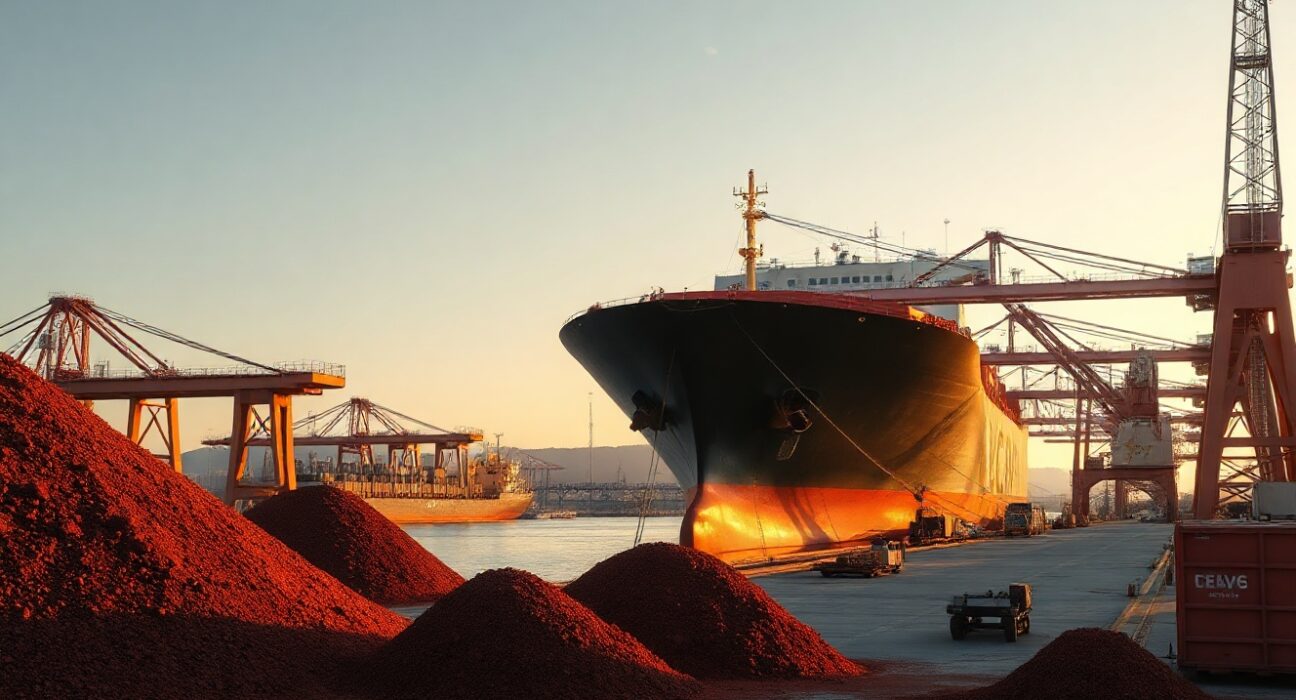
Australia is facing a growing strategic challenge in its most valuable commodity export: iron ore. According to a recent analysis from Rabobank, the nation must carefully consider its policy response to China’s dominant position as a buyer, a market structure known as a monopsony. The report underscores the risks of over-reliance on a single customer and the need for proactive economic and trade strategies.
Understanding the Monopsony Risk
A monopsony occurs when a single buyer holds significant market power, allowing it to influence prices and terms. In the global iron ore trade, China accounts for roughly 70% of seaborne demand, while Australia supplies about 60% of the global market. This concentration gives Beijing considerable leverage, potentially enabling it to drive down prices or impose unfavorable conditions on suppliers like Australia. Rabobank’s analysis highlights that this imbalance is not merely theoretical; it represents a tangible vulnerability for Australia’s economy, which relies on iron ore for a substantial portion of export revenue.
Strategic Options for Australia
The Rabobank report outlines several policy pathways Canberra could explore. These include diversifying export markets by strengthening ties with other steel-producing nations, such as India and Southeast Asian economies, which are expected to increase their iron ore consumption in the coming decades. Another option is to deepen domestic processing and value-added production, reducing the volume of raw ore exports and increasing the value captured locally. Additionally, Australia could invest in alternative commodities or critical minerals to reduce overall trade dependence on China. The report emphasizes that any response must be carefully calibrated to avoid triggering retaliatory measures that could harm Australian exporters.
Implications for Investors and Industry
For investors and industry stakeholders, the Rabobank analysis serves as a reminder that commodity markets are not purely driven by supply and demand fundamentals; geopolitical and policy risks play an increasingly central role. Companies like BHP, Rio Tinto, and Fortescue Metals Group, which dominate Australia’s iron ore sector, may face heightened scrutiny regarding their exposure to Chinese demand. The report suggests that long-term planning should account for potential policy shifts in both Beijing and Canberra, as well as structural changes in global steelmaking, including the transition to greener production methods.
Conclusion
Rabobank’s warning adds to a growing chorus of voices urging Australia to reassess its trade strategy regarding iron ore. While the current market remains profitable, the underlying structural vulnerability to a single buyer’s monopsony power demands careful policy consideration. The challenge for Australian policymakers will be to balance the immediate economic benefits of the trade relationship with the need for long-term resilience and strategic autonomy. As global trade dynamics evolve, the decisions made today will shape Australia’s economic security for decades to come.
FAQs
Q1: What is a monopsony in the context of iron ore?
A monopsony occurs when a single buyer, in this case China, holds dominant purchasing power over a commodity like iron ore. This allows the buyer to influence prices and contract terms, potentially to the disadvantage of sellers like Australia.
Q2: How dependent is Australia on China for iron ore exports?
Australia exports roughly 80% of its iron ore to China, making China by far its largest customer. This concentration creates significant economic vulnerability to shifts in Chinese demand or policy.
Q3: What are some alternatives Australia could pursue to reduce this risk?
Australia could diversify its export destinations by targeting growing steel markets in India and Southeast Asia, invest in domestic processing to export higher-value products, or develop alternative resource sectors such as critical minerals for the energy transition.
Disclaimer: The information provided is not trading advice, Bitcoinworld.co.in holds no liability for any investments made based on the information provided on this page. We strongly recommend independent research and/or consultation with a qualified professional before making any investment decisions.
