

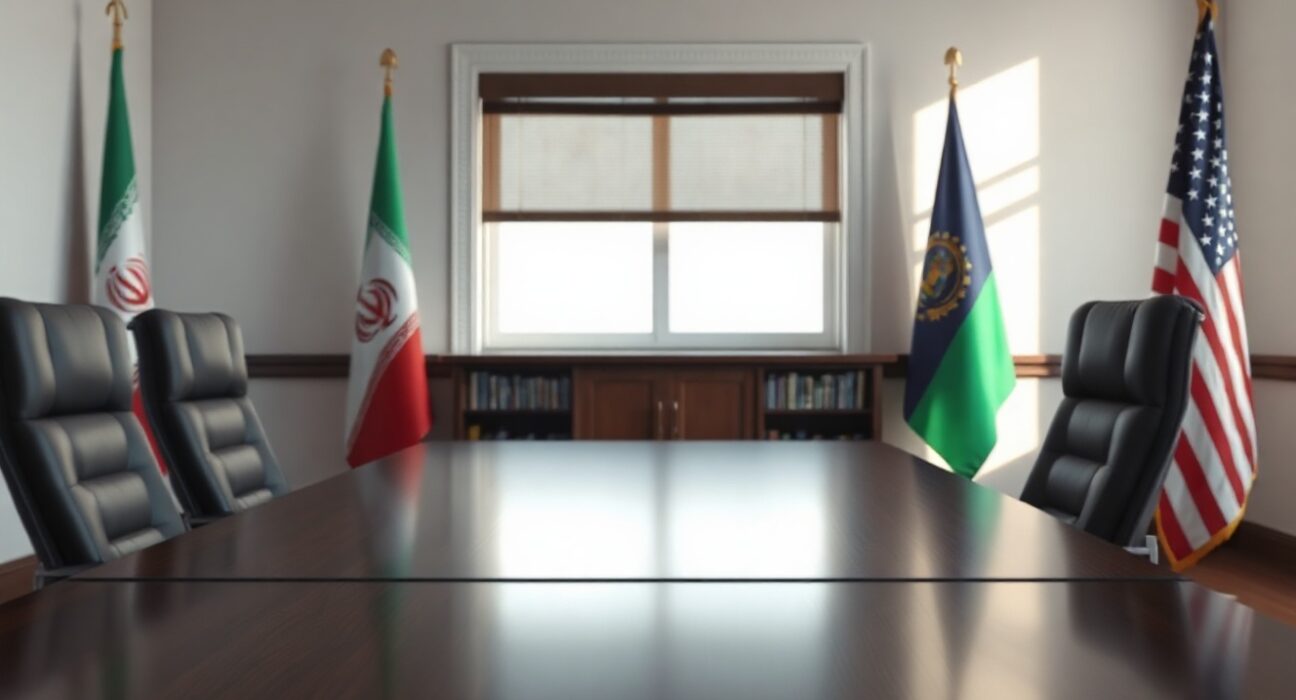
An advisor to Iran’s Supreme Leader told CNN on June 5 that peace talks with the United States have stalled over the release of $24 billion in frozen Iranian assets. The advisor stated that the negotiations are deadlocked and that the ball is in President Donald Trump’s court to break the impasse.
Iran’s Demands and US Concerns
Iran is demanding the immediate release of $12 billion upon the signing of an interim agreement, with an additional $12 billion to be unfrozen in a later phase. U.S. officials, however, are concerned that releasing the assets at this stage would weaken key negotiating leverage. The advisor described the unfreezing of assets as a trust-building measure that would open a new chapter in bilateral relations.
Military Escalation Warning
The advisor also warned that if the U.S. were to resume military action, Iran would expand the conflict from the Persian Gulf to the Strait of Hormuz, the Indian Ocean, the Bab el-Mandeb Strait, the Red Sea, and the Mediterranean Sea. He added that the likelihood of war is low, but the warning signals Tehran’s readiness to escalate regionally if pressured.
Meeting Between Trump and Khamenei Dismissed
Regarding a potential meeting between Trump and Supreme Leader Ali Khamenei, the advisor dismissed the possibility, stating that the talks are in their first phase and have been stalled by the U.S. president. This contrasts with remarks from President Trump earlier this week, who said he seems to get along well with Khamenei and that a meeting would be a great honor.
Conclusion
The deadlock over frozen assets remains a central obstacle to U.S.-Iran negotiations. With both sides signaling firm positions, the path to a diplomatic resolution remains uncertain. The outcome will have significant implications for regional stability and global energy markets, particularly oil transit through the Strait of Hormuz.
FAQs
Q1: Why are Iran’s assets frozen?
Iran’s assets were frozen under U.S. sanctions imposed after the 1979 hostage crisis and later expanded due to Iran’s nuclear program and support for militant groups. The funds are held in accounts in several countries, including South Korea, Iraq, and Luxembourg.
Q2: What is the significance of the Strait of Hormuz?
The Strait of Hormuz is a narrow waterway between the Persian Gulf and the Gulf of Oman, through which about 20% of the world’s oil passes. Any disruption there would cause a sharp spike in global oil prices.
Q3: Have U.S. and Iranian leaders ever met directly?
No sitting U.S. president has met directly with Iran’s Supreme Leader since the 1979 Islamic Revolution. The last high-level meeting was between President Barack Obama and President Hassan Rouhani by phone in 2013.
Disclaimer: The information provided is not trading advice, Bitcoinworld.co.in holds no liability for any investments made based on the information provided on this page. We strongly recommend independent research and/or consultation with a qualified professional before making any investment decisions.
