

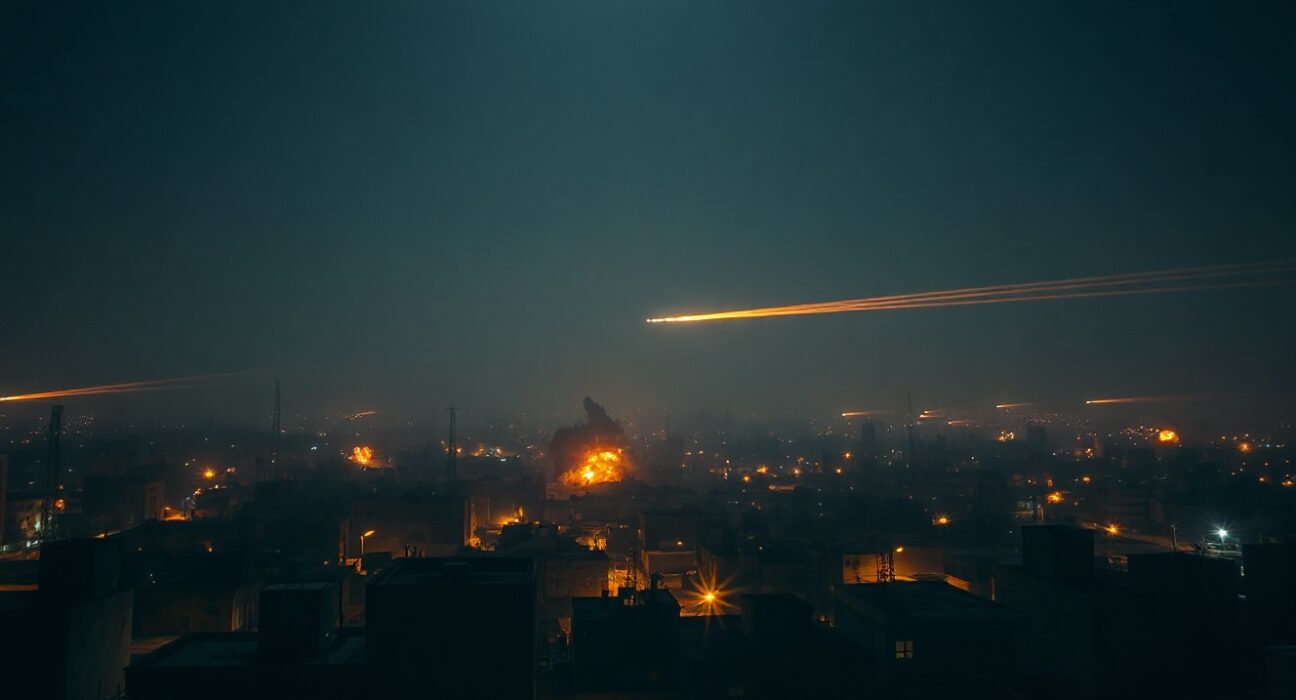
In a significant escalation of hostilities across the Middle East, the Israeli Air Force has conducted a series of precision strikes on military targets in western and central Iran. The operation, confirmed by multiple defense officials, comes as a direct response to a barrage of ballistic missiles launched from Iranian territory toward Israel earlier this week.
Details of the Strikes
According to preliminary reports, Israeli fighter jets and drone platforms struck multiple facilities, including air defense batteries, missile storage sites, and command-and-control centers located in Iran’s western provinces near the Iraqi border, as well as targets deeper in central Iran. The strikes were conducted in multiple waves, with the first wave focused on neutralizing Iranian air defenses to create safe corridors for subsequent attacks.
Satellite imagery and local sources confirm large explosions and secondary detonations at several sites, indicating the presence of stored munitions. The Israeli military has stated that all targets were carefully selected to minimize civilian casualties, and early assessments suggest no civilian infrastructure was deliberately hit.
Context and Escalation
The airstrikes mark the first time Israel has openly struck military targets deep inside Iran since the Iran-Iraq war in the 1980s. Previous operations attributed to Israel, such as the assassination of nuclear scientists or cyberattacks on enrichment facilities, were conducted covertly. This direct military action signals a shift in Israel’s deterrence strategy.
The immediate trigger was a coordinated Iranian missile attack that saw over 200 ballistic and cruise missiles launched toward Israeli cities and military installations. While Israel’s multi-layered air defense systems, including Iron Dome and David’s Sling, intercepted a majority of the incoming projectiles, several impacts were recorded, causing casualties and structural damage.
Regional and Global Implications
The strikes have sent shockwaves through global markets, with oil prices spiking over 5% on concerns about supply disruptions in the Strait of Hormuz. The United States, which was reportedly notified minutes before the operation began, has called for restraint from both sides while reaffirming Israel’s right to self-defense. Russia and China have urged de-escalation, warning of a broader regional war.
Iran’s Supreme National Security Council has convened an emergency session, with state media vowing ‘a decisive and painful response’ to what it termed ‘Israeli aggression.’ Analysts warn that the region is now at its most volatile point since the 1973 Yom Kippur War, with the potential for a multi-front conflict involving Iranian proxies in Lebanon, Syria, Yemen, and Iraq.
Conclusion
The Israeli airstrikes on Iranian military targets represent a dramatic and risky escalation in the long-running shadow war between the two nations. With both sides signaling readiness for further military action, the immediate priority for international diplomacy is to prevent a full-scale interstate conflict that could destabilize the entire Middle East. The coming days will be critical in determining whether this cycle of retaliation can be contained or if it spirals into a broader regional war.
FAQs
Q1: What specific targets were hit in Iran?
According to defense sources, the strikes targeted military installations including air defense batteries, missile storage depots, and command centers in western and central Iran. Specific locations have not been officially confirmed to avoid compromising operational security.
Q2: Why did Israel decide to strike Iran directly now?
The direct trigger was a large-scale Iranian missile attack on Israeli territory. After years of covert operations and proxy warfare, Israeli leadership determined that a direct, visible military response was necessary to restore deterrence and signal that attacks on Israeli soil would have immediate consequences.
Q3: What is the risk of a wider war?
Analysts assess the risk as high. Iran has multiple proxy forces across the region, including Hezbollah in Lebanon, Houthis in Yemen, and militias in Iraq and Syria, which could be activated. The United States has moved additional naval assets to the region as a deterrent. Diplomatic channels remain open, but both sides have limited room for de-escalation without appearing weak domestically.
Disclaimer: The information provided is not trading advice, Bitcoinworld.co.in holds no liability for any investments made based on the information provided on this page. We strongly recommend independent research and/or consultation with a qualified professional before making any investment decisions.
