

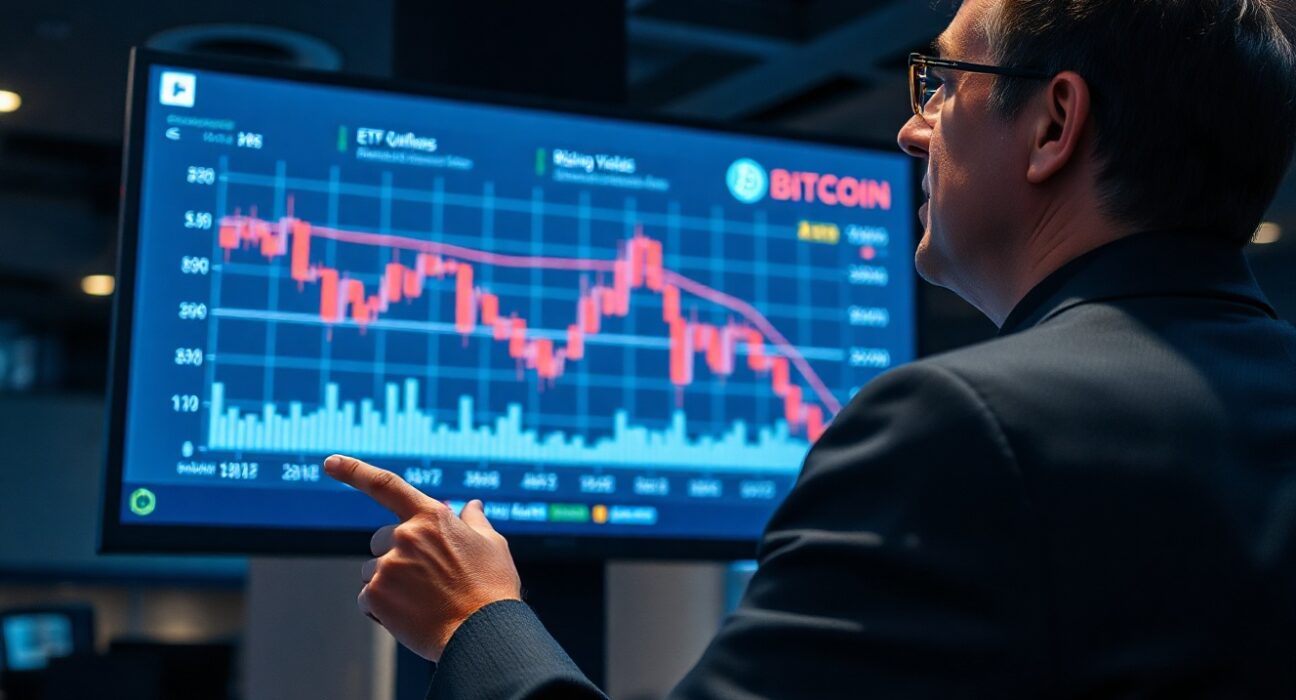
Bitcoin’s recent price decline is not the result of a single trigger but a convergence of pressures, according to a new report from digital asset exchange Bitfinex. The analysis identifies large-scale outflows from spot Bitcoin exchange-traded funds (ETFs), a deleveraging event in the derivatives market, and renewed macroeconomic concerns over prolonged high interest rates as the primary drivers behind the sell-off.
Key On-Chain Signals Deteriorate
Bitfinex’s report highlights a sharp deterioration in the spot Bitcoin Cumulative Volume Delta (CVD), a metric that tracks the net difference between buying and selling pressure. The CVD has fallen significantly since the accumulation phase observed in April and May, signaling that aggressive selling has overwhelmed buyer demand.
Perhaps more concerning for recent market entrants, the average acquisition price for short-term holders (STH) has dropped below the True Market Mean price of $77,800. This metric, which represents the average cost basis of coins moved within the last 155 days, suggests that a meaningful portion of investors who bought Bitcoin in recent months are now holding positions at a loss. Historically, when the STH cost basis falls below the True Market Mean, it indicates heightened vulnerability among newer market participants and can precede further selling pressure if sentiment weakens.
Macro Headwinds Intensify
Beyond crypto-native metrics, the broader macroeconomic environment has turned increasingly hostile for risk assets. The U.S. 10-year Treasury yield has climbed above 4.45%, pushing real interest rates—nominal yields adjusted for inflation—to levels not seen in recent months. Rising real rates increase the opportunity cost of holding non-yielding assets like Bitcoin, making fixed-income instruments relatively more attractive.
Bitfinex noted that this dynamic is not unique to digital assets. Traditional risk assets, including equities, are also feeling the pressure from the rising rate environment. The report underscores that both Bitcoin and traditional markets are currently being influenced by the same macro undercurrents, a correlation that has strengthened over the past year.
Implications for Investors
The confluence of ETF outflows, derivatives deleveraging, and macro uncertainty creates a challenging short-term backdrop for Bitcoin. However, the report does not suggest a structural breakdown. Rather, it frames the current correction as a cyclical adjustment within a broader market that remains sensitive to both on-chain signals and global liquidity conditions.
For traders and long-term holders, the key takeaway is the importance of monitoring real interest rates and ETF flow data as leading indicators. A stabilization in Treasury yields or a reversal in ETF outflows could provide the catalyst needed for a price recovery.
Conclusion
Bitcoin’s recent drop reflects a rare alignment of internal market weakness and external macroeconomic pressure. While short-term holders are feeling the strain, the broader picture remains one of an asset class increasingly integrated with traditional finance. Investors should watch for shifts in ETF flows and real yields as signals for the next directional move.
FAQs
Q1: What is the Cumulative Volume Delta (CVD) and why does it matter?
A: CVD tracks the net difference between market buying and selling pressure. A sharp decline indicates that sellers are aggressively dominating buyers, which often precedes or accompanies price drops.
Q2: Why do rising Treasury yields affect Bitcoin?
A: Higher yields, especially real yields, increase the opportunity cost of holding non-yielding assets like Bitcoin. Investors may shift capital toward bonds, reducing demand for risk assets.
Q3: Should short-term holders be worried about being underwater?
A: While being below the acquisition price is uncomfortable, it does not guarantee further losses. Historically, short-term holder losses can signal a local bottom if selling exhausts itself. However, prolonged macro pressure could extend the drawdown.
Disclaimer: The information provided is not trading advice, Bitcoinworld.co.in holds no liability for any investments made based on the information provided on this page. We strongly recommend independent research and/or consultation with a qualified professional before making any investment decisions.
