

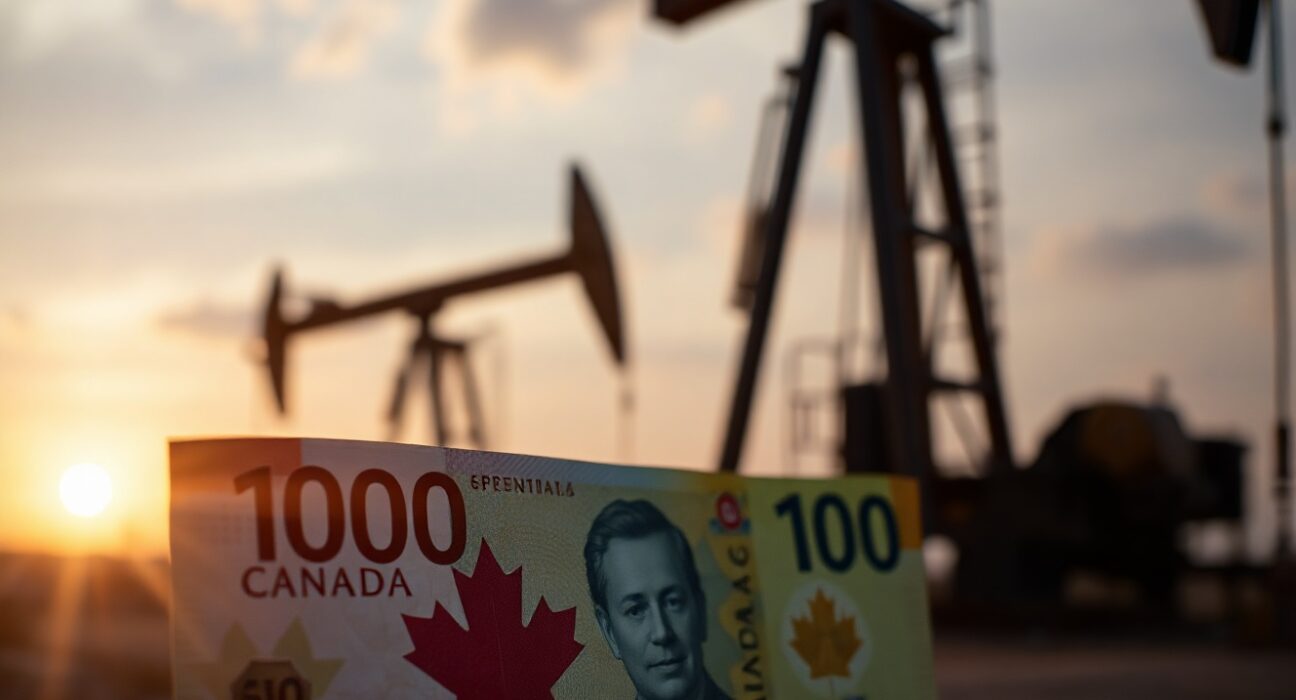
The Canadian dollar edged lower against its major counterparts on Tuesday, as renewed diplomatic efforts to de-escalate tensions in the Gulf region weighed on crude oil prices, a key driver for the commodity-linked currency.
Oil Prices Under Pressure From Geopolitical Optimism
Reports of potential progress in peace negotiations between major Gulf powers have reduced the risk premium embedded in oil markets. Brent crude, the global benchmark, slipped below $82 per barrel during the North American session, while West Texas Intermediate (WTI) crude traded near $78. The decline in oil prices directly impacts the Canadian dollar, given Canada’s status as a major oil exporter and the significant role energy exports play in the country’s trade balance.
Market Reaction and Trading Dynamics
The USD/CAD pair rose to 1.3650, its highest level in over a week, as the greenback strengthened against its Canadian counterpart. Traders cited a combination of lower oil prices and a broadly firmer US dollar as the primary catalysts. The move was relatively orderly, with no signs of panic selling, suggesting the market is pricing in a gradual shift in geopolitical expectations rather than a sudden shock.
Broader Implications for Commodity Currencies
The Canadian dollar’s weakness mirrors a broader trend among commodity-linked currencies, including the Australian and New Zealand dollars, which also faced headwinds from falling raw material prices. However, the loonie’s sensitivity to oil price fluctuations remains particularly acute. Analysts note that a sustained period of lower oil prices could force the Bank of Canada to reconsider its monetary policy stance, especially if it dampens export revenues and economic growth prospects.
Conclusion
The softening of the Canadian dollar underscores the intricate link between geopolitical developments and currency markets. While a Gulf peace deal would be a positive development for global stability, its immediate effect on oil prices has created headwinds for the loonie. Traders will now focus on upcoming Canadian economic data and any further signals from oil markets to gauge the currency’s next move.
FAQs
Q1: Why does the Canadian dollar react to oil prices?
Canada is one of the world’s largest oil producers and exporters. Higher oil prices boost export revenues and improve the country’s trade balance, which tends to strengthen the Canadian dollar. Conversely, falling oil prices reduce export income and can weaken the currency.
Q2: How does a Gulf peace deal affect oil prices?
Geopolitical tensions in the Gulf region often create a risk premium in oil prices, as traders anticipate potential supply disruptions. Progress toward peace reduces this risk, leading to lower oil prices as the market prices in a more stable supply outlook.
Q3: What is the outlook for the Canadian dollar?
The near-term outlook for the Canadian dollar is tied to oil price movements and the Bank of Canada’s interest rate decisions. If oil prices remain subdued, the loonie could face further pressure. However, strong domestic economic data or a hawkish tone from the Bank of Canada could provide support.
Disclaimer: The information provided is not trading advice, Bitcoinworld.co.in holds no liability for any investments made based on the information provided on this page. We strongly recommend independent research and/or consultation with a qualified professional before making any investment decisions.
