

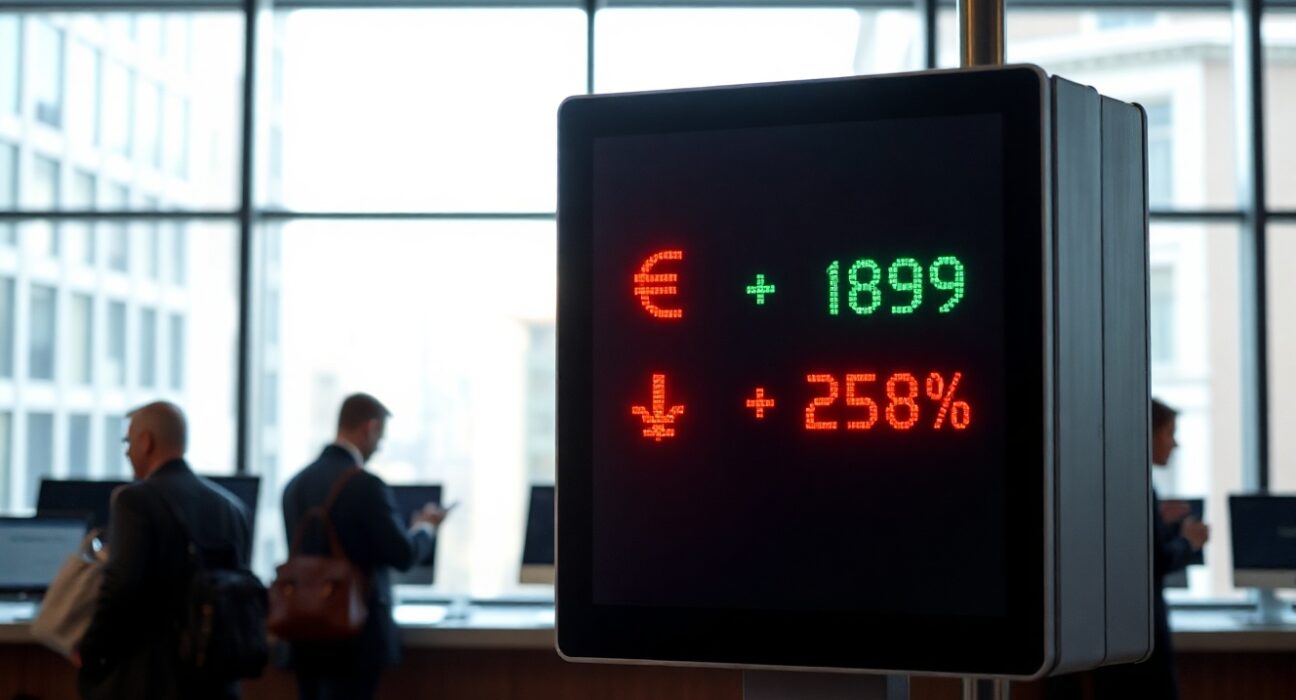
The euro remained stronger against the Japanese yen in Tuesday trading, holding onto gains recorded after the release of German industrial production data for December. The EUR/JPY pair traded near 162.20, reflecting a modest uptick from the previous session, as markets digested the latest signals from Europe’s largest economy.
German Industrial Production Beats Expectations
Germany’s industrial production rose by 0.3% month-on-month in December, exceeding the consensus forecast of a 0.1% decline. The data, released by Destatis, offered a rare positive surprise after months of contraction in the manufacturing sector. Analysts noted that the improvement was driven by a rebound in automotive production and capital goods, though the overall industrial outlook remains subdued.
Market Reaction and EUR/JPY Dynamics
The euro initially spiked against the yen following the release, briefly touching 162.45 before settling back. The pair has been trading in a narrow range over the past week, with the yen supported by expectations that the Bank of Japan may eventually move toward tighter monetary policy. However, the positive German data provided a short-term boost for the euro, reinforcing the view that the eurozone economy may be stabilizing.
What This Means for Traders
For forex traders, the EUR/JPY pair remains sensitive to diverging central bank policies. The European Central Bank has signaled a cautious approach to rate cuts, while the Bank of Japan has maintained its ultra-loose stance, though speculation about a shift has increased. The German data, while not transformative, offers a counterpoint to the prevailing narrative of eurozone weakness, which may limit downside for the euro in the near term.
Conclusion
The euro’s resilience against the yen reflects a market that is cautiously reassessing the eurozone’s economic trajectory. While German industrial production data provided a short-term lift, the broader trend for EUR/JPY will likely depend on upcoming inflation figures and central bank communications from both the ECB and the Bank of Japan. Traders should watch for further data releases that could confirm or reverse the current stabilization narrative.
FAQs
Q1: Why did the euro strengthen against the yen after the German data?
The German industrial production figure came in above expectations, suggesting the manufacturing sector may be stabilizing. This reduced some immediate pessimism about the eurozone economy, making the euro more attractive relative to the yen.
Q2: What is the outlook for EUR/JPY in the coming weeks?
The outlook remains mixed. The yen could strengthen if the Bank of Japan signals a policy shift, while the euro may gain if eurozone data continues to improve. Key levels to watch include support near 161.50 and resistance around 163.00.
Q3: How does German industrial production affect the broader eurozone?
Germany accounts for roughly a quarter of eurozone GDP, so its industrial data is a key indicator for the region. Positive surprises can lift confidence in the eurozone’s economic outlook, while persistent weakness reinforces expectations of further ECB support.
Disclaimer: The information provided is not trading advice, Bitcoinworld.co.in holds no liability for any investments made based on the information provided on this page. We strongly recommend independent research and/or consultation with a qualified professional before making any investment decisions.
