

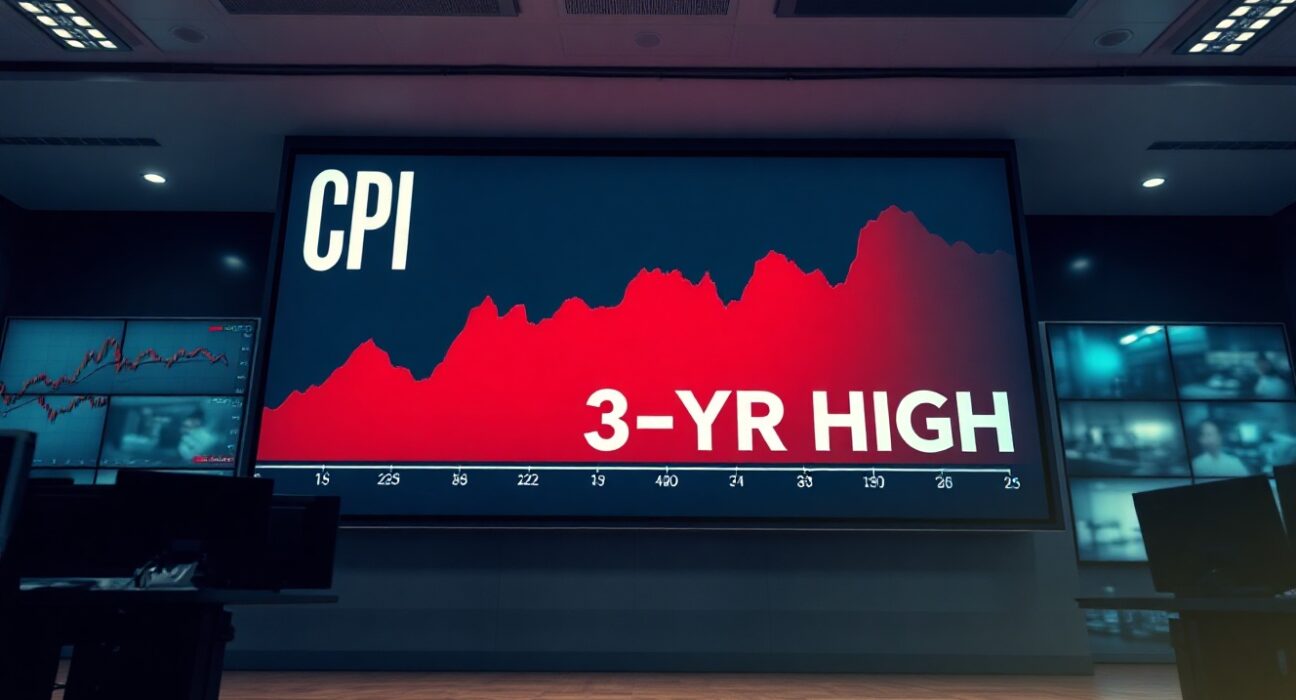
New inflation data scheduled for release next week is expected to show that the US Consumer Price Index (CPI) reached a three-year high in May, a development that would reinforce the Federal Reserve’s increasingly hawkish monetary policy direction. Economists surveyed by major financial data providers project a year-over-year increase of approximately 4.2%, a level not seen since early 2023, driven largely by persistent price pressures in shelter, services, and energy.
What the Data Is Expected to Show
The core CPI, which excludes volatile food and energy prices, is forecast to rise 3.8% from a year ago, also marking a multi-year peak. On a monthly basis, headline CPI is projected to increase 0.4% in May, while core CPI is expected to rise 0.3%. These figures would follow an April report that showed inflation remaining stubbornly above the Fed’s 2% target, despite a year of elevated interest rates. The persistence of high inflation has surprised many analysts who had anticipated a more rapid deceleration in price growth.
Market and Policy Implications
A May CPI reading at a three-year high would provide strong justification for the Federal Reserve to maintain, or even accelerate, its current tightening cycle. Fed officials have repeatedly signaled that they are prepared to hold rates higher for longer, and some have suggested that further rate increases may be necessary if inflation does not show consistent signs of easing. The futures market is already pricing in a higher probability of a 25-basis-point rate hike at the next Federal Open Market Committee (FOMC) meeting, with odds rising sharply after the latest producer price index data also came in above expectations.
Impact on Consumers and Investors
For American households, sustained high inflation continues to erode purchasing power, particularly for lower-income families who spend a larger share of their income on essentials like rent, food, and transportation. For investors, a higher-for-longer interest rate environment poses headwinds for equity valuations, especially in growth sectors, while potentially offering higher yields on fixed-income instruments. The US dollar has strengthened in recent weeks on expectations of continued Fed tightening, which could weigh on multinational corporate earnings and emerging market currencies.
Conclusion
The upcoming CPI release is one of the most consequential economic data points of the year, with the potential to reshape market expectations for the remainder of 2026. If the data confirms a three-year high in inflation, it will solidify the Federal Reserve’s hawkish posture and likely lead to further volatility across asset classes. Policymakers, investors, and consumers alike will be watching closely for any signs that price pressures are finally beginning to moderate, or whether the economy is entering a new phase of structurally higher inflation.
FAQs
Q1: What is the Consumer Price Index (CPI) and why does it matter?
The CPI measures the average change in prices paid by consumers for a basket of goods and services. It is the most widely used indicator of inflation and directly influences Federal Reserve monetary policy decisions, as well as cost-of-living adjustments for Social Security and other programs.
Q2: How does a high CPI reading affect the Federal Reserve’s decisions?
A high CPI reading signals that inflation is running above the Fed’s 2% target, which typically leads the central bank to raise interest rates or keep them elevated to cool economic activity and bring prices under control. Higher rates make borrowing more expensive for businesses and consumers, slowing spending and investment.
Q3: What does a three-year high in inflation mean for the average person?
It means that the cost of living is rising at a faster pace than it has in recent years. This can strain household budgets, particularly for rent, groceries, and utilities. It may also lead to higher interest rates on mortgages, car loans, and credit cards, making it more expensive to finance large purchases or carry debt.
Disclaimer: The information provided is not trading advice, Bitcoinworld.co.in holds no liability for any investments made based on the information provided on this page. We strongly recommend independent research and/or consultation with a qualified professional before making any investment decisions.
