

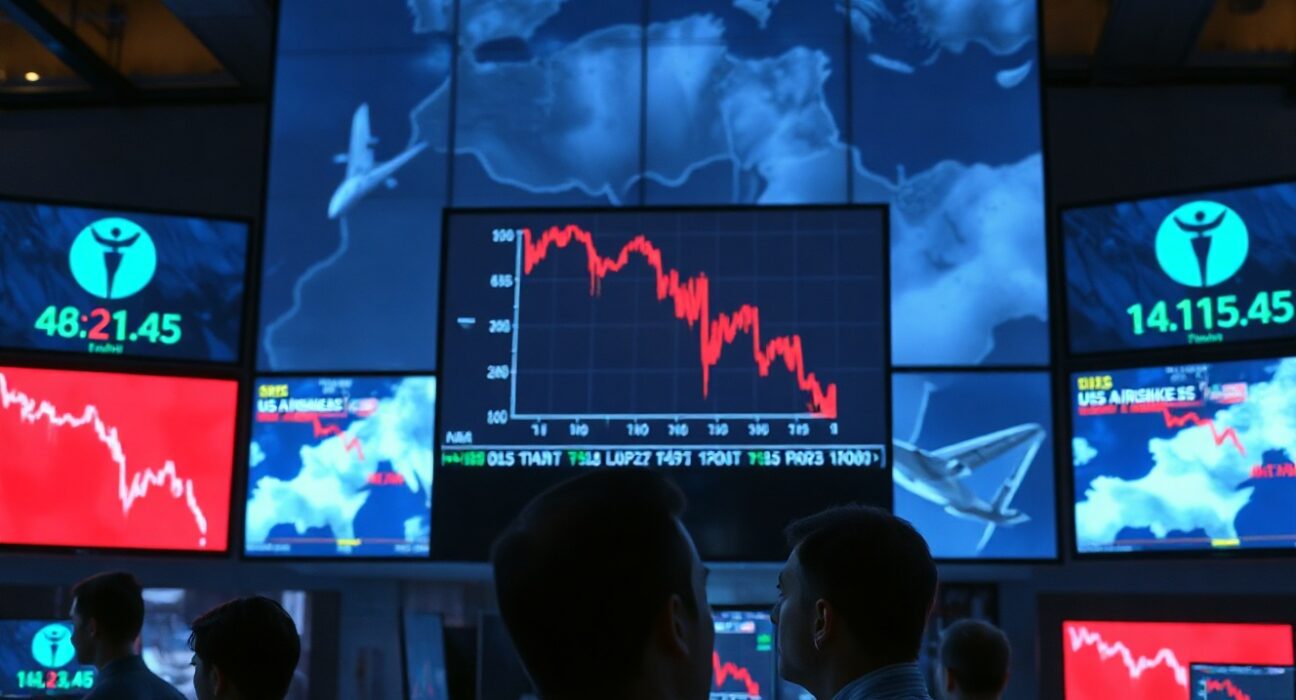
Nasdaq futures extended their decline to 1% on Monday, while S&P 500 futures fell 0.6%, as a U.S. official confirmed that American military airstrikes on Iran are ongoing. The escalation in the Middle East has injected fresh uncertainty into financial markets, which were already navigating inflation concerns and mixed corporate earnings.
Market Reaction to Escalating Conflict
The drop in futures reflects growing investor anxiety over a prolonged military engagement and its potential impact on global energy supplies and trade routes. The Nasdaq’s heavier decline, compared to the broader S&P 500, suggests particular pressure on technology stocks, which are more sensitive to interest rate expectations and global supply chain disruptions. Oil prices have also moved higher in early trading, adding to concerns about persistent inflation.
Geopolitical Context and Investor Concerns
The U.S. airstrikes mark a significant escalation in hostilities between the two nations. While the White House has not yet provided a detailed timeline or stated objectives, the ongoing nature of the operation has left markets without a clear endpoint. Historically, equity markets tend to react negatively to the onset of military conflict, but often recover once the scope and duration become clearer. The current lack of clarity is amplifying short-term volatility.
What This Means for Investors
For retail and institutional investors alike, the key risks include a sustained rise in oil prices, potential disruptions to shipping through the Strait of Hormuz, and a flight to safe-haven assets such as gold and U.S. Treasuries. Defensive sectors like utilities and healthcare may outperform in the near term, while cyclical and tech-heavy indices could face continued headwinds. Investors should monitor official statements from both the Pentagon and the Iranian government for signs of de-escalation or further escalation.
Conclusion
The ongoing U.S. airstrikes on Iran have triggered a broad sell-off in U.S. equity futures, with the Nasdaq bearing the brunt of the decline. The situation remains fluid, and market participants should prepare for continued volatility until clearer signals emerge regarding the conflict’s trajectory and its economic consequences.
FAQs
Q1: Why are Nasdaq futures falling more than S&P 500 futures?
Technology stocks, which dominate the Nasdaq, are more sensitive to interest rate changes and global supply chain disruptions. Geopolitical uncertainty often leads investors to rotate out of growth stocks into safer assets.
Q2: How long do stock market declines typically last during military conflicts?
Historical patterns show that initial sell-offs often reverse within weeks once the scope of the conflict becomes clearer. However, prolonged or unpredictable engagements can lead to extended volatility.
Q3: What safe-haven assets are investors turning to during this escalation?
Gold, U.S. Treasury bonds, and the Swiss franc typically see increased demand during geopolitical crises. Oil and defense stocks may also rise due to supply concerns and increased military spending expectations.
Disclaimer: The information provided is not trading advice, Bitcoinworld.co.in holds no liability for any investments made based on the information provided on this page. We strongly recommend independent research and/or consultation with a qualified professional before making any investment decisions.
