

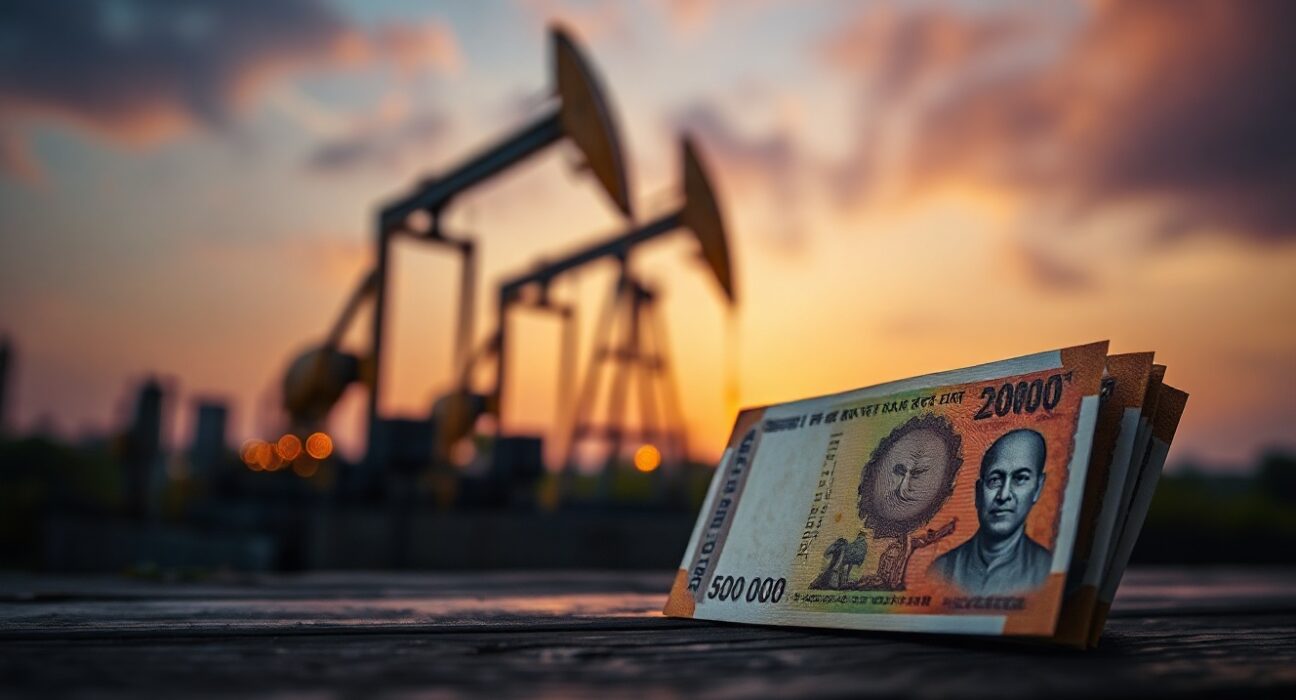
The Indian rupee weakened against the US dollar on Monday, extending its recent decline as global crude oil prices surged amid growing uncertainty over the stability of the US-Iran ceasefire agreement. The currency slipped past the 83.50 mark against the greenback in early trading, reflecting heightened investor anxiety over India’s import-dependent energy costs.
Oil Price Spike Triggers Rupee Weakness
Brent crude futures climbed above $85 per barrel, their highest level in weeks, after reports emerged that diplomatic talks between Washington and Tehran had stalled. The potential collapse of the ceasefire raises the risk of renewed sanctions on Iranian oil exports, which could tighten global supply and push prices higher. For India, which imports over 85% of its crude oil requirements, any sustained rise in oil prices directly impacts the trade deficit and puts downward pressure on the rupee.
Market Reaction and Broader Implications
The rupee’s decline was sharpest among Asian currencies on Monday, with the Reserve Bank of India (RBI) likely intervening through state-run banks to prevent excessive volatility. However, analysts suggest that the central bank’s ability to defend the currency is limited if oil prices remain elevated. A weaker rupee increases the cost of imports, potentially stoking inflationary pressures and complicating the RBI’s monetary policy stance. The currency has already lost nearly 2% against the dollar this year, and further depreciation could weigh on consumer sentiment and corporate earnings, particularly for companies with high foreign currency debt.
What This Means for Indian Consumers and Businesses
For the average Indian, a weaker rupee combined with higher oil prices translates into costlier fuel at the pump, which can feed into higher transportation and logistics costs across the economy. This could push up prices of essential goods and services, adding to household financial strain. For businesses, particularly those in manufacturing and aviation, rising input costs may squeeze profit margins and delay investment decisions. The government faces a delicate balancing act between managing fiscal deficits and providing relief to consumers through potential tax cuts on fuel.
Geopolitical Context and Outlook
The US-Iran ceasefire, brokered earlier this year, had provided a temporary reprieve from tensions in the Middle East and allowed for a modest increase in Iranian oil exports. However, recent disagreements over the scope of sanctions relief and Iran’s regional activities have put the agreement on shaky ground. Market participants are now closely watching diplomatic signals from both sides. A complete collapse of the ceasefire could push oil prices toward $90 per barrel, further pressuring the rupee and Indian financial markets. Conversely, any positive development in talks could trigger a relief rally.
Conclusion
The Indian rupee’s slide against the dollar underscores the country’s vulnerability to global geopolitical shocks, particularly those affecting energy markets. While the RBI has tools to manage short-term volatility, the medium-term trajectory of the currency hinges on the resolution of US-Iran tensions and the broader direction of oil prices. Investors and policymakers alike will be watching for any diplomatic breakthroughs or further escalations in the coming days.
FAQs
Q1: Why does the US-Iran ceasefire affect the Indian rupee?
A1: India is a major importer of crude oil. Any disruption to global oil supply, such as the potential collapse of the US-Iran ceasefire, can push oil prices higher. Since India pays for oil imports in US dollars, a surge in oil prices increases demand for dollars, weakening the rupee.
Q2: Can the RBI stop the rupee from falling?
A2: The RBI can intervene by selling US dollars from its reserves or by tightening monetary policy to support the rupee. However, these measures have limits, especially if oil prices remain high for an extended period, as the fundamental demand for dollars remains strong.
Q3: How do higher oil prices affect the average person in India?
A3: Higher oil prices lead to increased fuel costs for petrol and diesel, which raises transportation and logistics expenses. This often results in higher prices for everyday goods and services, contributing to inflation and reducing household purchasing power.
Disclaimer: The information provided is not trading advice, Bitcoinworld.co.in holds no liability for any investments made based on the information provided on this page. We strongly recommend independent research and/or consultation with a qualified professional before making any investment decisions.
