

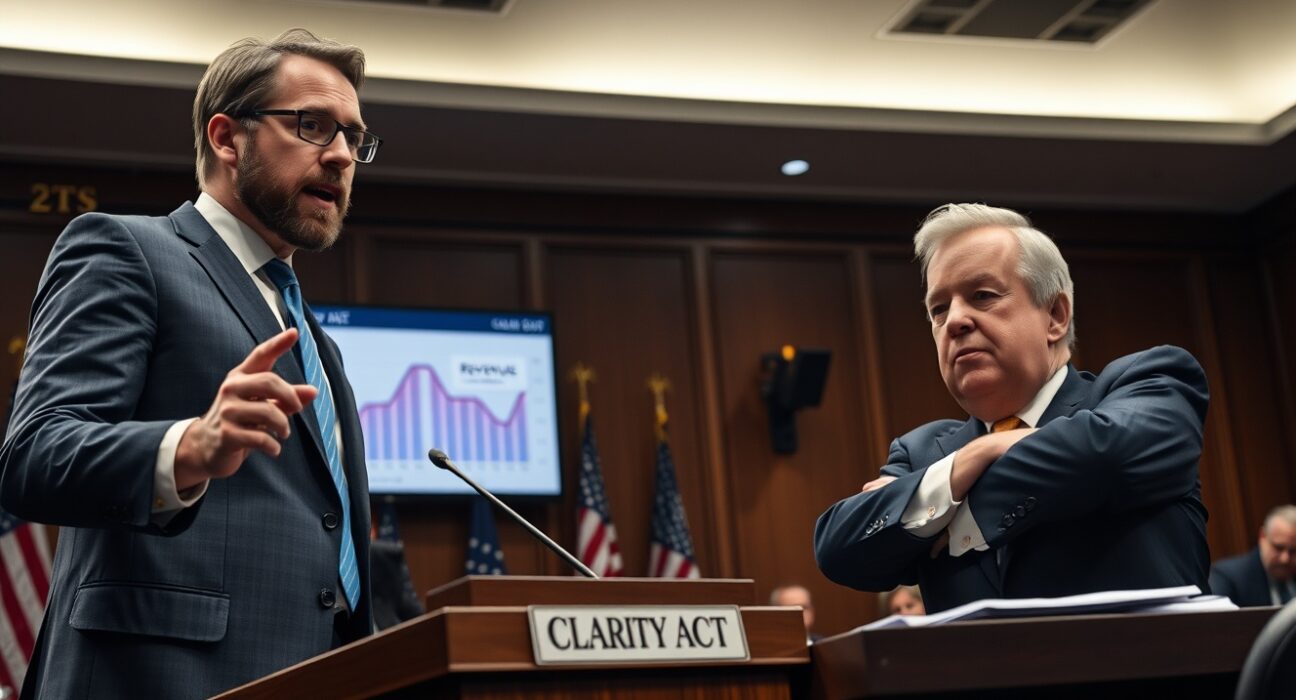
In a pointed exchange that highlights the deepening rift between traditional finance and the cryptocurrency industry, Ripple CEO Brad Garlinghouse publicly criticized JPMorgan Chase CEO Jamie Dimon for opposing the Clarity Act, a proposed stablecoin bill currently under consideration in the U.S. Congress. Appearing on Fox Business, Garlinghouse accused Dimon of deliberately distorting facts to protect JPMorgan’s lucrative payments business.
The Core of the Dispute
Garlinghouse claimed that JPMorgan generates approximately $20 billion in revenue and over $5 billion in net profit from its payments operations alone. He argued that Dimon’s opposition to the Clarity Act is not rooted in concerns about financial stability or consumer protection, but rather in a desire to maintain a competitive moat around the bank’s highly profitable payment infrastructure. ‘This is about protecting the status quo,’ Garlinghouse said, dismissing Dimon’s criticisms of virtual assets as either intentionally dishonest or negligent.
Legislative Timeline Tightens
The timing of this clash is critical. According to sources tracking the legislative calendar, the U.S. Congress has only about 16 legislative days remaining before its scheduled August recess. This narrow window places significant pressure on lawmakers to address the Clarity Act, which aims to establish a regulatory framework for stablecoins. The bill has drawn intense lobbying from both the banking sector and the crypto industry, each seeking to shape rules that could determine market leadership for years to come.
Why This Matters to Readers
For investors, businesses, and consumers, the outcome of this legislative battle could have far-reaching implications. A clear stablecoin framework could accelerate mainstream adoption of digital currencies, potentially reducing reliance on traditional bank transfers and payment networks. Conversely, a stalled or weakened bill may leave the market fragmented, favoring incumbent financial institutions like JPMorgan. Garlinghouse’s public confrontation underscores the high stakes involved, as both sides vie for influence over the future of digital payments.
Broader Industry Context
This is not the first time Dimon has expressed skepticism toward cryptocurrencies. The JPMorgan CEO has a long history of publicly criticizing Bitcoin and other digital assets, calling them ‘frauds’ and ‘Ponzi schemes’ in past statements. However, Garlinghouse’s accusation adds a new dimension to the debate by framing Dimon’s opposition as a self-interested business strategy rather than a principled stance. Ripple, which has faced its own regulatory challenges with the U.S. Securities and Exchange Commission, has positioned itself as a proponent of clear, innovation-friendly regulation.
Conclusion
The exchange between Garlinghouse and Dimon reflects a pivotal moment for U.S. crypto policy. With Congress facing a tight deadline, the battle over the Clarity Act is intensifying. Whether the bill passes before the recess or gets delayed will signal the direction of stablecoin regulation in the United States and the balance of power between traditional banks and emerging crypto firms.
FAQs
Q1: What is the Clarity Act?
The Clarity Act is a proposed U.S. bill aimed at creating a regulatory framework for stablecoins, which are cryptocurrencies designed to maintain a stable value relative to a fiat currency like the U.S. dollar.
Q2: Why is Jamie Dimon opposed to the bill?
According to Ripple CEO Brad Garlinghouse, Dimon’s opposition is driven by a desire to protect JPMorgan’s profitable payments business from competition posed by stablecoin-based payment systems.
Q3: How many legislative days are left before the recess?
As of the report, there are approximately 16 legislative days remaining before the U.S. Congress’s August recess, creating a tight timeline for the Clarity Act to be addressed.
Disclaimer: The information provided is not trading advice, Bitcoinworld.co.in holds no liability for any investments made based on the information provided on this page. We strongly recommend independent research and/or consultation with a qualified professional before making any investment decisions.
