

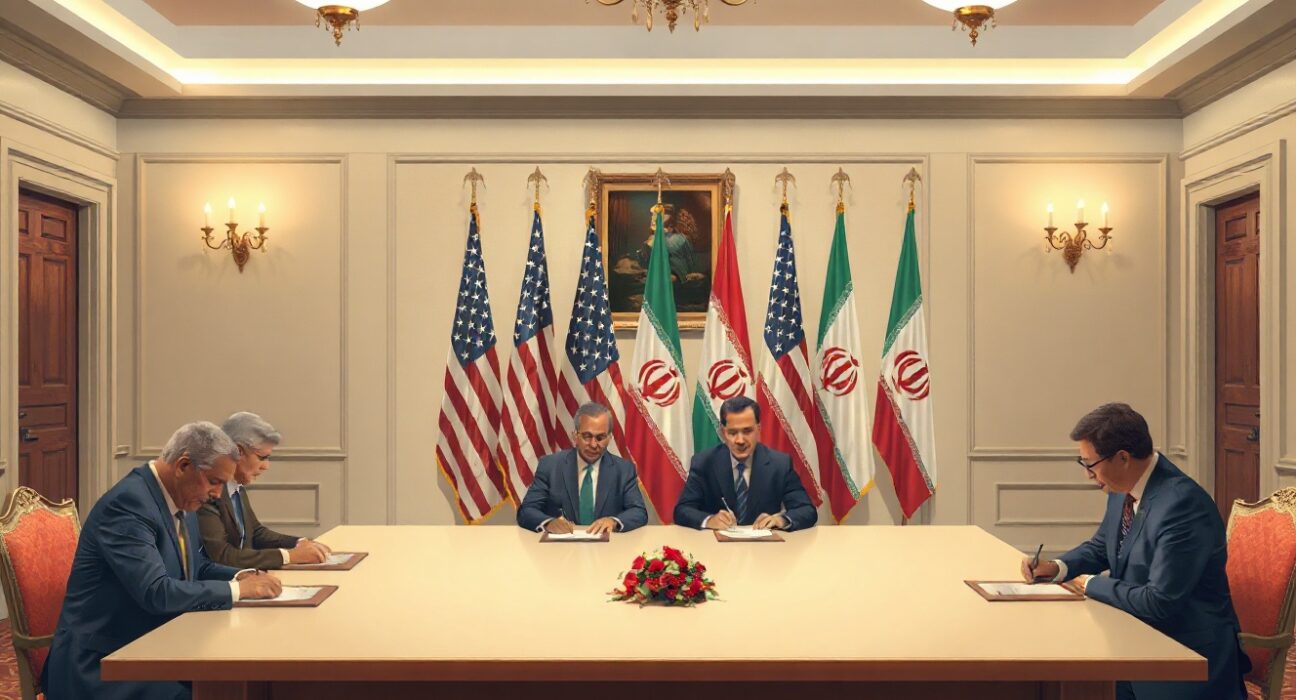
In a surprising development, U.S. President Donald Trump announced that the United States has reached a “great war reconciliation agreement” with Iran. The announcement, made without prior public warning, signals a potential shift in one of the most volatile geopolitical standoffs of the 21st century.
What the Deal Entails
Details of the agreement remain sparse. President Trump characterized the deal as a comprehensive reconciliation framework aimed at de-escalating military tensions and addressing key points of conflict between the two nations. The announcement did not specify whether the agreement includes terms related to Iran’s nuclear program, regional military activities, or economic sanctions—issues that have defined U.S.-Iran relations for decades.
The lack of immediate detail suggests the deal may be a preliminary framework rather than a fully ratified treaty. Senior administration officials have not yet held press briefings, and the Iranian government has not independently confirmed the agreement. This has led to cautious reactions from foreign policy analysts, who note that previous diplomatic breakthroughs have sometimes faltered during the implementation phase.
Historical Context and Implications
U.S.-Iran relations have been defined by mutual distrust since the 1979 Iranian Revolution and the subsequent hostage crisis. Tensions escalated dramatically in recent years following the U.S. withdrawal from the Joint Comprehensive Plan of Action (JCPOA) in 2018, the assassination of Iranian General Qasem Soleimani in 2020, and ongoing proxy conflicts across the Middle East.
If implemented successfully, this reconciliation deal could reshape the region’s security landscape. Potential implications include:
- Reduced risk of direct military confrontation in the Persian Gulf
- Possible easing of economic sanctions, affecting global oil markets
- Shift in alliances among regional powers such as Saudi Arabia, Israel, and Turkey
- Impact on ongoing negotiations regarding Iran’s nuclear enrichment activities
Market and Economic Impact
Global oil markets reacted swiftly to the announcement. Crude oil prices experienced a short-term decline on expectations of increased supply and reduced geopolitical risk premiums. Investors are closely watching for concrete details that would confirm the deal’s scope and enforcement mechanisms.
Long-term economic effects will depend on whether sanctions relief is part of the agreement. Iran holds some of the world’s largest oil and gas reserves, and its reintegration into global energy markets could influence pricing dynamics for years to come.
Expert Reactions and Uncertainty
Foreign policy experts have urged caution. “The announcement is significant, but the real work begins now,” said Dr. Elena Marchetti, a Middle East security analyst at the Institute for Strategic Studies. “We need to see the actual text of the agreement, understand verification mechanisms, and hear Iran’s official response before drawing conclusions.”
Israeli and Saudi officials have not yet commented publicly. Both nations have historically opposed a comprehensive U.S.-Iran rapprochement without stringent limits on Iran’s regional influence and missile programs.
Conclusion
President Trump’s announcement of a war reconciliation deal with Iran marks a potential turning point in Middle Eastern geopolitics. However, the lack of verified details and independent confirmation from Tehran means that the agreement’s durability and scope remain uncertain. Readers should monitor official statements from both governments and follow developments as they unfold. This story is developing and will be updated as more information becomes available.
FAQs
Q1: Has Iran confirmed the war reconciliation deal?
As of this publication, the Iranian government has not independently confirmed the agreement. President Trump’s announcement is the sole source of information. Verification is pending.
Q2: What is a war reconciliation deal?
A war reconciliation deal is a diplomatic agreement intended to end active hostilities or significantly de-escalate military tensions between nations. It may include ceasefires, troop withdrawals, sanctions relief, and frameworks for future negotiations.
Q3: How might this affect oil prices?
If the deal leads to sanctions relief and increased Iranian oil exports, global oil prices could decline due to higher supply. However, the effect depends on the specific terms and implementation timeline.
Disclaimer: The information provided is not trading advice, Bitcoinworld.co.in holds no liability for any investments made based on the information provided on this page. We strongly recommend independent research and/or consultation with a qualified professional before making any investment decisions.
