

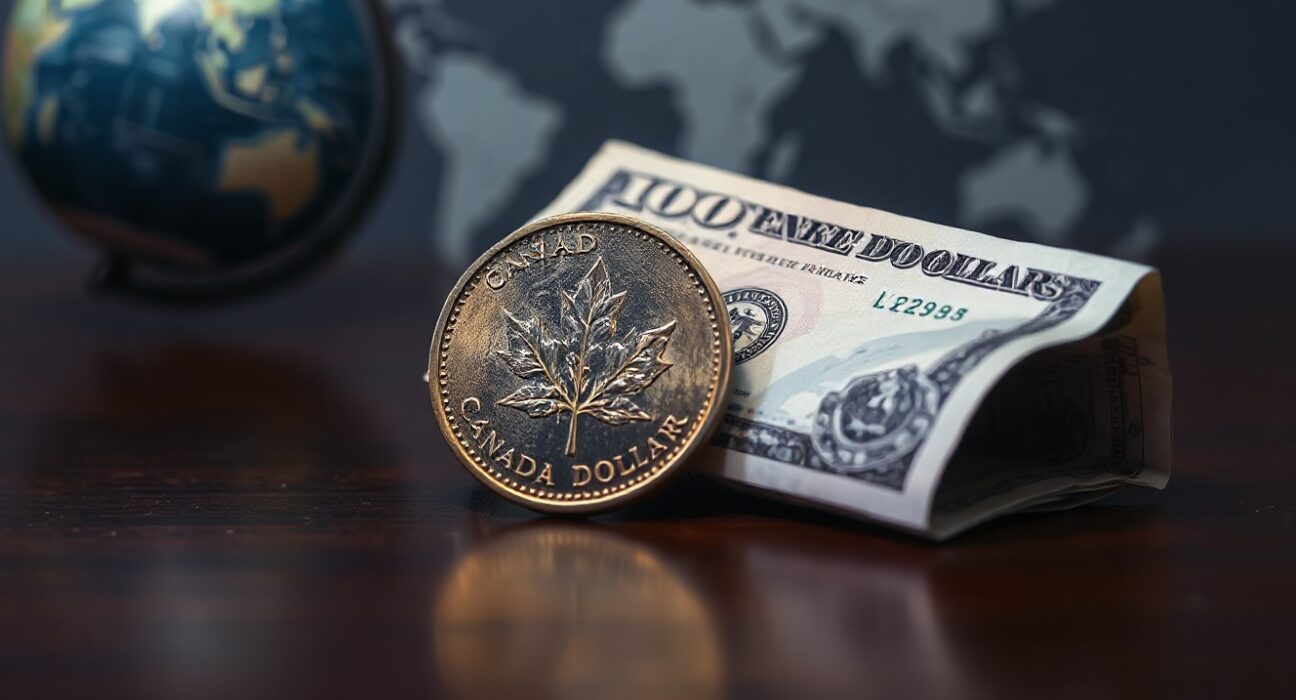
The Canadian dollar edged lower against its US counterpart on Thursday, pressured by stronger-than-expected US producer price data and lingering uncertainty surrounding the potential for a US-Iran peace deal. The move reflects a cautious mood in currency markets as traders weigh competing economic and geopolitical signals.
US PPI Data Reinforces Inflation Concerns
The US Bureau of Labor Statistics reported that the Producer Price Index (PPI) rose 0.4% month-over-month in January, exceeding the consensus estimate of 0.2%. Core PPI, which excludes volatile food and energy components, climbed 0.3%, also above expectations. The data suggests that inflationary pressures persist at the wholesale level, potentially complicating the Federal Reserve’s timeline for interest rate cuts.
Higher-than-expected PPI readings typically support the US dollar by reinforcing expectations that the Fed will maintain a tighter monetary policy stance for longer. This dynamic weighed on the Canadian dollar, as the divergence between the Bank of Canada’s more dovish outlook and the Fed’s cautious approach became more pronounced.
US-Iran Peace Deal Uncertainty Adds to Risk Aversion
Reports emerged earlier this week that US and Iranian negotiators had made progress toward a preliminary framework for a peace deal, which would ease sanctions on Iranian oil exports and potentially lower global energy prices. However, subsequent statements from both sides introduced significant ambiguity, with Iranian officials denying any formal agreement and US diplomats cautioning that major hurdles remain.
This uncertainty has dampened risk appetite across financial markets, as investors had priced in a swift resolution that would increase global oil supply and reduce geopolitical tensions. Canada, as a major oil exporter, is particularly sensitive to shifts in crude prices. The lack of clarity around the deal has kept oil prices volatile, removing a key support for the Canadian dollar.
Market Implications for the Canadian Dollar
The combination of stronger US inflation data and geopolitical uncertainty has created headwinds for the Canadian dollar. The USD/CAD pair rose to 1.3450, its highest level in two weeks, before stabilizing near 1.3430. Analysts note that the currency pair is likely to remain sensitive to further US economic data releases and any concrete developments regarding the Iran negotiations.
From a fundamental perspective, the Bank of Canada’s recent decision to hold interest rates steady at 4.50% reflects its view that the domestic economy is slowing, while the Fed remains data-dependent and cautious. This policy divergence is likely to keep the Canadian dollar under pressure in the near term, unless oil prices rally sharply or the US-Iran situation resolves decisively in favor of lower tensions.
Conclusion
The Canadian dollar’s softening reflects a market grappling with persistent US inflation and geopolitical ambiguity. While the US PPI data reinforces the case for a patient Fed, the lack of clarity around a US-Iran peace deal has removed a key source of support for risk-sensitive currencies like the loonie. Traders should monitor upcoming US CPI data and any official statements from Washington and Tehran for further direction.
FAQs
Q1: Why does US PPI data affect the Canadian dollar?
US PPI data provides insight into inflationary pressures in the US economy. Higher PPI readings can lead to expectations that the Federal Reserve will keep interest rates higher for longer, which strengthens the US dollar relative to other currencies, including the Canadian dollar.
Q2: How does a US-Iran peace deal impact the Canadian dollar?
A US-Iran peace deal could lead to the lifting of sanctions on Iranian oil exports, increasing global oil supply and potentially lowering crude prices. Since Canada is a major oil exporter, lower oil prices can reduce export revenues and weaken the Canadian dollar. Uncertainty around the deal creates volatility that also pressures the currency.
Q3: What should traders watch next for the Canadian dollar?
Traders should focus on upcoming US CPI data for further inflation signals, any official statements on US-Iran negotiations, and the Bank of Canada’s next policy decision. Crude oil price movements will also remain a key driver for the Canadian dollar.
Disclaimer: The information provided is not trading advice, Bitcoinworld.co.in holds no liability for any investments made based on the information provided on this page. We strongly recommend independent research and/or consultation with a qualified professional before making any investment decisions.
