

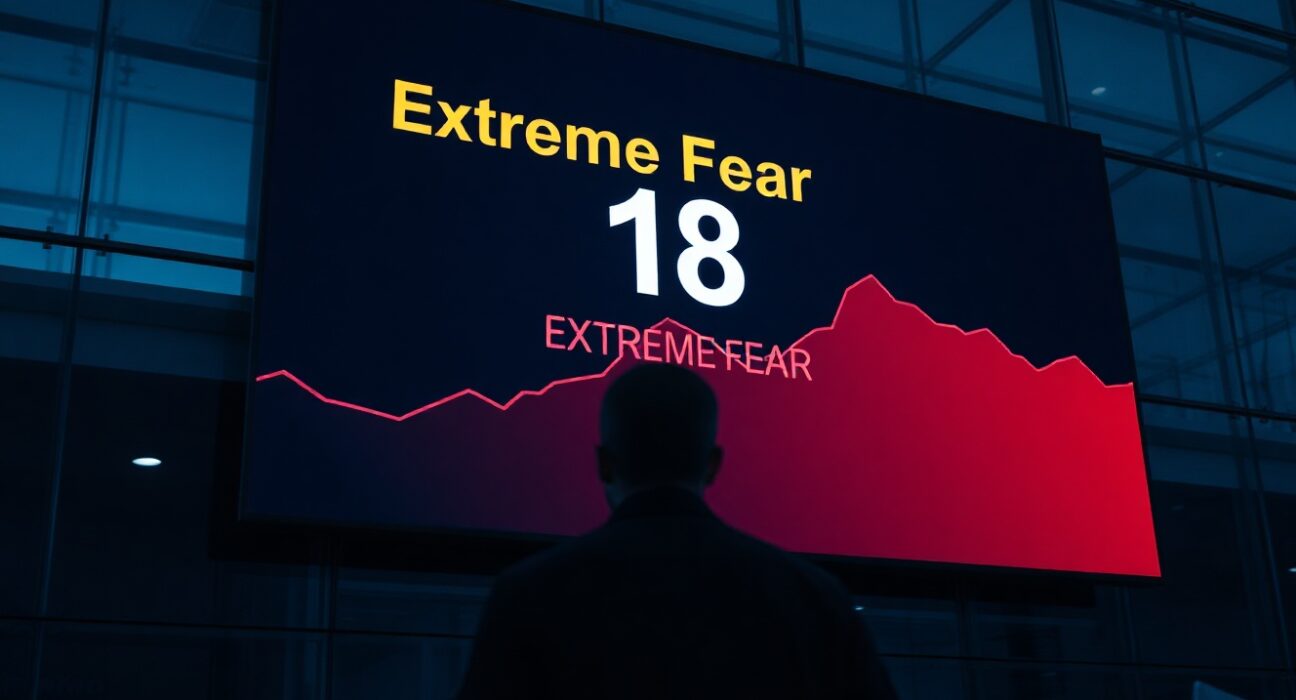
The Crypto Fear & Greed Index, a widely followed barometer of market sentiment, remains entrenched in ‘Extreme Fear’ territory, registering at 18 as of today. This marks a slight uptick of two points from the previous day, but the market mood remains heavily skewed toward pessimism.
What the Index Measures
Developed by CoinMarketCap, the index compresses a range of market data into a single numerical score from 0 to 100. A reading near 0 indicates ‘Extreme Fear,’ often signaling potential panic selling or undervaluation, while a score approaching 100 reflects ‘Extreme Greed,’ which can precede market corrections. The current reading of 18 places the market firmly in the fear camp, a zone historically associated with heightened volatility and potential buying opportunities for contrarian investors.
Key Drivers Behind the Persistent Fear
The index is not a simple price tracker. It synthesizes several complex data points:
- Price Momentum: The price action of the top 10 cryptocurrencies by market capitalization is a primary input. Sustained downward pressure or lack of recovery contributes heavily to the fear score.
- Market Volatility: Sharp, unpredictable swings in asset prices increase the fear component. The current environment, marked by sudden drops and low confidence, amplifies this factor.
- Derivatives Data: The index incorporates put/call ratios from major exchanges. A higher ratio of put options (bets on price declines) relative to call options (bets on price increases) indicates a defensive or bearish posture among traders.
- Stablecoin Supply Ratio (SSR): This metric tracks the ratio of stablecoin supply relative to the total market cap of major cryptocurrencies. A high SSR suggests that investors are holding cash-like assets rather than deploying capital into the market, a classic sign of risk aversion.
- Search Volume Data: CoinMarketCap’s own platform search data is used to gauge retail interest. A surge in searches for ‘sell’ or ‘crash’ versus ‘buy’ or ‘bottom’ feeds into the fear reading.
Historical Context and Implications
Readings of 18 are not unprecedented but are relatively rare. Historically, prolonged periods of ‘Extreme Fear’ have often preceded significant market bottoms, as weak hands are flushed out and long-term accumulation begins. However, the index is a sentiment snapshot, not a timing tool. The current persistence of fear suggests a lack of conviction among buyers and a cautious outlook from institutional and retail participants alike.
What This Means for Investors
For long-term holders, extreme fear can present accumulation opportunities, but it also carries the risk of further downside. For traders, the environment demands tight risk management. The index serves as a useful gauge of prevailing emotion, but it should not be used in isolation for making investment decisions. The broader macroeconomic landscape, including regulatory developments and global liquidity conditions, continues to play a decisive role in market direction.
Conclusion
The Crypto Fear & Greed Index holding at 18 underscores a market gripped by anxiety. While the two-point increase from yesterday offers little relief, it indicates that sentiment, while deeply negative, is not deteriorating further. Market participants will be watching closely for any catalyst—whether regulatory clarity, macroeconomic shifts, or technical support levels—that could begin to shift the needle away from extreme fear.
FAQs
Q1: What does the Crypto Fear & Greed Index measure?
The index measures market sentiment in the cryptocurrency space on a scale from 0 (Extreme Fear) to 100 (Extreme Greed). It combines price momentum, volatility, derivatives data, stablecoin supply ratios, and search trends.
Q2: Is an ‘Extreme Fear’ reading a good time to buy?
Historically, extreme fear has often coincided with market bottoms, but it is not a guaranteed signal. It can persist for extended periods, and further declines are possible. It is best used as one of many tools in a broader analysis strategy.
Q3: How often is the index updated?
The index is updated daily by CoinMarketCap, reflecting the latest available data from the previous 24 hours. Intraday movements can shift the reading, but the daily snapshot is the most commonly referenced figure.
Disclaimer: The information provided is not trading advice, Bitcoinworld.co.in holds no liability for any investments made based on the information provided on this page. We strongly recommend independent research and/or consultation with a qualified professional before making any investment decisions.
