

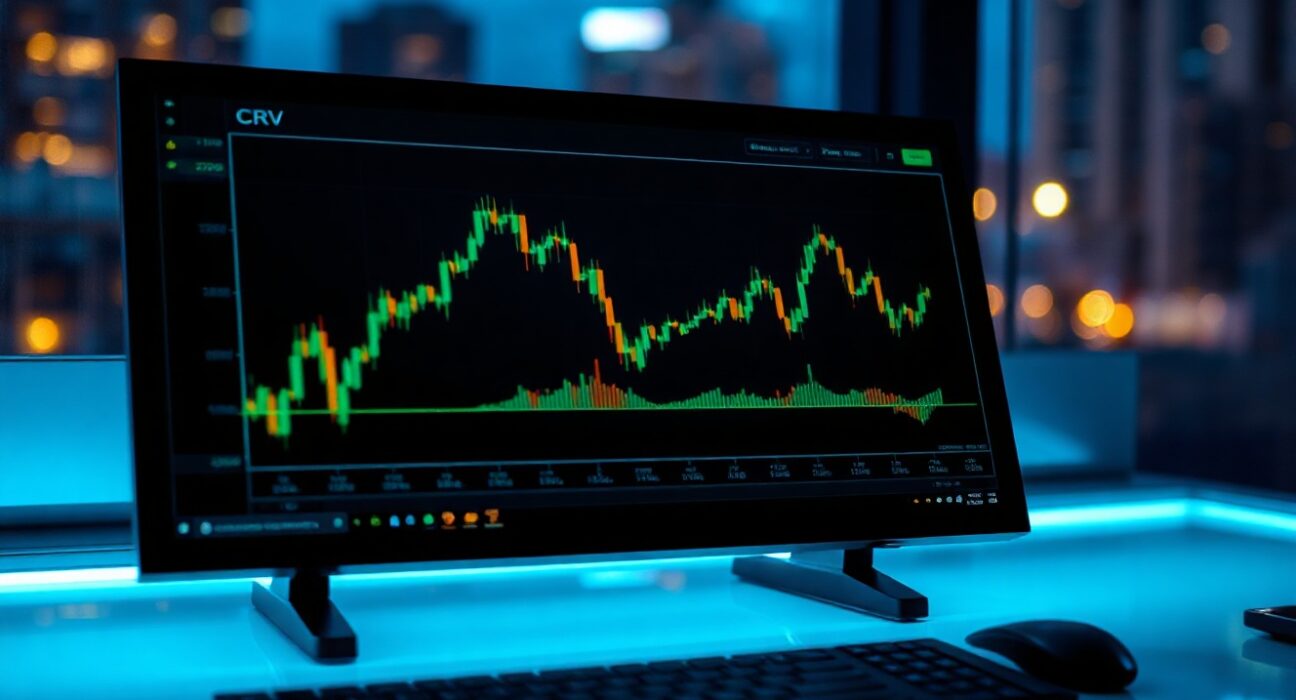
Curve DAO Token (CRV), the governance token of the Curve Finance decentralized exchange, has traded within a defined price range for several years. As the broader cryptocurrency market matures and decentralized finance (DeFi) protocols evolve, many investors are asking whether CRV can sustain a breakout above its historical resistance levels between 2026 and 2030. This article examines the token’s current market structure, key on-chain metrics, and the fundamental factors that could influence its long-term trajectory.
Understanding CRV’s Historical Price Structure
CRV launched in August 2020 during the DeFi summer, reaching an all-time high near $60 in 2021 before entering a prolonged downtrend. Since late 2022, the token has largely consolidated between support around $0.40 and resistance near $1.20, forming a well-defined trading range. This consolidation phase reflects both the broader bear market conditions and specific challenges facing the Curve ecosystem, including competition from other automated market makers (AMMs) and regulatory uncertainty in the DeFi sector.
The token’s price action has been heavily influenced by liquidity incentives, protocol revenue, and governance decisions. Curve Finance remains one of the largest decentralized exchanges by total value locked (TVL), but CRV’s price has not mirrored the platform’s usage growth, a divergence that analysts attribute to token dilution from emissions and the lack of a clear value accrual mechanism for holders.
Key Factors That Could Drive a Breakout
1. Protocol Revenue and Fee Structure Changes
Curve Finance generates substantial fees from trading volume, but historically, most of this revenue has not flowed directly to CRV token holders. If the protocol implements a fee-sharing mechanism or a buyback-and-burn model—similar to what other DeFi protocols have adopted—it could create a stronger fundamental case for holding CRV. Any governance vote toward such changes would likely act as a catalyst for price appreciation.
2. DeFi Market Recovery and Capital Inflows
CRV’s price is closely correlated with overall DeFi market sentiment. A sustained recovery in the crypto market, driven by potential interest rate cuts, regulatory clarity, or institutional adoption, could bring fresh capital into DeFi. Curve’s deep liquidity pools make it a preferred venue for large stablecoin swaps, and increased trading activity directly boosts protocol fees and the demand for CRV as a governance and staking asset.
3. Competition and Ecosystem Developments
Curve faces increasing competition from newer AMMs like Uniswap V3 and Maverick Protocol, which offer concentrated liquidity and higher capital efficiency. However, Curve’s specialization in stablecoin and correlated asset pairs gives it a moat in the low-slippage stablecoin swap market. The launch of Curve’s own lending protocol, crvUSD, and its integration with the broader Curve ecosystem could provide additional utility for CRV, potentially reducing selling pressure from emissions.
Technical Outlook for 2026-2030
From a technical perspective, CRV’s long-term range between $0.40 and $1.20 represents a critical battleground. A decisive weekly close above $1.20 with strong volume would signal a potential trend reversal, opening the path toward the $2.00–$3.00 zone. Conversely, a breakdown below $0.40 could lead to further downside, with the next major support around $0.20.
For 2026, analysts project a gradual recovery if DeFi adoption continues to grow, with a potential trading range of $0.80 to $1.50. By 2027-2028, if the broader market enters a new bullish cycle, CRV could test the $2.50–$4.00 range, depending on token supply dynamics and protocol revenue growth. The 2030 outlook remains highly speculative but hinges on Curve’s ability to maintain its market share in an increasingly competitive landscape.
Risks and Uncertainties
Investors should be aware of several risks. The ongoing token emissions from liquidity mining programs dilute existing holders, creating persistent selling pressure. Regulatory actions against DeFi protocols, particularly in the United States, could negatively impact Curve’s operations and CRV’s price. Additionally, smart contract vulnerabilities or governance attacks remain inherent risks in the DeFi space.
Conclusion
CRV’s long-term price trajectory depends on a combination of protocol-level improvements, broader market conditions, and competitive dynamics. While a breakout above the multi-year range is possible, it is not guaranteed. Investors should focus on fundamental developments—particularly fee-sharing mechanisms and crvUSD adoption—rather than short-term price speculation. The 2026-2030 period will likely be defined by whether Curve can evolve from a purely liquidity-driven protocol to one that captures and distributes value to its token holders.
FAQs
Q1: What is the main resistance level for CRV in 2026?
The primary resistance remains around $1.20, which has acted as the top of CRV’s long-term trading range since late 2022. A breakout above this level would be a strong bullish signal.
Q2: Does CRV have a maximum supply?
No, CRV has an inflationary supply model. New tokens are continuously emitted as rewards for liquidity providers, which dilutes existing holders. The emission rate is subject to governance votes and has been reduced over time.
Q3: How does crvUSD affect CRV’s price?
crvUSD, Curve’s native stablecoin, could increase demand for CRV if it is integrated into the protocol’s incentive structure. For example, if CRV is required as collateral or to boost yields on crvUSD, it could create additional buying pressure and reduce circulating supply.
Disclaimer: The information provided is not trading advice, Bitcoinworld.co.in holds no liability for any investments made based on the information provided on this page. We strongly recommend independent research and/or consultation with a qualified professional before making any investment decisions.
