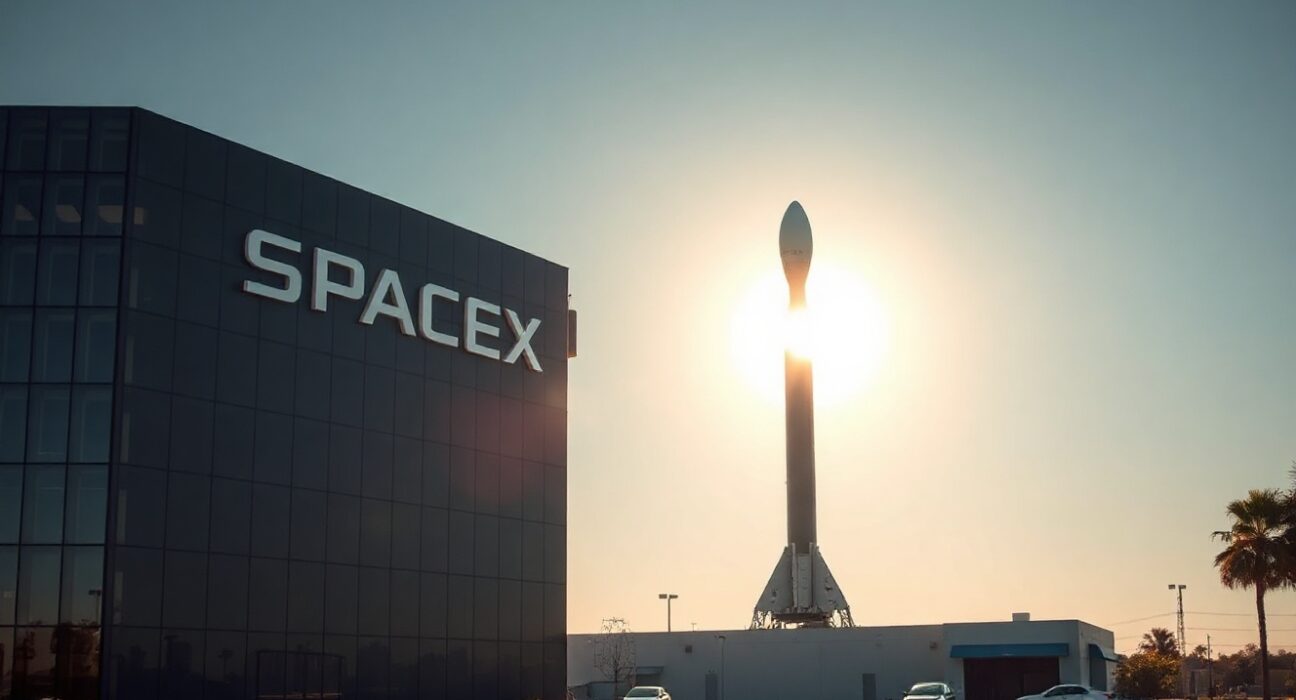
SpaceX has officially become a publicly traded company, marking a historic moment not just for the aerospace industry but for global capital markets. After 24 years as a private entity, the company priced its initial public offering at $135 per share, raising $75 billion and making it the largest IPO in history. The total raised later ballooned to $85.7 billion, reflecting extraordinary investor demand. The listing turned founder and CEO Elon Musk into the world’s first trillionaire and created thousands of new millionaires among SpaceX employees. Bitcoin World has covered SpaceX from its early struggles through its reusable rocket breakthroughs, and now its transition to a public company. This article provides a comprehensive overview of the IPO, its implications, and what investors and observers should watch next.
The debut and immediate market reaction
SpaceX shares began trading on the Nasdaq on June 12, 2026, opening at $150 — an 11% pop from the IPO price. The stock continued to climb throughout the day, closing at $160.95, up 19% from the offering price. Midday trading saw shares surge as much as 30%, with heavy volume reported across major brokerages. Robinhood reported record-breaking traffic on its trading platform in the hours following the debut. The strong performance underscored the immense retail and institutional appetite for a company that has become synonymous with space innovation, satellite internet, and artificial intelligence infrastructure.
By the numbers: The scale of SpaceX’s public offering
The IPO’s sheer size reshaped the financial landscape. SpaceX sold 555.6 million shares at $135 each, raising $75 billion initially. With the underwriters’ green shoe option fully exercised, the total reached $85.7 billion. The offering generated approximately $500 million in fees for banks, with Goldman Sachs and Morgan Stanley emerging as the biggest winners. SpaceX’s market capitalization quickly surpassed $2.7 trillion, making it the fifth-most valuable company in the world, ahead of Amazon. The company’s valuation ballooned further after its stock price climbed 20% on June 15 and more than 8% in early trading the following day.
Behind the headline numbers, the company’s S-1 filing revealed significant financial details. SpaceX reported revenues of over $18 billion in 2025, but also recorded a net loss of $4.9 billion. Since its inception, the company has accumulated more than $37 billion in cumulative losses. Despite this, investors have focused on its dominant position in satellite internet via Starlink, its reusable rocket technology, and its growing artificial intelligence business through xAI.
Who wins and who doesn’t
The biggest winner is Elon Musk, who holds approximately 85.1% of the company’s voting power. His paper wealth surpassed $1 trillion after the IPO, making him the world’s first trillionaire. Musk’s control over the publicly traded SpaceX is described as monarchical, with more than 50% voting power — far exceeding the influence typical of other tech founders. According to The New York Times, approximately 4,400 SpaceX employees could become millionaires through the IPO, though lower-tier investors in special purpose vehicles face hidden fees, lengthy payout delays, and the risk of outright fraud until lock-up periods lift.
Key developments since going public
Just days after the IPO, SpaceX announced its acquisition of Cursor for $60 billion in stock, signaling the company’s intent to expand its AI capabilities. The deal was widely seen as a strategic move to integrate Cursor’s AI coding tools into SpaceX’s engineering workflows and xAI division. Additionally, SpaceX COO Gwynne Shotwell, in a CNBC interview on June 12, suggested that a merger between SpaceX and Tesla might make Elon Musk’s life easier, fueling speculation about future corporate restructuring. The company also added language to its S-1 warning investors of potential future dilution, which some analysts interpreted as preparation for a possible Tesla merger or further large acquisitions.
Pre-IPO deals and the AI compute boom
In the months leading up to the IPO, SpaceX locked in several massive compute deals that improved its balance sheet. Anthropic agreed to pay xAI $1.25 billion per month for compute capacity, though the duration of the lease has been a point of debate. Google also committed to paying SpaceX $920 million per month for compute, described by a Google representative as a short-term deal addressing unexpected demand for its newly launched AI products. These contracts highlight SpaceX’s pivot toward becoming a major AI infrastructure provider, leveraging its Starlink network and data center capabilities.
What the S-1 revealed
The S-1 registration document provided an unprecedented look inside SpaceX. The filing detailed a business dominated by Starlink, which now generates the majority of revenue. It also outlined the company’s ambitious plans for Starship, though the path to full reusability remains murky. The S-1 warned investors that future dilution could be significant, adding fuel to merger rumors. The document also revealed that Musk’s xAI division is central to SpaceX’s future growth prospects, with AI compute deals expected to become a major revenue stream.
Conclusion
SpaceX’s IPO represents a watershed moment for the space industry and public markets. The company’s ability to raise $85.7 billion reflects extraordinary investor confidence in its technology, leadership, and long-term vision. However, the company faces significant challenges, including ongoing losses, regulatory hurdles for Starship, and the complexities of integrating AI acquisitions. For investors, the key metrics to watch will be Starlink’s subscriber growth, Starship’s test flight progress, and the revenue trajectory of xAI’s compute deals. Bitcoin World will continue to provide comprehensive coverage of SpaceX as it navigates life as a public company.
FAQs
Q1: When did SpaceX start trading on the Nasdaq?
SpaceX shares began trading on June 12, 2026, opening at $150 per share on the Nasdaq exchange under the ticker symbol SPCE.
Q2: How much money did SpaceX raise in its IPO?
SpaceX initially raised $75 billion by pricing 555.6 million shares at $135 each. After underwriters exercised the green shoe option, the total raised reached $85.7 billion, making it the largest IPO in history.
Q3: What are the biggest risks for SpaceX as a public company?
The S-1 filing highlighted cumulative losses of over $37 billion, potential future dilution, and the uncertain path to Starship reusability. Additionally, Elon Musk’s outsized voting power (85.1%) raises governance concerns for minority shareholders.
Disclaimer: The information provided is not trading advice, Bitcoinworld.co.in holds no liability for any investments made based on the information provided on this page. We strongly recommend independent research and/or consultation with a qualified professional before making any investment decisions.