

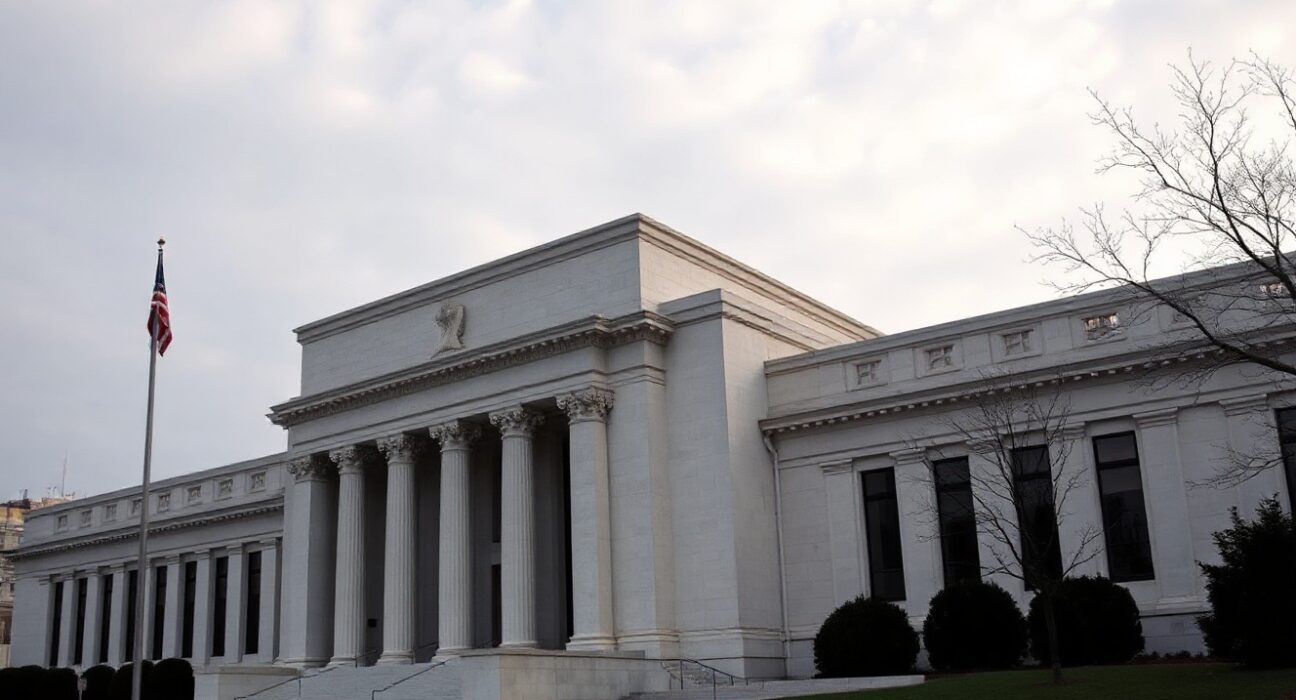
The Federal Reserve has updated its economic projections, raising its 2026 interest rate forecast to 3.8% while simultaneously lifting its outlook for the Personal Consumption Expenditures (PCE) inflation index. The revised estimates, released following the Federal Open Market Committee’s latest meeting, signal a more cautious approach to monetary easing than previously anticipated.
Revised Rate Path Reflects Persistent Inflation Concerns
The updated median projection for the federal funds rate at the end of 2026 now stands at 3.8%, up from the 3.4% forecast issued in the previous quarterly summary. This adjustment suggests that Fed officials expect to maintain tighter monetary conditions for longer, as inflation proves stickier than initially hoped. The decision reflects a balancing act between supporting economic growth and containing price pressures that have not yet fully subsided to the central bank’s 2% target.
PCE Inflation Forecasts Move Higher
Alongside the rate adjustment, the Fed raised its PCE inflation projection for 2026 to 2.5%, compared to the earlier estimate of 2.2%. Core PCE, which excludes volatile food and energy prices, was also revised upward to 2.6%. These changes indicate that policymakers see a slower path toward disinflation, partly due to lingering effects from supply chain adjustments, housing costs, and labor market tightness. The revised inflation outlook reinforces the rationale for keeping borrowing costs elevated.
Market and Economic Implications
The updated projections have immediate implications for financial markets, business investment, and household borrowing costs. Higher-for-longer interest rates typically weigh on stock valuations, particularly in growth-oriented sectors, while increasing the cost of mortgages, auto loans, and corporate debt. For savers, however, the environment may offer improved yields on fixed-income products. The Fed’s stance also affects the U.S. dollar’s strength and global capital flows, as higher rates attract foreign investment.
Economists note that the revised forecasts reflect a delicate economic landscape. While the labor market remains resilient with unemployment near historic lows, consumer spending has shown signs of moderation. The Fed’s updated dot plot, which charts individual members’ rate expectations, reveals a more hawkish tilt among policymakers, though some dissenting voices still advocate for a quicker pivot to easing if growth slows sharply.
Conclusion
The Federal Reserve’s decision to raise its 2026 interest rate forecast to 3.8% and lift PCE inflation projections underscores a cautious monetary policy trajectory. With inflation expected to remain above target for an extended period, the central bank is prioritizing price stability over short-term growth support. Market participants and consumers alike should prepare for a prolonged period of elevated borrowing costs, as the Fed continues to navigate the complex path toward its dual mandate of maximum employment and stable prices.
FAQs
Q1: What does the Fed’s 2026 interest rate forecast of 3.8% mean for borrowers?
Borrowers can expect higher costs for mortgages, credit cards, and business loans throughout 2026, as the Fed signals it will keep rates elevated to combat inflation. Adjustable-rate loans may see further increases, while fixed-rate products will remain expensive compared to recent years.
Q2: Why did the Fed raise its PCE inflation projections?
The upward revision reflects persistent price pressures in services, housing, and some goods categories, along with slower-than-expected progress in bringing inflation down to the 2% target. Supply chain improvements have helped, but core inflation remains sticky.
Q3: How might these revised forecasts affect the stock market?
Higher interest rate expectations typically pressure equity valuations, especially for growth stocks and technology companies that rely on cheap borrowing. Defensive sectors and financial stocks may fare better, but overall market volatility could increase as investors adjust to a tighter monetary stance.
Disclaimer: The information provided is not trading advice, Bitcoinworld.co.in holds no liability for any investments made based on the information provided on this page. We strongly recommend independent research and/or consultation with a qualified professional before making any investment decisions.
