

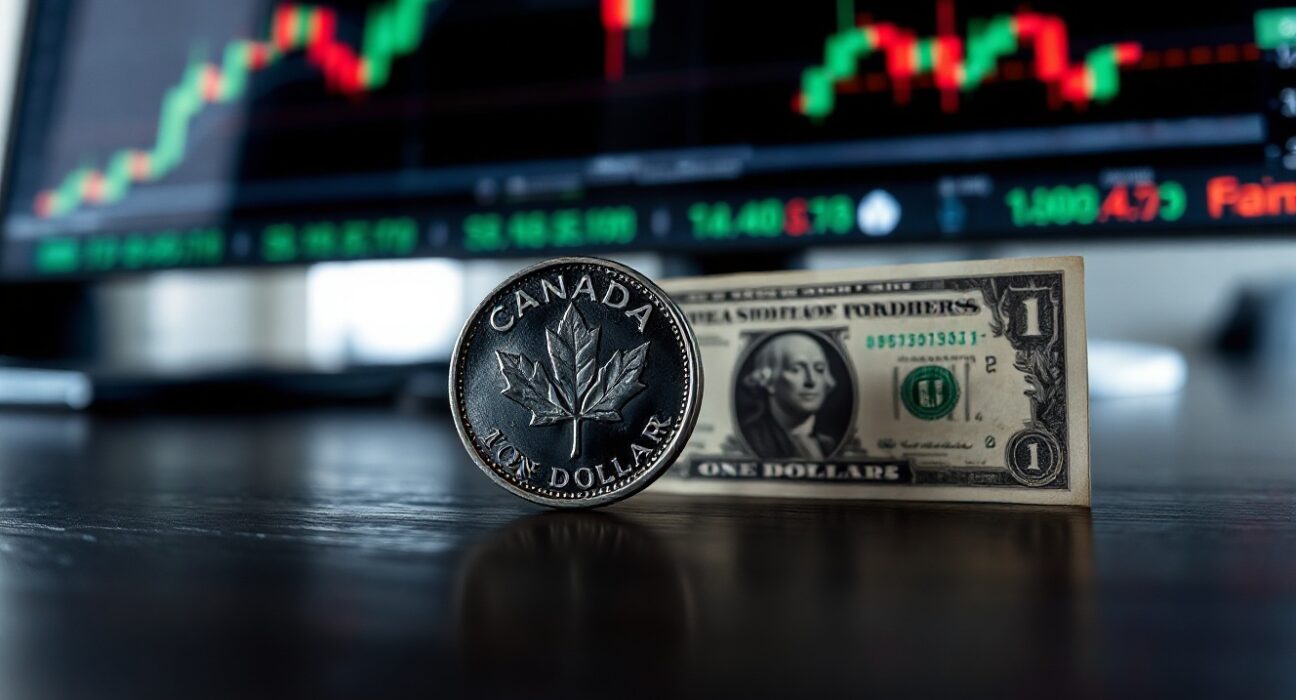
The Canadian Dollar (CAD) inched higher against its US counterpart during Wednesday’s trading session, capitalizing on a broad shift away from safe-haven assets. The move comes as fading risk aversion across global markets prompted investors to reduce their exposure to the US Dollar, which had strengthened in recent weeks amid geopolitical uncertainties.
Risk-On Sentiment Drives Currency Flows
The latest price action in the USD/CAD pair reflects a broader improvement in market sentiment. Global equity markets posted gains, and commodity prices stabilized, providing a tailwind for resource-linked currencies like the Canadian Dollar. The US Dollar, which often benefits during periods of market stress, retreated as traders moved back into higher-yielding and risk-sensitive assets.
Analysts point to a combination of factors behind the shift, including easing concerns over a potential escalation in trade tensions and more optimistic economic data from key trading partners. The Canadian economy, closely tied to the health of the US and global commodity demand, has shown resilience, supporting the currency’s recent uptick.
USD/CAD Technical and Fundamental Drivers
From a technical perspective, the USD/CAD pair has been trading within a relatively narrow range over the past week, with the Canadian Dollar’s modest gains pushing the pair slightly lower. Key support levels are being tested, and a sustained move below them could signal further weakness for the greenback.
Fundamentally, the divergence in monetary policy expectations between the Bank of Canada (BoC) and the Federal Reserve remains a focal point. While the Fed has signaled a cautious approach to rate cuts, the BoC has already begun easing, which typically would weigh on the CAD. However, the current risk-on mood is overriding these policy differences in the short term.
What This Means for Traders and the Broader Market
For currency traders, the recent move highlights the importance of monitoring global risk sentiment as a primary driver of short-term forex movements. The Canadian Dollar’s strength is not solely a reflection of domestic fundamentals but is heavily influenced by external factors such as equity market performance and commodity prices, particularly oil.
The relationship between the CAD and oil prices remains crucial. As a major exporter of crude, Canada’s currency often moves in tandem with energy prices. Recent stability in oil markets has provided an additional layer of support for the loonie, reinforcing the bullish bias against the US Dollar in the current environment.
Conclusion
The Canadian Dollar’s incremental advance against the US Dollar is a clear signal that risk appetite is returning to financial markets. While the move is modest, it represents a notable shift from the defensive positioning seen in previous weeks. Traders will now watch for upcoming economic data from both Canada and the US, as well as any shifts in central bank rhetoric, to determine whether this trend can sustain itself. For now, the fading of risk aversion is providing a welcome reprieve for the Canadian Dollar.
FAQs
Q1: Why did the Canadian Dollar rise against the US Dollar?
The Canadian Dollar rose primarily due to a decline in risk aversion. Investors moved away from safe-haven assets like the US Dollar and into riskier currencies, supported by stronger global equity markets and stable commodity prices.
Q2: How does risk sentiment affect the USD/CAD exchange rate?
Risk sentiment is a major driver for USD/CAD. When investors are optimistic (risk-on), they tend to sell the US Dollar and buy higher-yielding currencies like the Canadian Dollar. When fear rises (risk-off), the US Dollar typically strengthens.
Q3: What role do oil prices play in the Canadian Dollar’s value?
Canada is a major oil exporter, so the Canadian Dollar often moves in tandem with crude oil prices. Higher oil prices generally support the CAD, while lower prices can weaken it. The current stability in oil markets is providing a tailwind for the loonie.
Disclaimer: The information provided is not trading advice, Bitcoinworld.co.in holds no liability for any investments made based on the information provided on this page. We strongly recommend independent research and/or consultation with a qualified professional before making any investment decisions.
