

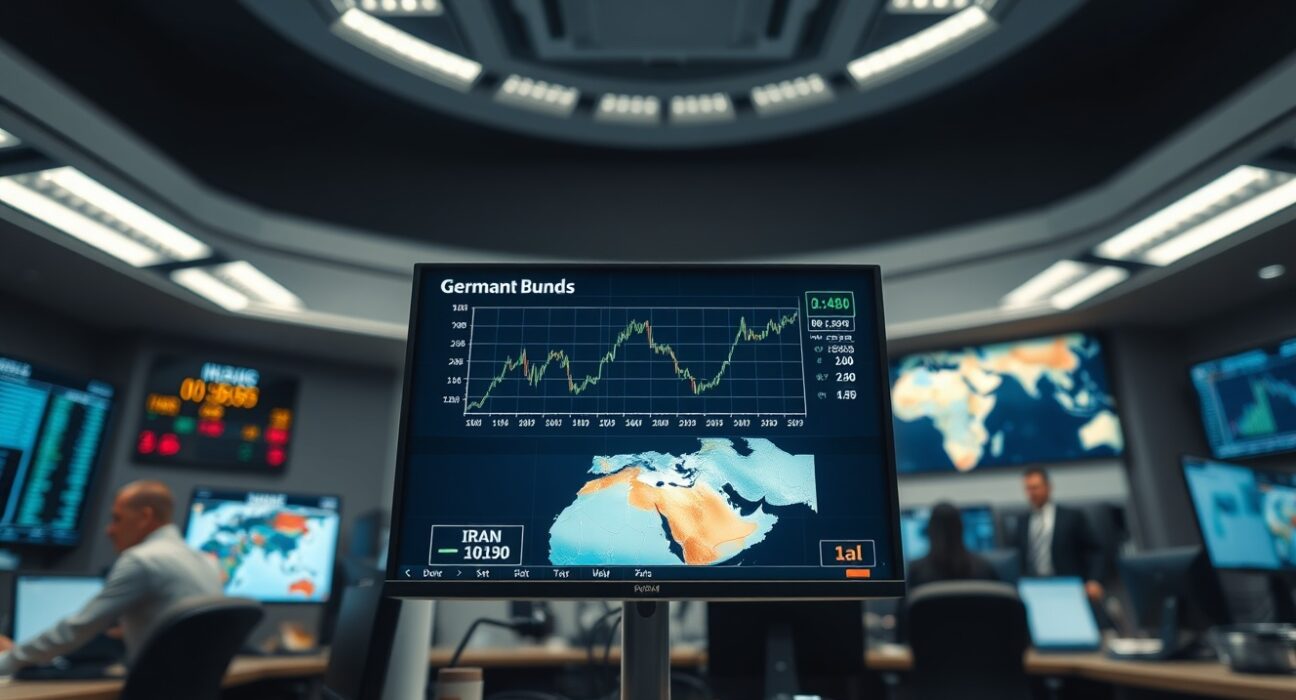
Euro zone government bond yields rose on Tuesday after the United States abruptly canceled diplomatic talks with Iran, sending oil prices higher and prompting a reassessment of risk across global financial markets. The development marks a fresh geopolitical flashpoint that investors are now pricing into sovereign debt and energy markets.
Market Reaction and Yield Movements
Germany’s 10-year Bund yield, the benchmark for the euro zone, climbed 5 basis points to 2.45%, while French OATs and Italian BTPs saw similar upward moves. The sell-off in safe-haven bonds reflected a shift in investor sentiment as the prospect of renewed tensions in the Middle East raised concerns about energy supply disruptions and inflationary pressures.
The cancellation of talks, which had been seen as a potential step toward easing sanctions on Iranian oil exports, triggered a sharp rally in crude prices. Brent crude futures rose more than 3% to $82 per barrel, their highest level in two weeks. The move reverberated through bond markets as traders recalibrated expectations for central bank policy in light of higher energy costs.
Geopolitical Context and Broader Implications
The decision to call off negotiations follows months of indirect exchanges between Washington and Tehran, with European mediators attempting to revive elements of the 2015 nuclear deal. The abrupt halt suggests a hardening of positions on both sides, reducing the likelihood of near-term de-escalation. For European investors, the development adds a layer of uncertainty to an already complex macroeconomic picture.
Higher oil prices pose a particular challenge for the European Central Bank, which is already grappling with stubbornly high core inflation. Energy costs feed directly into consumer prices, and a sustained uptick could complicate the ECB’s efforts to begin cutting interest rates later this year. Bond markets are now pricing in a lower probability of rate cuts in the second half of 2025.
Impact on Peripheral Euro Zone Debt
Spreads between German Bunds and peripheral bonds widened modestly, indicating a flight to quality within the region. Italian BTPs underperformed, with the yield spread over Bunds expanding to 145 basis points. Analysts noted that countries with higher debt-to-GDP ratios are more exposed to rising energy costs and tighter financial conditions.
The move also weighed on European equities, with the STOXX 600 index falling 0.8% as energy-sensitive sectors such as airlines and chemicals led declines. The correlation between oil prices and bond yields has strengthened in recent months, reflecting the market’s focus on supply-side shocks and their implications for monetary policy.
Conclusion
The cancellation of US-Iran talks represents a meaningful shift in geopolitical risk that is now being reflected across asset classes. Euro zone bond yields are likely to remain sensitive to further developments in the Middle East, as well as to any signs that higher oil prices are feeding through to core inflation. Investors should monitor diplomatic channels and central bank communications closely in the coming weeks.
FAQs
Q1: Why did euro zone bond yields rise after the US canceled Iran talks?
A: Bond yields rose as investors sold safe-haven government bonds in response to increased geopolitical risk and a spike in oil prices. Higher energy costs can fuel inflation, reducing the likelihood of central bank rate cuts, which makes bonds less attractive.
Q2: How does the cancellation of Iran talks affect oil prices?
A: The talks had raised hopes of a potential easing of sanctions on Iranian oil exports, which would have increased global supply. Their cancellation removes that prospect, tightening supply expectations and pushing crude prices higher.
Q3: What does this mean for European Central Bank policy?
A: Higher oil prices add to inflationary pressures, making it harder for the ECB to justify cutting interest rates. Markets have reduced expectations for rate cuts in 2025, as the central bank may need to keep policy tighter for longer to contain price pressures.
Disclaimer: The information provided is not trading advice, Bitcoinworld.co.in holds no liability for any investments made based on the information provided on this page. We strongly recommend independent research and/or consultation with a qualified professional before making any investment decisions.
