

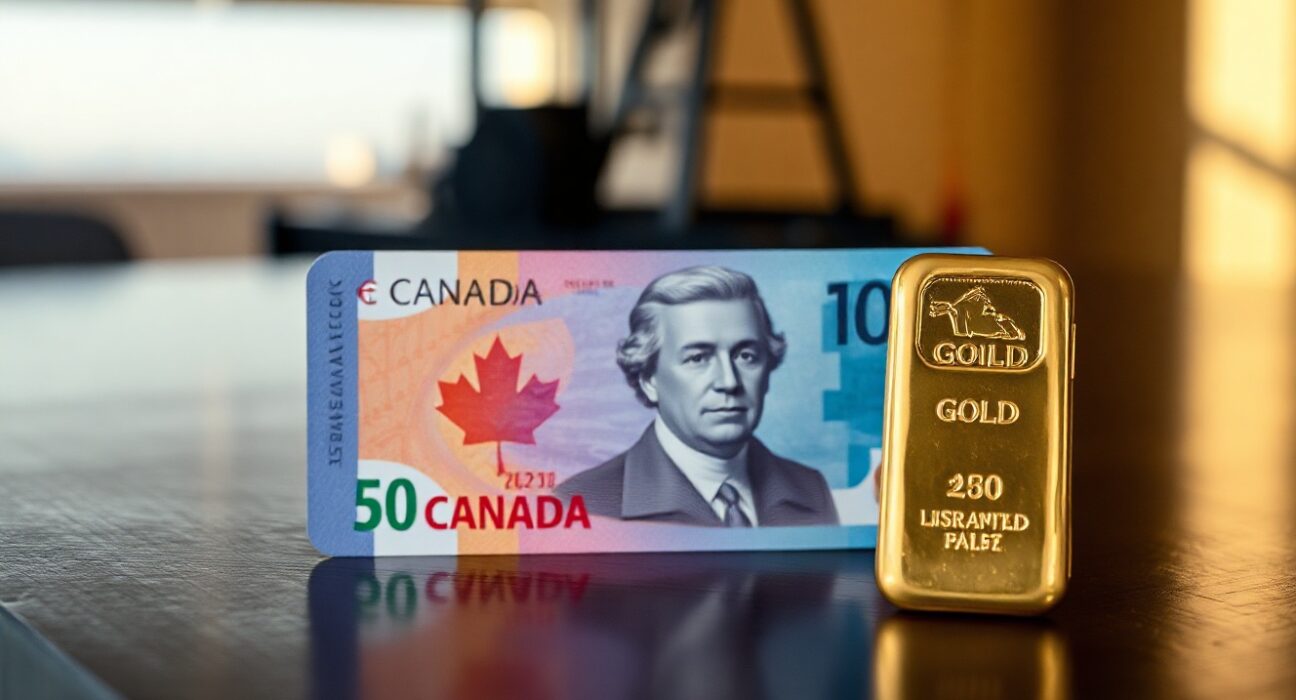
For decades, the Canadian dollar was widely known as a petrocurrency, moving in lockstep with crude oil prices. But recent market data and central bank behavior suggest a quiet but significant shift: the loonie is increasingly correlating with gold rather than oil.
A Changing Correlation
Historically, Canada’s status as a major oil exporter meant that CAD/USD exchange rates closely tracked West Texas Intermediate crude. When oil rose, the loonie strengthened. That relationship, however, has weakened noticeably since 2020. Meanwhile, the correlation between gold prices and the Canadian dollar has strengthened, particularly over the past 18 months.
Analysts point to several factors. Canada’s oil production has become less price-sensitive due to pipeline constraints and a shift toward long-term contracts. At the same time, the Bank of Canada has increased its gold reserves for the first time in decades, following a global trend among central banks diversifying away from the U.S. dollar.
Why Gold Is Gaining Ground
Gold’s appeal as a reserve asset has grown amid geopolitical uncertainty and inflation hedging. The Bank of Canada’s 2023 decision to add gold to its reserves, after years of selling, signaled a strategic pivot. This move aligns with broader de-dollarization trends seen in China, India, and emerging markets.
For currency traders, the implication is clear: the old playbook of using crude oil as a proxy for CAD exposure may no longer be reliable. Gold prices, influenced by different supply-demand dynamics and central bank policies, now offer a more consistent signal for the loonie’s direction.
What This Means for Investors
Investors who rely on commodity correlations for hedging or speculative strategies need to recalibrate. The CAD-gold link suggests that gold price movements may increasingly drive short-term exchange rate volatility, while oil shocks could have a muted impact unless they significantly alter Canada’s terms of trade.
This shift also has implications for Canadian exporters and importers. A gold-linked loonie could behave differently during risk-off events, potentially offering less natural hedging for energy-sector revenues.
Conclusion
The Canadian dollar’s evolving relationship with gold over crude oil is not a temporary anomaly but a structural change driven by central bank policy, global reserve diversification, and shifting commodity market dynamics. Market participants should monitor gold prices as closely as oil prices when assessing CAD exposure going forward.
FAQs
Q1: Why was the Canadian dollar historically tied to crude oil?
Canada is one of the world’s largest oil exporters, so crude oil prices directly affected export revenues, trade balances, and investor sentiment toward the loonie.
Q2: What caused the shift toward gold correlation?
Factors include the Bank of Canada’s gold reserve purchases, reduced sensitivity of Canadian oil production to spot prices, and global central bank de-dollarization trends boosting gold demand.
Q3: How reliable is the new CAD-gold correlation?
While still developing, the correlation has strengthened consistently over 18 months and appears to reflect structural changes rather than short-term noise. Continued monitoring is advised.
Disclaimer: The information provided is not trading advice, Bitcoinworld.co.in holds no liability for any investments made based on the information provided on this page. We strongly recommend independent research and/or consultation with a qualified professional before making any investment decisions.
