

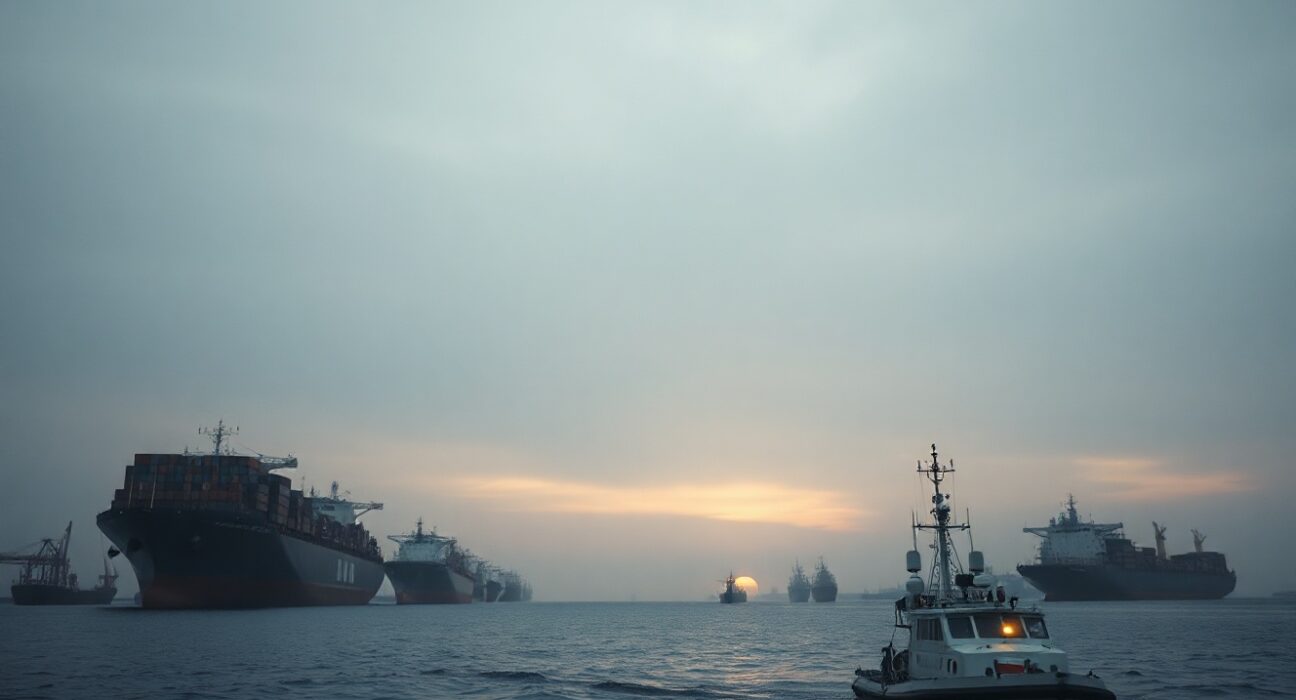
Iran has reportedly closed the Strait of Hormuz to maritime traffic, citing a violation of a recent ceasefire agreement by an unnamed party. The move, which took effect in the early hours of [Current Date], has sent shockwaves through global energy markets and raised immediate concerns over oil supply disruptions, regional stability, and the security of one of the world’s most critical maritime chokepoints.
What Happened and Why It Matters
The Strait of Hormuz, a narrow 21-mile-wide passage between the Persian Gulf and the Gulf of Oman, handles roughly 20% of the world’s oil transit. Any sustained closure represents a direct threat to global energy security. According to initial reports from regional maritime agencies, Iranian naval vessels have been deployed to block commercial shipping, with tankers carrying crude from Saudi Arabia, Iraq, Kuwait, and the UAE being turned away or held at anchorage points.
The Iranian government has not issued an official statement detailing the specific nature of the alleged ceasefire violation. However, diplomatic sources indicate that the decision was made by the Supreme National Security Council in response to what Tehran describes as a ‘material breach’ of a recent understanding aimed at de-escalating tensions in the region. The identity of the alleged violator remains unconfirmed, with speculation ranging from a coalition naval patrol to a specific commercial shipping incident.
Immediate Impact on Global Oil Markets
Oil prices surged by more than 8% in early Asian and European trading, with Brent crude briefly touching $98 per barrel before settling near $95. Analysts warn that if the closure extends beyond 48 hours, prices could easily breach the $100 mark, triggering a broader economic shockwave. The International Energy Agency (IEA) has not yet announced an emergency meeting, but member states are reportedly reviewing strategic petroleum reserve release options.
The closure also threatens liquefied natural gas (LNG) shipments from Qatar, the world’s largest LNG exporter, which relies entirely on the Strait for its exports to Asia and Europe. This could compound existing energy supply challenges, particularly for European nations still adjusting to reduced Russian gas flows.
Maritime Security and Military Posture
The U.S. Navy’s Fifth Fleet, based in Bahrain, has issued a statement confirming it is monitoring the situation closely and is in contact with regional partners. While no immediate military intervention has been announced, the closure represents a significant escalation that could draw in naval forces from multiple countries, including the United Kingdom, France, and India, all of which maintain a presence in the region.
Commercial shipping operators have been advised to reroute vessels, though alternative routes around the Arabian Peninsula add significant time and cost. The Bab el-Mandeb strait, another chokepoint near Yemen, remains open but carries its own security risks due to ongoing Houthi activities.
Conclusion
The closure of the Strait of Hormuz marks one of the most serious geopolitical developments in the region in recent years. While the immediate trigger is a claimed ceasefire violation, the underlying tensions between Iran and its regional adversaries have been building for months. The situation remains fluid, with diplomatic channels reportedly active but no resolution yet in sight. For global markets and consumers, the next 48 to 72 hours will be critical in determining whether this is a short-term pressure tactic or the beginning of a prolonged blockade with far-reaching economic consequences.
FAQs
Q1: How much of the world’s oil passes through the Strait of Hormuz?
Approximately 20% of global oil consumption, or about 17 million barrels per day, transits the Strait of Hormuz. It is also a key route for LNG from Qatar.
Q2: Has Iran closed the Strait of Hormuz before?
Iran has repeatedly threatened to close the strait during periods of heightened tension, most notably in 2012 and 2019, but it has not enacted a full, sustained blockade in recent decades. Previous incidents involved temporary harassment or seizure of specific vessels.
Q3: What are the alternative routes if the Strait remains closed?
The only alternative for Gulf oil exports is the pipeline network, which has limited capacity. The Petroline (East-West Pipeline) in Saudi Arabia can carry about 5 million barrels per day, but that is insufficient to replace the full volume of Strait transit. Other pipelines from Iraq and the UAE also have limited capacity.
Disclaimer: The information provided is not trading advice, Bitcoinworld.co.in holds no liability for any investments made based on the information provided on this page. We strongly recommend independent research and/or consultation with a qualified professional before making any investment decisions.
