

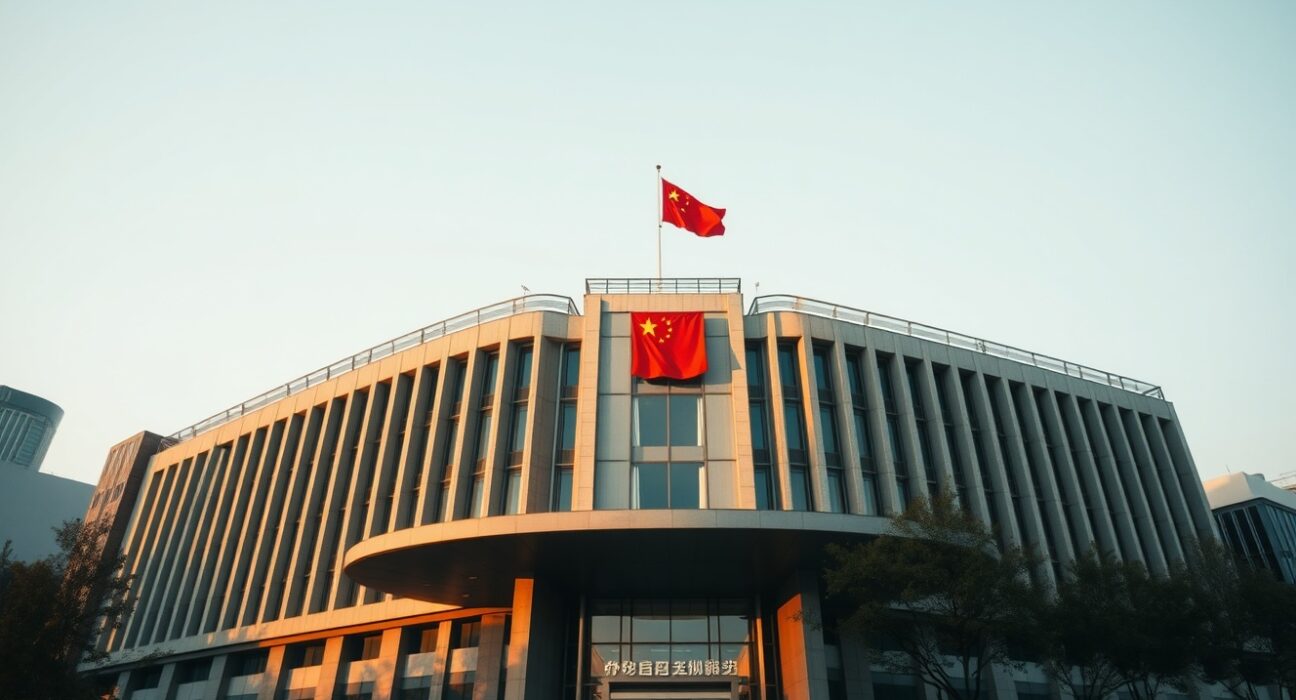
China’s Ministry of Finance announced on [date] that it will impose restrictive measures on 46 American companies, barring them from participating in government procurement contracts within the country. The move marks a significant escalation in the ongoing trade and technology conflict between the world’s two largest economies, targeting a wide range of sectors including defense, technology, and industrial manufacturing.
Details of the Procurement Restrictions
The new measures, outlined in an official notice, blacklist the 46 US firms from bidding on or supplying goods and services to Chinese government entities at all levels. The list includes major defense contractors, semiconductor manufacturers, and technology firms that have been previously sanctioned by the US or are involved in sensitive supply chains. According to the Ministry, the decision is based on national security considerations and reciprocal measures against US trade policies that have restricted Chinese companies’ access to American markets.
Broader Context of US-China Trade Tensions
This action follows a series of tit-for-tat sanctions between Beijing and Washington over the past year. The US has imposed export controls on advanced chips, AI technology, and semiconductor equipment to China, while also adding dozens of Chinese entities to its own blacklists. China’s procurement ban is seen as a direct response, leveraging its massive state purchasing power—estimated at over $2 trillion annually—to pressure US companies and signal its willingness to retaliate.
Impact on Global Supply Chains and Markets
The restrictions are expected to disrupt existing contracts and supply agreements, particularly in the aerospace, electronics, and defense sectors. US firms that rely on Chinese government contracts for revenue may face significant financial losses. Analysts warn that the move could further fragment global supply chains, forcing companies to choose between the Chinese and American markets. The announcement has already contributed to volatility in Asian and US stock markets, with shares of affected companies experiencing declines.
Conclusion
The Chinese finance ministry’s decision to impose procurement measures on 46 US firms represents a hardening of Beijing’s stance in the trade war. While the immediate impact will be felt by the blacklisted companies, the longer-term consequences may include deeper decoupling of the two economies and increased uncertainty for global businesses operating across both markets. The development underscores the growing use of government procurement as a strategic tool in geopolitical conflicts.
FAQs
Q1: What does the Chinese government procurement ban mean for US companies?
US companies on the blacklist will be prohibited from selling goods or services to any Chinese government entity, including state-owned enterprises, at the central, provincial, and local levels. This cuts them off from a major source of revenue in China.
Q2: Which US firms are affected by the new measures?
The specific list of 46 companies has not been fully published, but it is expected to include major defense contractors like Lockheed Martin and Raytheon, as well as semiconductor firms such as Micron Technology and companies involved in AI and quantum computing.
Q3: How does this affect the broader US-China trade relationship?
The ban is likely to deepen the existing trade and technology rift, reducing bilateral economic cooperation. It may also prompt further retaliatory measures from the US, potentially leading to a full-scale decoupling of key industries and supply chains.
Disclaimer: The information provided is not trading advice, Bitcoinworld.co.in holds no liability for any investments made based on the information provided on this page. We strongly recommend independent research and/or consultation with a qualified professional before making any investment decisions.
