

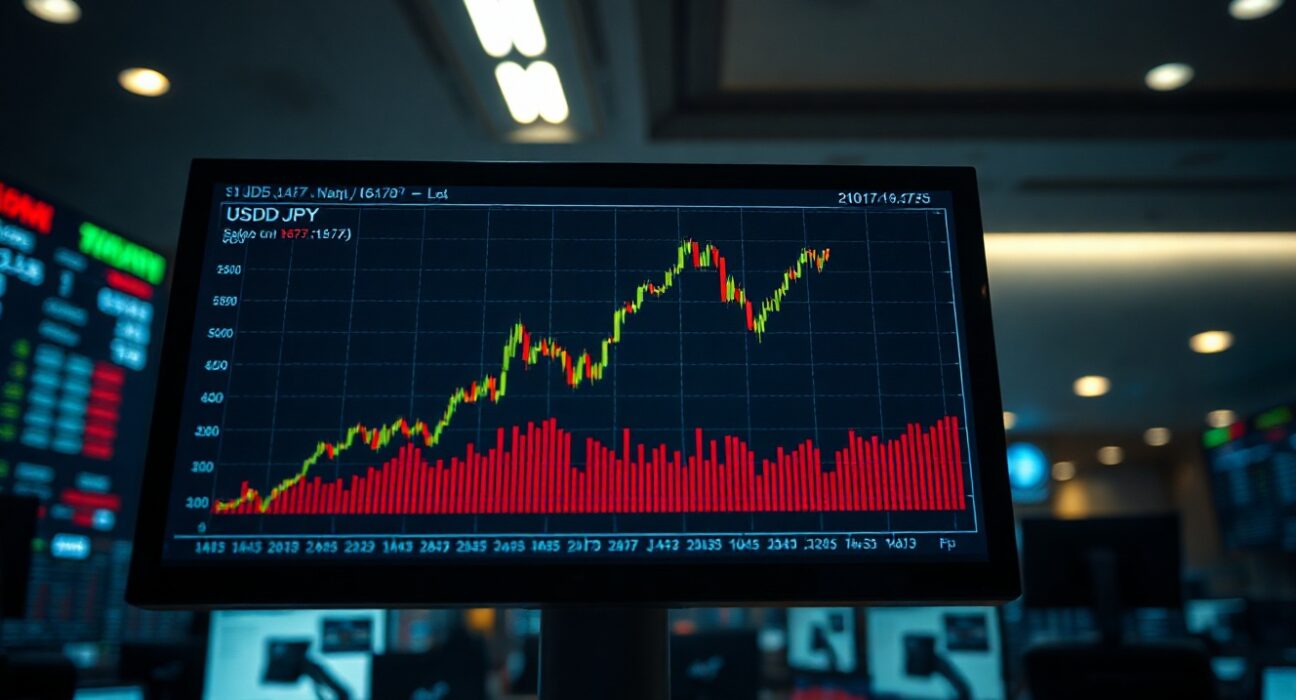
The USD/JPY pair has edged closer to a two-year high, trading around the 161.75 level, as persistent interest rate differentials between the U.S. and Japan continue to weigh on the yen. The move has reignited market speculation about potential intervention by Japanese authorities to stem further yen weakness.
Technical Analysis: Approaching Critical Resistance
From a technical perspective, the 161.75 zone represents a key resistance level, last seen in late 2022. The pair has been in a steady uptrend since early this year, driven by the Federal Reserve’s hawkish stance and the Bank of Japan’s (BOJ) continued ultra-loose monetary policy. A break above this level could open the path toward the 162.50 region, but such a move would likely heighten intervention risks.
The Relative Strength Index (RSI) on the daily chart is hovering near overbought territory, suggesting that the rally may be stretched. However, momentum indicators remain bullish, with the 50-day moving average crossing above the 200-day moving average earlier this month — a classic ‘golden cross’ signal that often attracts trend-following traders.
Intervention Risks Loom Large
Japanese officials, including Finance Minister Shunichi Suzuki and Vice Finance Minister for International Affairs Masato Kanda, have repeatedly warned that they are watching currency movements closely and stand ready to take appropriate action against excessive volatility. The 161.75 level is widely seen as a potential trigger point for intervention, similar to the 150-151 zone in 2022 when the BOJ conducted multiple rounds of yen-buying operations.
Market participants are now pricing in a higher probability of intervention, with some analysts estimating a 40-50% chance of action if the pair pushes above 162.00. The effectiveness of such intervention, however, remains debated, as fundamental drivers — particularly the U.S.-Japan yield gap — continue to favor the dollar.
Why This Matters for Traders
For forex traders, the current environment presents both opportunity and risk. The uptrend is clear, but the potential for sudden intervention means that stop-loss orders and position sizing become critical. A surprise intervention could trigger a sharp 2-3% reversal in a matter of minutes, as seen in previous episodes. Long-term investors should also watch for any shift in BOJ policy, as a change in yield curve control settings could alter the trajectory of the yen.
Conclusion
The USD/JPY pair remains in a strong uptrend, with the 161.75 level acting as a critical technical and psychological barrier. While the fundamental backdrop favors further dollar strength, the growing risk of Japanese intervention introduces a significant wildcard. Traders should remain vigilant and prepared for potential volatility spikes as the pair tests these multi-year highs.
FAQs
Q1: What is the current USD/JPY price and why is it at a two-year high?
The USD/JPY pair is trading around 161.75, near its highest level since late 2022. The move is driven by the wide interest rate differential between the U.S. Federal Reserve’s hawkish policy and the Bank of Japan’s ultra-loose stance, along with ongoing dollar strength.
Q2: What are the chances of Japanese intervention?
Market estimates suggest a 40-50% probability of intervention if USD/JPY breaches the 162.00 level. Japanese officials have repeatedly warned against excessive yen weakness and have a history of intervening at key levels.
Q3: How can traders protect themselves from intervention risk?
Traders should use tight stop-loss orders, reduce position sizes during high-volatility periods, and consider hedging strategies such as options. Sudden intervention can cause rapid reversals of 2-3% in minutes.
Disclaimer: The information provided is not trading advice, Bitcoinworld.co.in holds no liability for any investments made based on the information provided on this page. We strongly recommend independent research and/or consultation with a qualified professional before making any investment decisions.
