

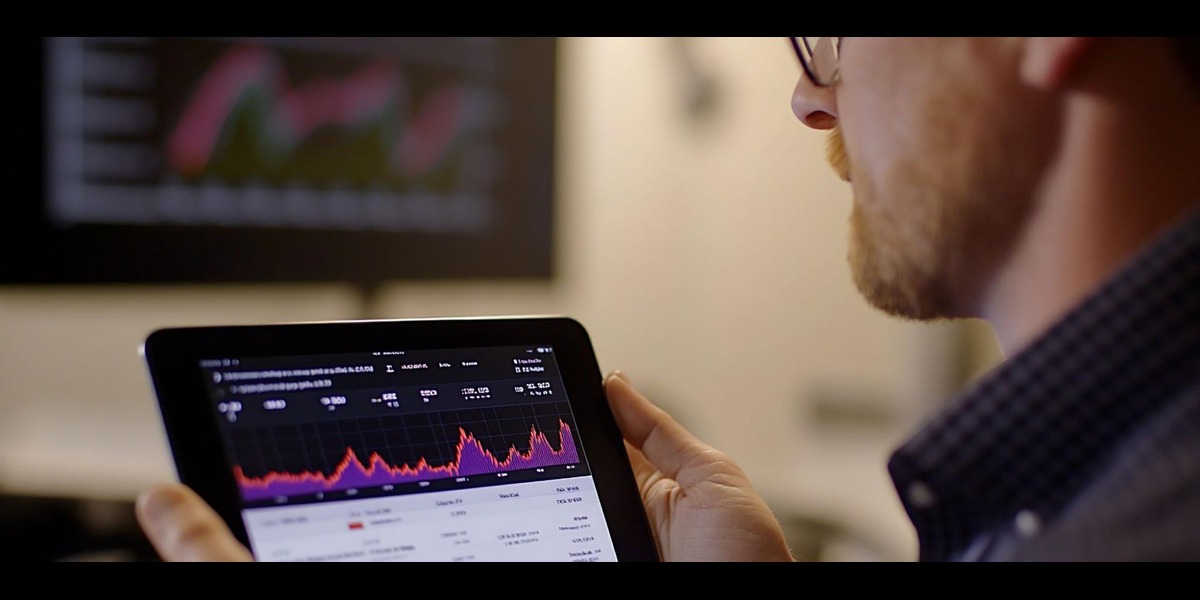
Automated trading has become an increasingly important part of modern financial markets, especially as technology continues to reshape how people approach investing and trading. For new users, the idea of letting a system handle trading decisions can feel both interesting and slightly overwhelming at the same time. However, when understood step by step, automated trading becomes much easier to grasp.
At its core, automated trading is about using technology to assist with decision making. Instead of manually analyzing every market movement or placing each trade by hand, users rely on systems that can monitor conditions and respond based on defined logic. This helps reduce pressure, especially in fast moving markets where timing plays a crucial role.
One of the most talked about tools in this space is the AI trading robot, which combines automation with intelligent data analysis to support trading decisions in real time.
Understanding How Automated Trading Works
To understand automated trading, it is important to first recognize how financial decisions are usually made. In traditional approaches, traders study charts, follow news updates, and make decisions based on experience and interpretation.
Automated systems simplify this process by using pre defined rules or models. These systems continuously scan market data and respond when specific conditions are met. Instead of reacting emotionally or manually, decisions are executed through a structured system.
Modern tools go a step further. An AI trading robot does not only follow fixed instructions but also analyzes patterns in data, studies market behavior, and adapts its responses based on changing conditions. This makes the system more flexible and data driven compared to traditional automation.
Why Beginners Are Turning to Automation
For new users, financial markets can appear complex. Prices move quickly, information changes constantly, and there is a large amount of data to process. This can make manual trading difficult, especially without experience.
Automation helps reduce this complexity by handling repetitive tasks and continuous monitoring. Instead of watching the market all day, users can rely on systems that track conditions and respond when needed.
Another important reason beginners are interested in automation is emotional control. Human decision making is often influenced by emotions such as fear or excitement. Automated systems help reduce this factor by following structured logic instead of emotional reactions.
The AI trading robot is often used in this context because it combines structured automation with intelligent analysis, making it easier for beginners to engage with financial markets in a more organized way.
Step 1: Learning Basic Market Concepts
Before using any automated system, it is important to understand how markets behave. Financial markets move based on supply and demand, global events, and investor sentiment.
Beginners do not need advanced knowledge at this stage. However, understanding basic ideas such as trends, volatility, and price movement helps build a strong foundation.
When users understand these basics, it becomes easier to interpret how an AI trading robot reacts to different market conditions.
Step 2: Understanding System Logic
Automated trading systems operate based on logic. This logic defines when to enter or exit a trade based on specific conditions.
For example, a system might respond when a price reaches a certain level or when a trend shows consistent movement. Once these conditions are met, the system acts automatically.
An AI trading robot takes this further by analyzing multiple signals at the same time. Instead of relying on a single indicator, it evaluates a wider range of data points, which helps improve decision making accuracy in changing market environments.
Step 3: Setting Up the System
Getting started with automated trading usually involves a few basic steps. While platforms may differ, the general process is quite similar.
Users typically begin by creating an account, selecting a trading option, and configuring basic preferences such as risk level or strategy type. Once everything is set, the system can be activated.
Many platforms that use an AI trading robot also provide ready made configurations, which makes the process simpler for beginners who may not have technical experience.
This allows users to begin without needing deep knowledge of trading strategies or market analysis.
Step 4: Understanding Risk in Trading
One of the most important lessons for any beginner is that financial markets always involve risk. Prices can move unexpectedly, and no system can fully predict market behavior.
Even advanced tools like the AI trading robot cannot remove uncertainty. While they can help improve efficiency and reduce manual effort, they still operate within unpredictable market conditions.
This is why risk awareness is essential. Beginners should always understand that automation is a support tool, not a guarantee of results.
Step 5: Observing Performance Over Time
Once a system is active, it is important to monitor how it performs. This does not mean constant supervision, but regular observation helps users understand how the system behaves in different market situations.
An AI trading robot usually provides performance insights and activity summaries, which help users evaluate how the system is responding to market changes.
Over time, this helps beginners develop better understanding and confidence in how automated trading works in practice.
Step 6: Learning Gradually
One of the most effective ways for beginners to learn automated trading is through gradual experience. Instead of trying to understand everything at once, it is better to observe, learn, and build knowledge step by step.
By watching how trades are executed and how market conditions influence system behavior, users begin to understand the logic behind automation more clearly.
This learning process is especially useful when working with an AI trading robot, as it demonstrates how data driven systems interpret and respond to real market activity.
The Role of Artificial Intelligence
Artificial intelligence has significantly improved the capabilities of automated trading systems. It allows systems to analyze large amounts of data, identify patterns, and adapt to changing market conditions.
Unlike traditional systems that follow fixed instructions, AI based tools are more flexible and responsive. They can adjust their analysis based on new information, making them more suitable for dynamic financial environments.
This is one of the reasons why AI based automation has become increasingly popular among beginners and experienced users alike.
Final Thoughts
Automated trading is making financial markets more accessible to beginners by simplifying complex processes and reducing the need for constant manual involvement. However, it is important to approach it with understanding and realistic expectations.
Tools like the AI trading robot can support decision making, improve efficiency, and help users engage with markets in a more structured way. But they work best when combined with basic market knowledge and awareness of risk.
As technology continues to evolve, automated trading is likely to become even more integrated into modern financial systems. For new users, learning these fundamentals provides a strong foundation for understanding how trading is changing in the digital age.
Disclaimer: The information provided is not trading advice, Bitcoinworld.co.in holds no liability for any investments made based on the information provided on this page. We strongly recommend independent research and/or consultation with a qualified professional before making any investment decisions.
