

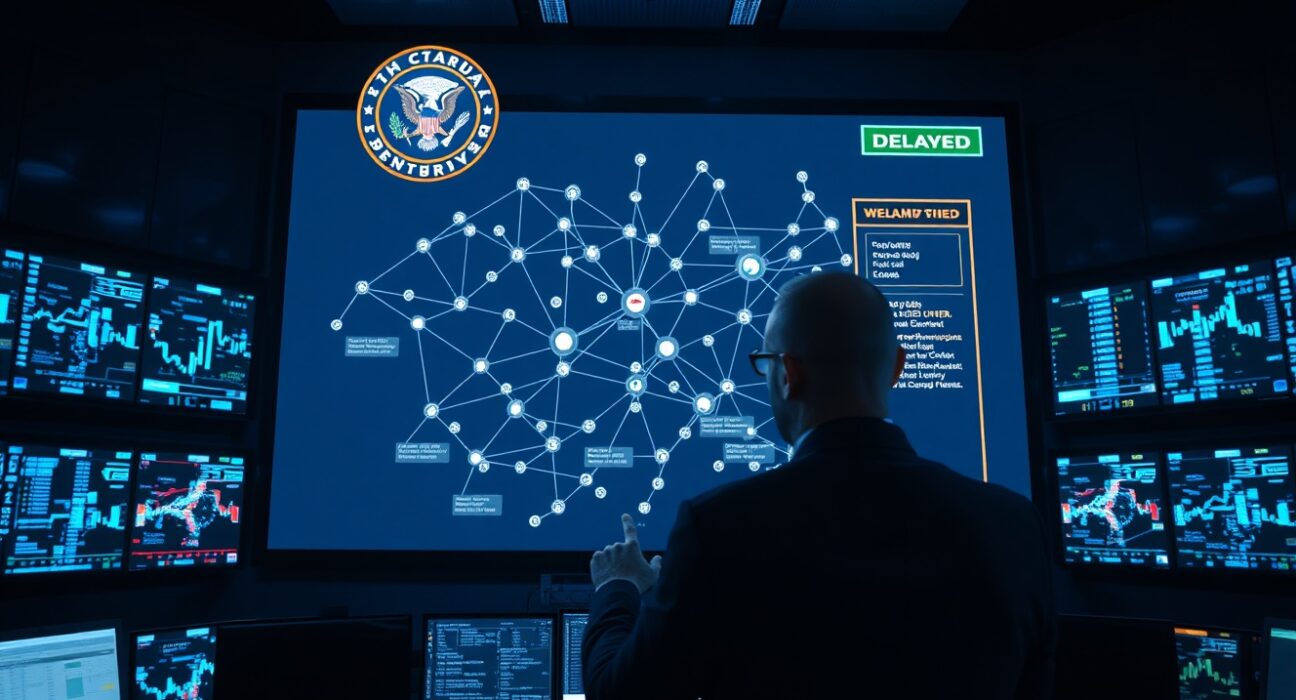
A security infrastructure expert has characterized the U.S. Securities and Exchange Commission’s (SEC) recent decision to postpone the approval of tokenized stocks as a constructive step toward stronger investor protection. According to a report by CoinDesk, the delay provides a critical window to address foundational flaws in the current compliance framework, which is ill-equipped to handle the speed and complexity of real-time tokenized trading.
The Core Issue: Compliance, Not Technology
The expert, identified as Chamarajnagar, argues that the problem does not lie with the technology of tokenization itself. Instead, the primary obstacle is the existing regulatory and surveillance infrastructure, which was designed for a slower, batch-processed trading environment. He asserts that tokenizing U.S. equities without a modernized oversight system would expose the market to significant risk.
Chamarajnagar points to several high-profile incidents to illustrate his point. The Lazarus Group’s laundering of stolen funds through Tornado Cash, the misuse of customer assets at FTX, and the exploitative attack on Mango Markets all demonstrate that fraud occurs within the context of transactions, not within the underlying code. These events highlight the need for a system that can analyze the intent and relationships behind a trade, not just its execution.
The Case for a ‘Cognitive Compliance’ Framework
To bridge this gap, Chamarajnagar is advocating for a next-generation regulatory model he terms “Cognitive Compliance.” This framework would move beyond static rule-checking to a dynamic, context-aware system. Key components would include:
- Real-time data collection: Continuous aggregation of transactional data from multiple sources.
- Relational analysis: Mapping connections between wallets, exchanges, and asset movements to identify suspicious patterns.
- Anomaly detection: Using advanced algorithms to flag unusual trading behavior as it occurs.
- Dynamic risk assessment: Adjusting risk scores for transactions based on real-time context and historical data.
This approach would allow regulators to understand the full picture of a transaction—its origin, purpose, and potential for harm—before it is finalized, rather than investigating after the fact.
Why This Matters to Investors
The SEC’s delay is not a setback for innovation, but a strategic pause to prevent a potentially catastrophic failure. Chamarajnagar warns that rushing to tokenize U.S. stocks without adequate preparation could trigger a crisis far larger than the collapse of FTX. For everyday investors, the delay means their assets are not being exposed to a market that lacks the necessary safeguards. For the industry, it represents a clear directive: build the regulatory infrastructure first, or risk losing public trust entirely.
Conclusion
The SEC’s postponement of tokenized stock trading is a calculated move to ensure that market evolution does not outpace investor protection. The call for a “Cognitive Compliance” framework underscores a growing consensus that the future of finance requires a fundamental rethinking of how we monitor and regulate transactions. The time granted by this delay is invaluable, and as the expert notes, it must not be wasted.
FAQs
Q1: What exactly did the SEC delay?
The SEC postponed its plans to allow the trading of tokenized stocks, which are traditional equity shares represented as digital tokens on a blockchain.
Q2: What is ‘Cognitive Compliance’?
It is a proposed regulatory framework that uses real-time data analysis and relational mapping to understand the context of a transaction, aiming to detect and prevent fraud before it occurs.
Q3: Why is the current compliance system inadequate for tokenized assets?
Existing systems are designed for slower, batch-processed trading and cannot analyze the complex, real-time relationships between wallets, exchanges, and assets that are characteristic of tokenized markets.
Disclaimer: The information provided is not trading advice, Bitcoinworld.co.in holds no liability for any investments made based on the information provided on this page. We strongly recommend independent research and/or consultation with a qualified professional before making any investment decisions.
