

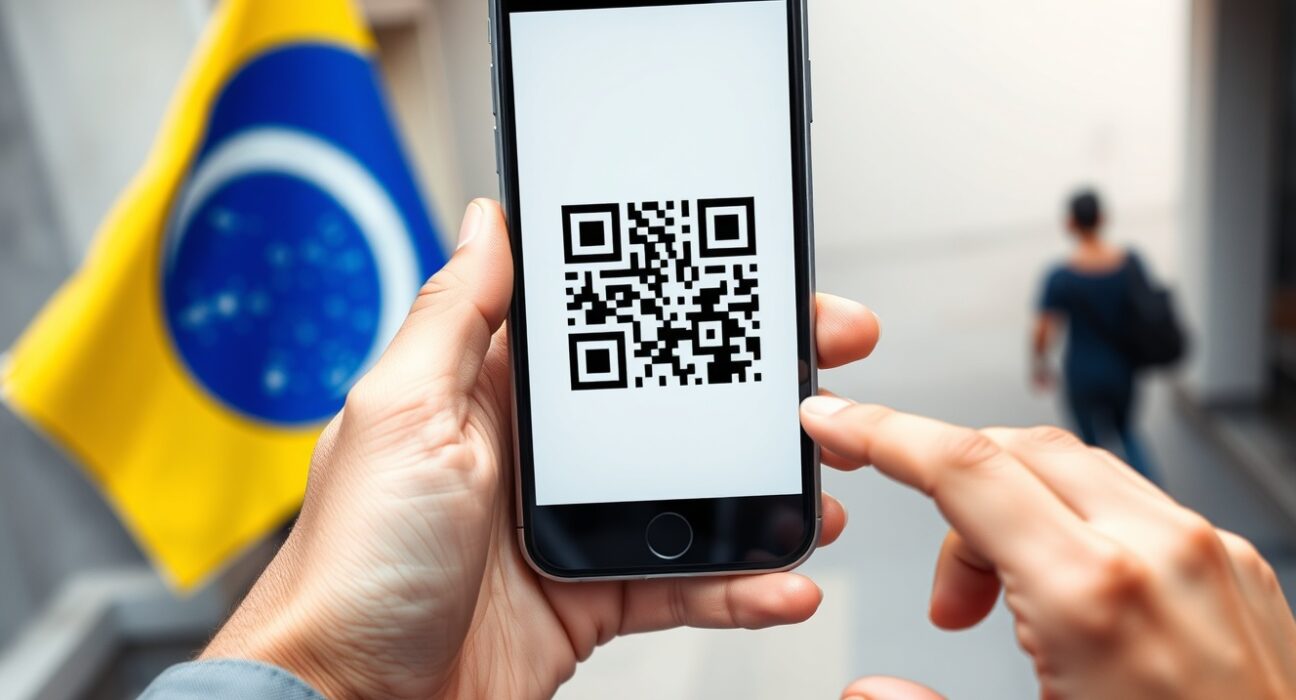
Cryptocurrency payment app Oobit has announced a significant integration with Brazil’s PIX real-time payment system, opening the door for approximately 170 million users to seamlessly deposit Brazilian reais (BRL) and convert them into USDT for holding or making payments. The move marks one of the most direct bridges between a major national digital payment network and a global stablecoin.
How the Integration Works
According to Oobit, users can now send USDT using their PIX key or scan a QR code to complete transactions. The blockchain operates entirely in the background, providing a user experience that mirrors the existing PIX system. This design eliminates the friction typically associated with crypto payments, such as wallet addresses, transaction confirmations, or network fees visible to the end user.
The integration effectively turns every PIX user into a potential USDT user without requiring them to learn new technology. For the estimated 170 million Brazilians who actively use PIX, the barrier to entry for stablecoin transactions has been lowered substantially.
PIX: A Digital Payment Giant
Launched by the Central Bank of Brazil in November 2020, PIX has grown into one of the world’s largest digital payment networks. It processes billions of transactions annually and has become deeply embedded in Brazil’s economy, used for everything from street vendor purchases to large corporate transfers. Its instant settlement, 24/7 availability, and zero-cost structure for individuals made it an instant success.
By integrating with PIX, Oobit gains access to a user base that is already accustomed to real-time digital payments. The move also signals growing demand for stablecoin access within regulated financial ecosystems.
Why This Matters for Crypto Adoption
The integration addresses a longstanding pain point in cryptocurrency adoption: the difficulty of moving between fiat currency and digital assets. Most crypto users in emerging markets still rely on bank transfers or peer-to-peer exchanges, which can be slow, expensive, or unreliable. By plugging directly into PIX, Oobit offers a familiar, instant, and low-cost on-ramp.
USDT, issued by Tether, is the world’s largest stablecoin by market capitalization. Its peg to the US dollar makes it a popular choice for savings, remittances, and cross-border payments in countries with volatile local currencies. Brazil, which has experienced significant currency fluctuations in recent years, represents a natural market for dollar-pegged digital assets.
Conclusion
Oobit’s integration with Brazil’s PIX network represents a practical step toward mainstream stablecoin usage. By removing technical barriers and leveraging an existing payment infrastructure that millions already trust, the app positions itself as a bridge between traditional finance and the crypto economy. The success of this model could influence similar integrations in other markets with dominant real-time payment systems.
FAQs
Q1: What is PIX?
PIX is a real-time payment system launched by the Central Bank of Brazil in 2020. It allows instant money transfers between individuals, businesses, and government entities, 24 hours a day, 365 days a year. It has become Brazil’s most popular digital payment method.
Q2: Do I need a crypto wallet to use Oobit with PIX?
Yes, but Oobit handles the blockchain complexity behind the scenes. Users can deposit BRL via PIX, which is automatically converted to USDT within the app. Sending payments works similarly to standard PIX transfers, using a PIX key or QR code.
Q3: Is USDT legal in Brazil?
Brazil has a progressive regulatory stance toward cryptocurrencies. While not classified as legal tender, digital assets like USDT are legal to own, trade, and use for payments. The Central Bank of Brazil has also been exploring its own digital currency, the Drex, signaling official interest in digital payment innovation.
Disclaimer: The information provided is not trading advice, Bitcoinworld.co.in holds no liability for any investments made based on the information provided on this page. We strongly recommend independent research and/or consultation with a qualified professional before making any investment decisions.
