

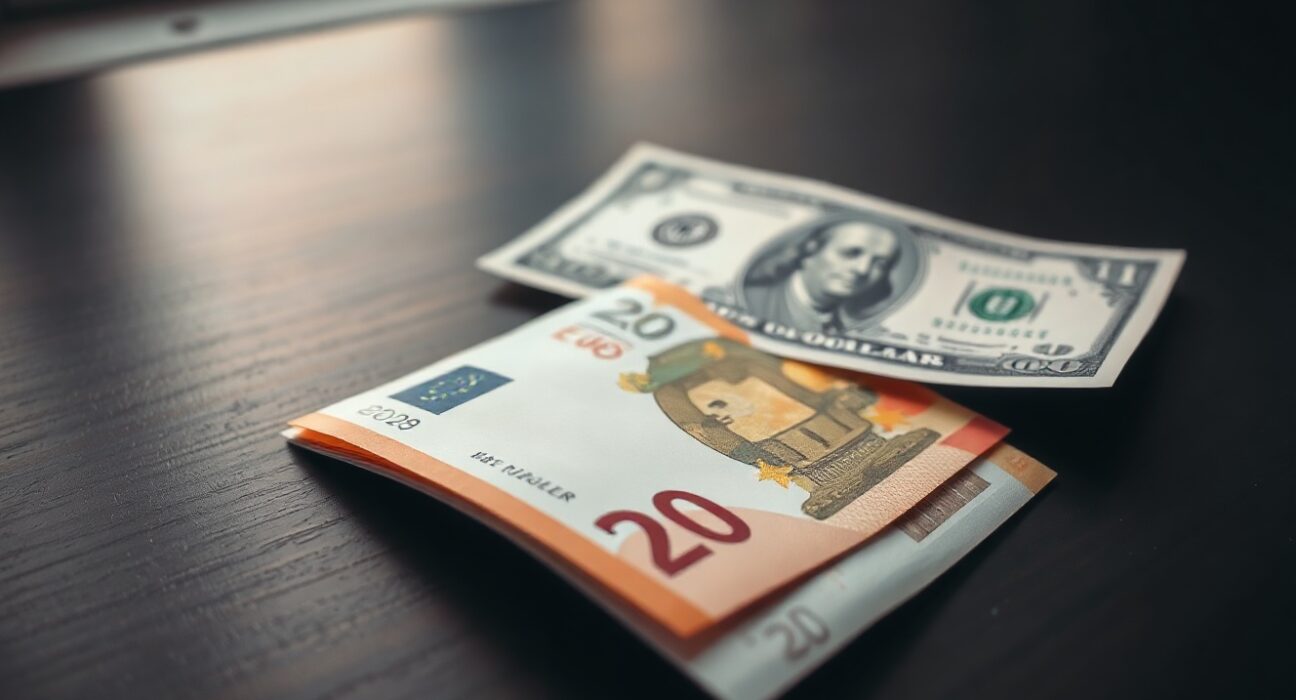
The euro dropped to its weakest level against the US dollar in over a year on Wednesday, driven by persistent expectations that the Federal Reserve will maintain higher interest rates for longer than previously anticipated. The single currency fell below the $1.05 mark for the first time since November 2023, reflecting a broader shift in global currency markets as the dollar continues to attract investors seeking higher yields.
Why the Euro Is Under Pressure
The primary catalyst for the euro’s decline is the widening interest rate differential between the US and the eurozone. The Federal Reserve has signaled it is in no rush to cut rates, with recent data showing a resilient US labor market and sticky inflation. In contrast, the European Central Bank (ECB) is widely expected to begin easing monetary policy later this year as the eurozone economy struggles with sluggish growth and weaker industrial output. This divergence has made dollar-denominated assets more attractive, pushing the EUR/USD pair lower.
Market Reaction and Key Levels
Traders reacted swiftly to the move, with the euro touching an intraday low of $1.0490 before stabilizing slightly higher. Analysts are now watching the $1.04 level as a potential support zone. A break below that could open the door to further losses, with some technical strategists pointing to the $1.02 area as the next major target. The euro has now lost more than 5% of its value against the dollar since the start of the year, marking one of the steepest declines among major currencies.
Impact on Businesses and Consumers
A weaker euro has mixed implications for the European economy. Exporters benefit from cheaper goods sold abroad, which could provide a boost to manufacturing sectors in Germany and France. However, import costs rise, particularly for energy and raw materials priced in dollars, adding to inflationary pressures. For consumers, travel to the US becomes more expensive, while American tourists find Europe more affordable. Companies with significant dollar-denominated debt may also face higher repayment costs.
What This Means for the ECB
The ECB faces a delicate balancing act. A weaker euro can help stimulate exports and support growth, but it also risks reigniting inflation by making imports more expensive. ECB President Christine Lagarde has reiterated that future policy decisions will remain data-dependent, but the currency’s slide may complicate the central bank’s efforts to bring inflation back to its 2% target. Some economists argue that the ECB may tolerate a moderately weaker euro as a way to support the region’s struggling economy, but a disorderly decline could prompt concern.
Conclusion
The euro’s slide to one-year lows underscores the dominant role of Federal Reserve policy in shaping global currency markets. With US rates expected to stay elevated and the ECB likely to cut rates later this year, the interest rate gap is set to remain wide. While the weaker euro offers some relief to European exporters, it also introduces new uncertainties for inflation and import costs. Traders will be closely watching upcoming US inflation data and ECB policy signals for the next directional move.
FAQs
Q1: Why did the euro fall to a one-year low?
The euro weakened primarily due to expectations that the Federal Reserve will keep interest rates higher for longer, widening the rate gap between the US and the eurozone and boosting demand for the dollar.
Q2: How does a weaker euro affect European consumers?
European consumers face higher costs for imported goods, especially energy and raw materials priced in dollars, which can contribute to inflation. Travel to the US also becomes more expensive.
Q3: Could the euro fall further?
Analysts suggest that if the euro breaks below the $1.04 support level, further declines toward $1.02 are possible. The outlook will depend on upcoming economic data and central bank policy decisions.
Disclaimer: The information provided is not trading advice, Bitcoinworld.co.in holds no liability for any investments made based on the information provided on this page. We strongly recommend independent research and/or consultation with a qualified professional before making any investment decisions.
