

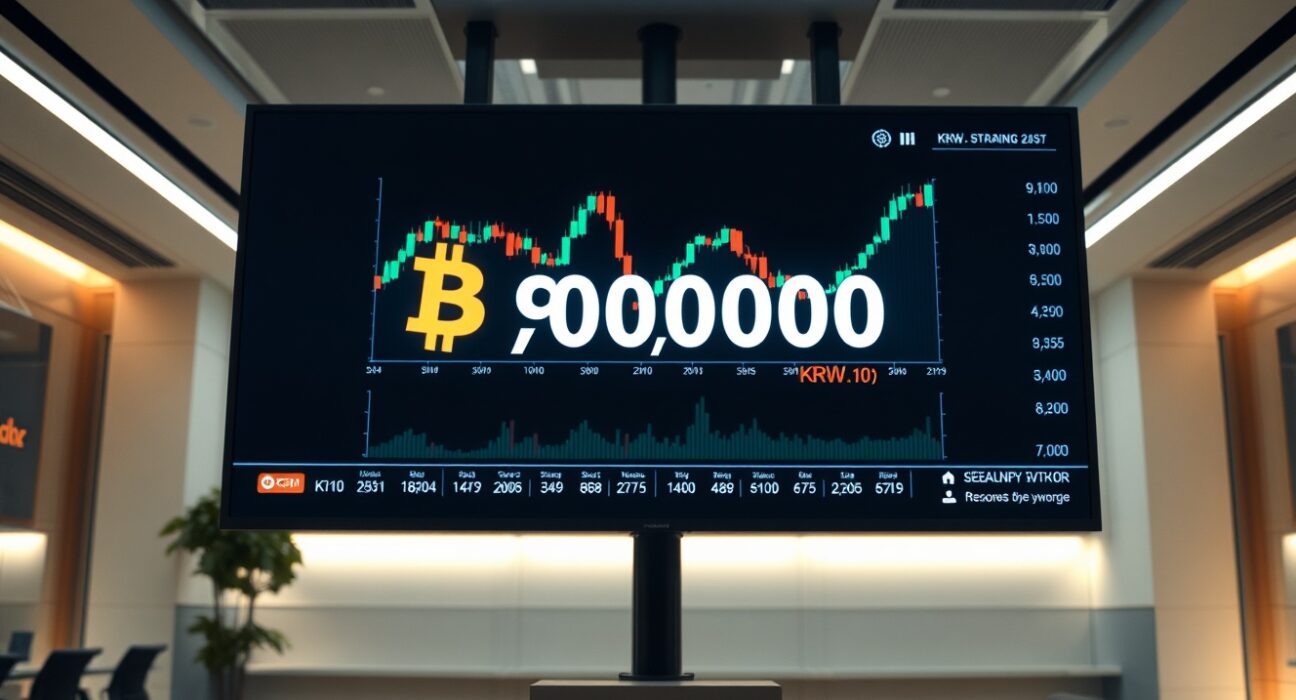
Bitcoin fell below the 90 million won mark on South Korean cryptocurrency exchange Upbit on [Date of event, e.g., Wednesday], a significant price level for local traders. The drop reflects a combination of global market pressures and unique dynamics within South Korea’s crypto ecosystem, including the persistent “Kimchi premium.”
Local Price Divergence and the Kimchi Premium
South Korean exchanges like Upbit often trade at a premium compared to global averages due to strict capital controls and high retail demand. This phenomenon, known as the Kimchi premium, means that a drop below 90 million won on Upbit is a more pronounced signal of local selling pressure. At the time of the dip, the global Bitcoin price was trading lower, but the gap between Upbit’s price and international benchmarks narrowed, suggesting a temporary easing of the premium.
The 90 million won level is a psychological threshold for many South Korean investors, who have been among the most active retail participants in the crypto market. Breaking below this point can trigger stop-loss orders and accelerate selling, as observed in previous corrections.
Market Context and Global Factors
The decline on Upbit coincided with broader market weakness, including [mention a relevant global factor, e.g., regulatory news from the US, macroeconomic data, or a sell-off in tech stocks]. Bitcoin has been under pressure from [mention a general trend, e.g., rising interest rates or profit-taking after a rally]. The move below 90 million won in South Korea adds a regional dimension to the global price action.
Implications for South Korean Investors
For South Korean traders, the drop below 90 million won represents a test of support. If the price holds near this level, it could signal a buying opportunity for those who view the Kimchi premium as a long-term feature of the market. However, a sustained break below could lead to further losses, especially if global sentiment turns bearish. Regulators in South Korea have also been tightening oversight of exchanges, adding to the uncertainty.
Conclusion
Bitcoin’s fall below 90 million won on Upbit is a notable event that highlights the interplay between local market structure and global trends. While the Kimchi premium provides a buffer for South Korean prices, it also creates unique risks when premiums compress during downturns. Investors should monitor both local exchange data and international benchmarks to gauge the next move.
FAQs
Q1: What is the Kimchi premium?
The Kimchi premium is the price difference between cryptocurrencies on South Korean exchanges like Upbit and global exchanges. It exists due to capital controls and high local demand, often making coins more expensive in Korea.
Q2: Why did Bitcoin drop below 90 million won on Upbit?
The drop was driven by a combination of global selling pressure in the crypto market and local factors, including potential profit-taking and the narrowing of the Kimchi premium.
Q3: Is this a buying opportunity?
Whether this is a buying opportunity depends on individual risk tolerance and market outlook. The 90 million won level is a key support; a bounce could offer a short-term trade, but a break lower could signal further declines.
Disclaimer: The information provided is not trading advice, Bitcoinworld.co.in holds no liability for any investments made based on the information provided on this page. We strongly recommend independent research and/or consultation with a qualified professional before making any investment decisions.
