

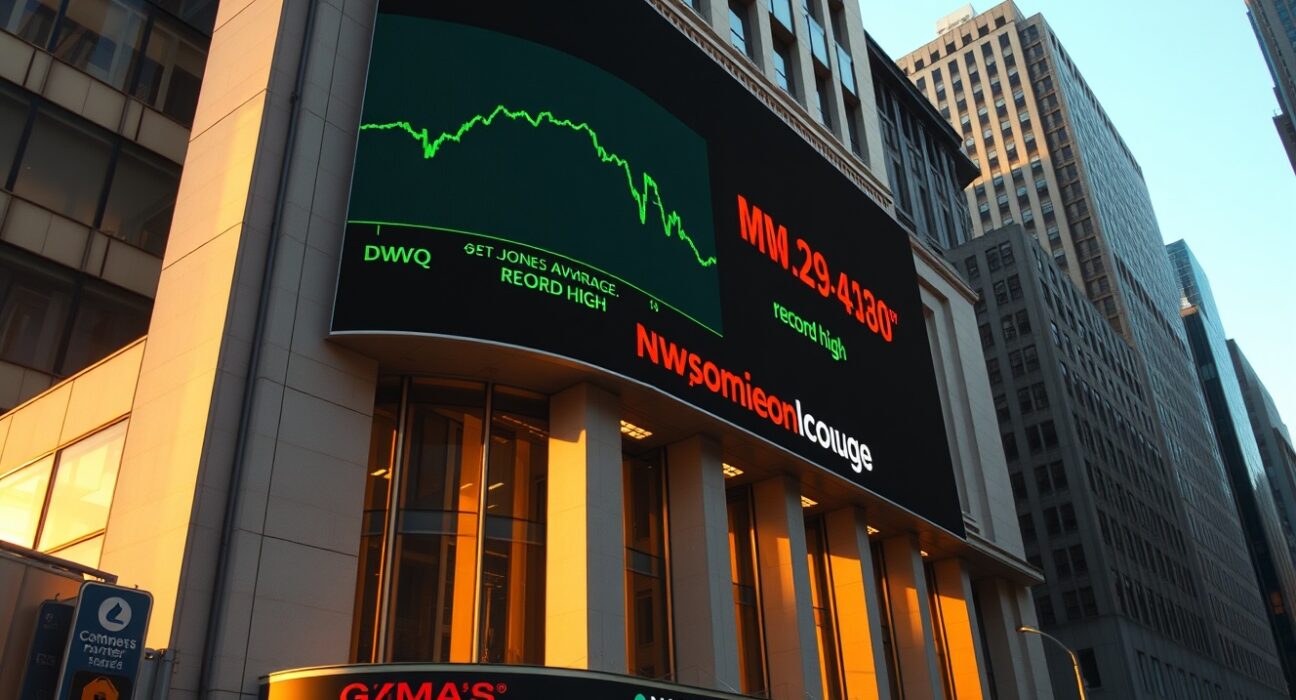
The Dow Jones Industrial Average (DJIA) closed at a new all-time high on Tuesday, a milestone that underscores a growing divergence in the U.S. stock market. While the 30-stock blue-chip index celebrated its record, the technology-heavy Nasdaq Composite lagged significantly, effectively paying for the Dow’s gains through a rotation out of growth and into value.
A Tale of Two Indices
The Dow’s record close, its first in several months, was driven by strong performances in sectors like financials, industrials, and energy. This marks a clear shift in investor sentiment, moving away from the high-growth tech stocks that have dominated market leadership for much of the past two years. In contrast, the Nasdaq Composite, which is heavily weighted toward major technology firms, ended the session nearly flat, with several key names in the red.
The Rotation Under the Hood
This divergence is not an anomaly but a continuation of a broader market rotation that has been building for weeks. Rising bond yields and shifting expectations around Federal Reserve policy have made traditional value stocks more attractive. Investors are reallocating capital from high-valuation tech companies to more cyclical sectors that benefit from a strengthening economy. The Dow, with its heavy weighting in names like Goldman Sachs, Caterpillar, and Boeing, is a direct beneficiary of this trend.
What This Means for Investors
For market participants, the Dow’s record is a signal that the bull market is broadening, which is generally considered a healthier sign than a rally concentrated in a handful of mega-cap tech stocks. However, the lag in the Nasdaq also introduces a note of caution. If the rotation accelerates, it could lead to a sharper correction in the tech sector, which has been the primary driver of overall market gains for years. The key question is whether this rotation is a temporary rebalancing or the start of a longer-term shift in market leadership.
Conclusion
The Dow Jones Industrial Average’s new record is a headline-grabbing event, but the real story lies in the contrasting performance of the Nasdaq. The divergence highlights a fundamental shift in market dynamics, as investors rotate from growth to value. For now, the Dow is celebrating, but the sustainability of this rally depends on whether the broader market can support the move without a significant pullback in technology stocks.
FAQs
Q1: Why did the Dow hit a record while the Nasdaq lagged?
A1: The Dow is composed of 30 large, established companies, many in sectors like finance and industry that benefit from economic growth and higher interest rates. The Nasdaq is heavy with technology stocks, which are more sensitive to rising bond yields and have seen profit-taking as investors rotate into value.
Q2: Is a market rotation a good or bad sign?
A2: A broadening of market leadership is generally seen as a positive sign for the long-term health of the bull market. It indicates that gains are not dependent on a narrow group of stocks. However, a rapid rotation can cause short-term volatility, particularly in the sectors being sold off.
Q3: What should investors do in this environment?
A3: Investors should review their portfolio diversification. Overweight positions in high-growth tech may need rebalancing. The current environment favors a more balanced approach, with exposure to both growth and value sectors, as well as international markets that may benefit from similar trends.
Disclaimer: The information provided is not trading advice, Bitcoinworld.co.in holds no liability for any investments made based on the information provided on this page. We strongly recommend independent research and/or consultation with a qualified professional before making any investment decisions.
