

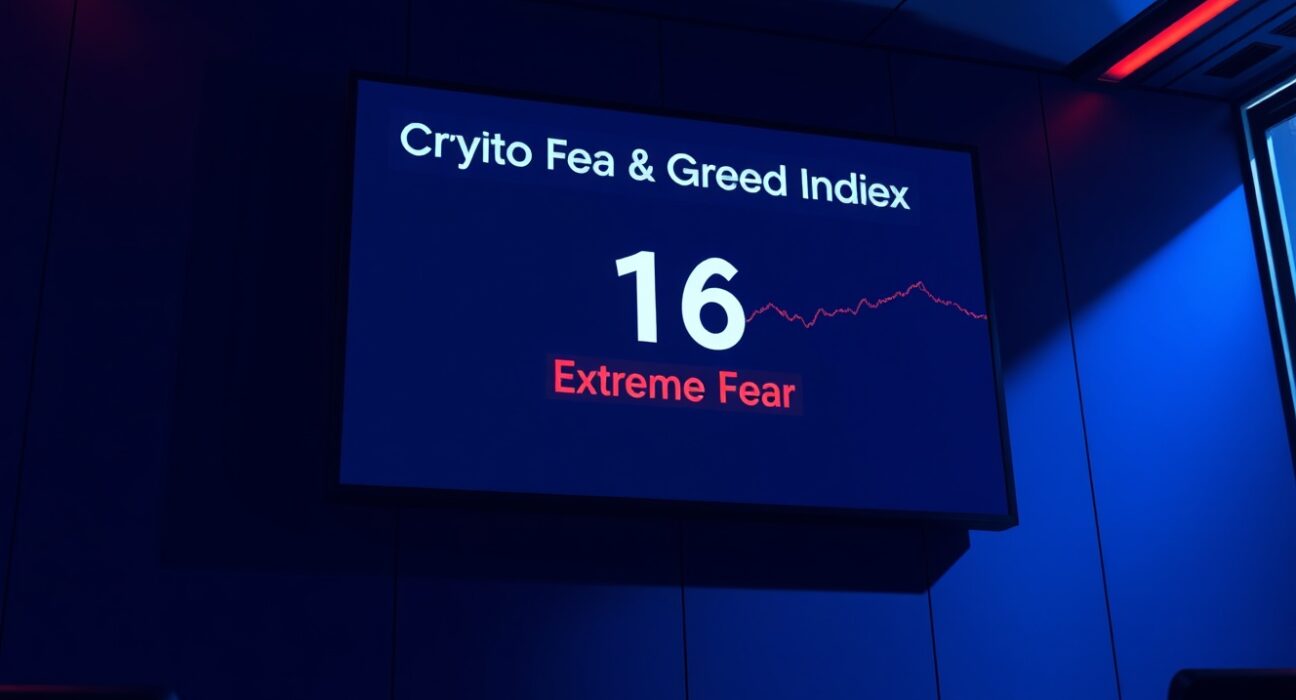
The Crypto Fear & Greed Index, a widely followed sentiment gauge for the cryptocurrency market, has fallen to 16, according to data provider CoinMarketCap. This marks a two-point decline from the previous day and signals a deepening of the ‘Extreme Fear’ sentiment that has gripped the market.
What the Index Measures
The index is calculated on a scale from 0 to 100, where 0 represents ‘Extreme Fear’ and 100 indicates ‘Extreme Greed.’ A reading of 16 places the market firmly in the extreme fear territory, suggesting that investors are highly pessimistic about the short-term outlook for digital assets. CoinMarketCap’s methodology incorporates several factors, including the price movements of the top 10 cryptocurrencies by market capitalization, overall market volatility, derivatives market data such as the put-to-call ratio, the Stablecoin Supply Ratio (SSR), and the platform’s own proprietary search data.
Why This Matters
While the index is often viewed as a contrarian indicator — with extreme fear sometimes presenting buying opportunities for long-term investors — the sustained drop below 20 suggests that negative sentiment is not easing. Historically, readings this low have coincided with periods of significant price corrections or prolonged bearish trends. For example, during the market downturns of 2018 and 2022, the index frequently hovered in the single digits before any meaningful recovery began.
What This Means for Investors
For traders and investors, the current reading underscores the importance of risk management. Extreme fear can lead to panic selling, which in turn exacerbates downward price pressure. However, it can also create conditions for a potential rebound if the underlying fundamentals remain intact. The decline in the index also reflects broader macroeconomic uncertainties, including regulatory developments and interest rate expectations, which continue to weigh on risk assets like cryptocurrencies.
Conclusion
The drop in the Crypto Fear & Greed Index to 16 is a clear signal that market sentiment has turned deeply negative. While such readings have historically preceded market bottoms, they do not guarantee an immediate reversal. Investors should monitor the index alongside other indicators — such as trading volume, on-chain activity, and regulatory news — to form a complete picture of market conditions. The coming days will be critical in determining whether this extreme fear phase is a temporary capitulation or the beginning of a more sustained downturn.
FAQs
Q1: What is the Crypto Fear & Greed Index?
The Crypto Fear & Greed Index is a sentiment indicator that measures the current mood of the cryptocurrency market on a scale from 0 (extreme fear) to 100 (extreme greed). It is calculated using factors like price momentum, volatility, trading volume, and social media data.
Q2: What does a reading of 16 mean?
A reading of 16 falls within the ‘Extreme Fear’ zone, indicating that investors are highly pessimistic and that selling pressure is likely dominant. Historically, such low readings have often preceded market bottoms, but they can also persist during prolonged bear markets.
Q3: How is the index calculated by CoinMarketCap?
CoinMarketCap’s index uses a weighted formula that includes the price movements of the top 10 cryptocurrencies, market volatility, derivatives data (such as put-to-call ratios), the Stablecoin Supply Ratio (SSR), and search volume data from its own platform. The exact weighting of each factor is periodically adjusted.
Frequently Asked Questions
What does a Crypto Fear & Greed Index reading of 16 mean?
It means the market is in ‘Extreme Fear’ territory, indicating that investors are highly pessimistic about the short-term outlook for cryptocurrencies.
How is the Crypto Fear & Greed Index calculated?
It is calculated using factors like price movements of the top 10 cryptocurrencies, market volatility, derivatives data (put-to-call ratio), the Stablecoin Supply Ratio, and proprietary search data.
Is a low Fear & Greed Index a good time to buy?
It can be a contrarian buying opportunity for long-term investors, as extreme fear historically has coincided with price bottoms before recoveries, but it also signals ongoing risk of further declines.
What caused the index to drop to 16?
The drop reflects deepening negative sentiment driven by broader macroeconomic uncertainties, including regulatory developments and interest rate expectations, which weigh on risk assets like crypto.
Has the index been this low before?
Yes, during major downturns like 2018 and 2022, the index frequently hovered in single digits before any meaningful recovery began.
Disclaimer: The information provided is not trading advice, Bitcoinworld.co.in holds no liability for any investments made based on the information provided on this page. We strongly recommend independent research and/or consultation with a qualified professional before making any investment decisions.
