

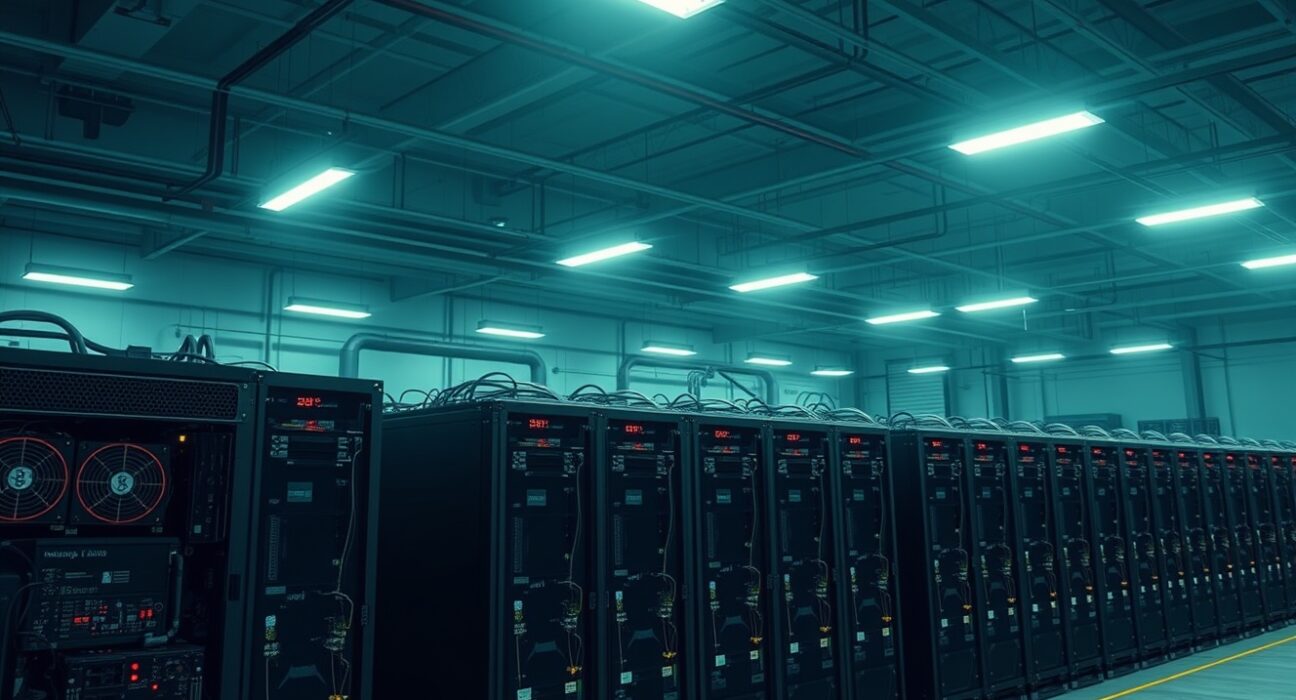
A new analysis from Bloomberg has highlighted a surprising shift in the role of Bitcoin miners: they are increasingly being viewed as a valuable demand response resource for electricity grids struggling to manage surging power consumption from artificial intelligence data centers.
Bitcoin Mining vs. AI Data Centers: A Key Difference in Power Flexibility
The core distinction lies in operational flexibility. AI data centers, which run high-performance computing clusters for training large language models and inference, typically operate around the clock. Reducing their power load during peak demand periods can interrupt critical work, leading to significant financial losses. In contrast, Bitcoin miners can power down their operations in milliseconds without losing progress on their computational work. This ability to instantly curtail power usage makes them uniquely suited to participate in demand response programs, where grid operators pay large energy consumers to reduce load during periods of high stress or to prevent blackouts.
Ethan Vera, chief operating officer of crypto mining services firm Luxor Technologies, explained the dynamic to Bloomberg. He noted that AI data centers are generating hundreds of gigawatts of fixed power demand across the United States. While these facilities would incur substantial losses if they halted training or inference operations, Bitcoin miners can organically reduce their power consumption without disrupting their core work, effectively acting as a controllable load for grid operators.
Implications for Energy Markets and Grid Stability
This re-evaluation comes at a critical time. The rapid expansion of AI infrastructure is placing unprecedented strain on regional power grids, leading to longer interconnection queues and rising electricity prices. Bitcoin miners, which have historically been criticized for their energy consumption, are now being recognized for the grid services they can provide. By participating in demand response programs, miners can help stabilize the grid, potentially lowering costs for all ratepayers and supporting the integration of renewable energy sources.
What This Means for the Crypto and AI Industries
The development signals a potential convergence between the cryptocurrency and AI sectors, not just in terms of hardware but also in energy strategy. For Bitcoin miners, this represents a new revenue stream beyond block rewards and transaction fees. For AI data center operators, it highlights a growing need to design for energy flexibility, perhaps by incorporating similar interruptible workloads. The broader takeaway is that energy-intensive industries are being forced to innovate in how they interact with the grid, and Bitcoin mining’s unique characteristics may offer a blueprint for future demand-side management.
Conclusion
The Bloomberg report underscores a pragmatic shift in how Bitcoin miners are perceived within the energy ecosystem. Rather than being viewed solely as a drain on resources, they are emerging as a potential tool for grid reliability in an era of surging AI-driven electricity demand. This development adds a new layer to the ongoing debate about cryptocurrency’s environmental impact, highlighting the importance of operational context and grid integration.
FAQs
Q1: How do Bitcoin miners reduce power consumption so quickly?
Bitcoin mining rigs can be powered down almost instantly because their work (hashing) is stateless. If a miner stops, they simply stop contributing to the network hash rate and can resume later without losing any progress or data.
Q2: Why can’t AI data centers do the same thing?
AI data centers run complex, long-running training jobs that cannot be easily paused or resumed. Interrupting these processes can result in lost computation time, corrupted data, and significant financial costs, making them far less flexible for demand response.
Q3: Is this a common practice for Bitcoin miners?
Yes, many large-scale Bitcoin mining operations already participate in demand response programs with local utilities. This is especially common in regions with variable renewable energy or constrained grid capacity, where miners can act as a controllable load to help balance supply and demand.
Disclaimer: The information provided is not trading advice, Bitcoinworld.co.in holds no liability for any investments made based on the information provided on this page. We strongly recommend independent research and/or consultation with a qualified professional before making any investment decisions.
